

India’s GST ecosystem has entered a new era of automated compliance monitoring in 2026. For Micro, Small, and Medium Enterprises (MSMEs), this has resulted in a noticeable rise in GST notices, scrutiny alerts, Input Tax Credit (ITC) mismatch communications, and compliance reminders.
Many business owners are suddenly receiving notices related to:
- ITC mismatches
- GSTR-1 vs GSTR-3B differences
- E-invoicing errors
- Delayed return filing
- IMS (Invoice Management System) discrepancies
- Vendor non-compliance
- High-risk transaction flags
But why is this happening now?
The answer lies in India’s rapidly evolving digital tax infrastructure.
GST in 2026: From Manual Scrutiny to AI-Based Surveillance
The GST Network (GSTN) is no longer dependent on random manual audits. In 2026, compliance monitoring has become largely automated through:
- Artificial Intelligence (AI)
- Machine learning-based risk scoring
- Real-time invoice tracking
- Cross-platform data matching
- Automated scrutiny systems
Experts note that GST authorities are now cross-checking data between:
- GST returns
- E-invoices
- E-way bills
- Income tax filings
- TDS/TCS records
- MCA filings
- Banking transactions
Even small inconsistencies can automatically trigger scrutiny notices.
Major Reasons MSMEs Are Receiving More GST Notices
1. ITC Mismatch Between GSTR-2B and GSTR-3B
One of the biggest reasons behind GST notices in 2026 is incorrect Input Tax Credit claims.
If a supplier fails to upload invoices properly in GSTR-1, the buyer’s ITC may not appear in GSTR-2B. However, many MSMEs still claim the credit in GSTR-3B, resulting in automatic mismatch notices.
In many cases, businesses are being asked to:
- Reverse ITC
- Pay interest
- Provide reconciliation reports
This has become one of the most common GST compliance risks for MSMEs.
2. Invoice Management System (IMS) Compliance
The newly strengthened Invoice Management System (IMS) has changed GST workflows significantly in 2026.
Businesses must now:
- Accept
- Reject
- Or mark supplier invoices as pending
before claiming ITC.
If MSMEs fail to reconcile invoices properly through IMS, return filing can get blocked automatically.
Many small businesses are still adapting to these system-driven compliance requirements.
3. E-Invoicing Expansion
E-invoicing applicability has expanded further in 2026, bringing more MSMEs under mandatory compliance requirements. Businesses crossing specified turnover thresholds must generate Invoice Reference Numbers (IRN) and upload invoices within prescribed timelines.
Common errors triggering notices include:
- Delayed IRN generation
- Invalid invoice uploads
- Missing QR codes
- Incorrect HSN codes
- Invoice duplication
Because the entire process is automated, even minor technical mistakes are now easily detectable by GST systems.
4. AI-Based Risk Profiling
GST authorities are increasingly using AI-driven risk assessment tools to identify suspicious or abnormal transaction patterns.
Businesses may receive notices for:
- Sudden spikes in turnover
- Excessive ITC claims
- High refund claims
- Irregular filing patterns
- Vendor linkage with fake invoice networks
In many situations, notices are system-generated without human intervention.
5. Vendor Non-Compliance Becoming Your Problem
A major challenge for MSMEs is that supplier mistakes can now directly impact buyers.
If vendors:
- Fail to file returns
- Upload incorrect invoices
- Delay GSTR-1 filing
- Use invalid GSTINs
the purchasing business may receive notices or lose ITC eligibility.
This has forced businesses to become more cautious while selecting vendors and managing supplier compliance.
6. Increased Data Integration Across Departments
GST authorities now integrate data with:
- Income Tax Department
- Customs
- MCA
- Banking systems
- TDS/TCS databases
Mismatch between declared turnover, bank credits, e-way bills, and GST returns can trigger automated scrutiny.
For example:
- Higher turnover in income tax compared to GST returns
- Mismatch in TDS and sales data
- E-way bills without corresponding invoices
can lead to notices.
7. MSMEs Often Ignore Initial Notices
Industry discussions show that many MSMEs underestimate the seriousness of GST notices. Business owners often forward notices without reviewing deadlines or understanding implications.
Ignoring notices may lead to:
- Penalties
- Interest
- Registration suspension
- ITC blockage
- Departmental audits
Timely response has become critical in the current GST environment.
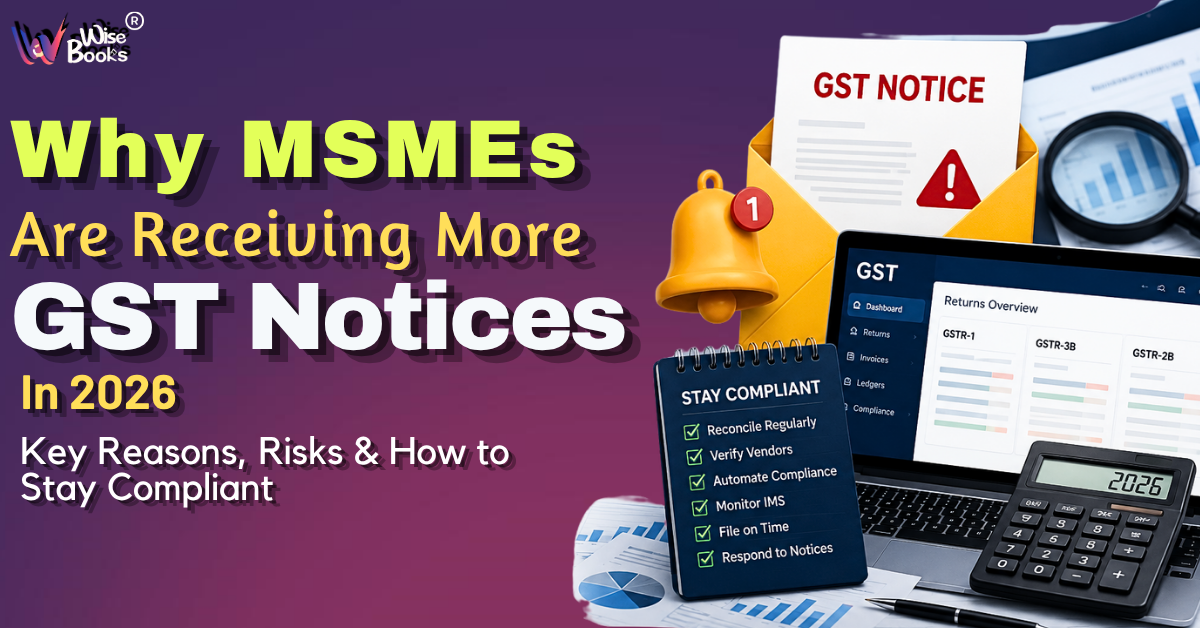
How MSMEs Can Reduce GST Notice Risks in 2026
Maintain Monthly Reconciliation
Regularly reconcile:
- GSTR-1
- GSTR-3B
- GSTR-2B
- Purchase register
- Sales register
Verify Vendor Compliance
Work only with compliant vendors and monitor supplier filing status monthly.
Automate Compliance
Use GST automation software and AI-enabled accounting systems to reduce human errors.
Monitor IMS Carefully
Review supplier invoices before filing returns.
Avoid Last-Minute Filing
Late filing increases the probability of system-generated scrutiny.
Respond Quickly to Notices
Never ignore GST notices, even if they appear minor.
Final Thoughts
The rise in GST notices for MSMEs in 2026 does not necessarily mean tax authorities are targeting small businesses unfairly. Instead, it reflects the government’s shift toward a highly digitized, data-driven compliance ecosystem.
GST compliance is no longer just about filing returns on time. Businesses now need:
- Accurate reconciliation
- Vendor monitoring
- Real-time invoice management
- Automated bookkeeping
- AI-supported compliance systems
For MSMEs, proactive compliance is becoming essential for avoiding penalties, protecting cash flow, and maintaining smooth business operations in India’s increasingly automated tax environment.


Comments
QtkRHv