


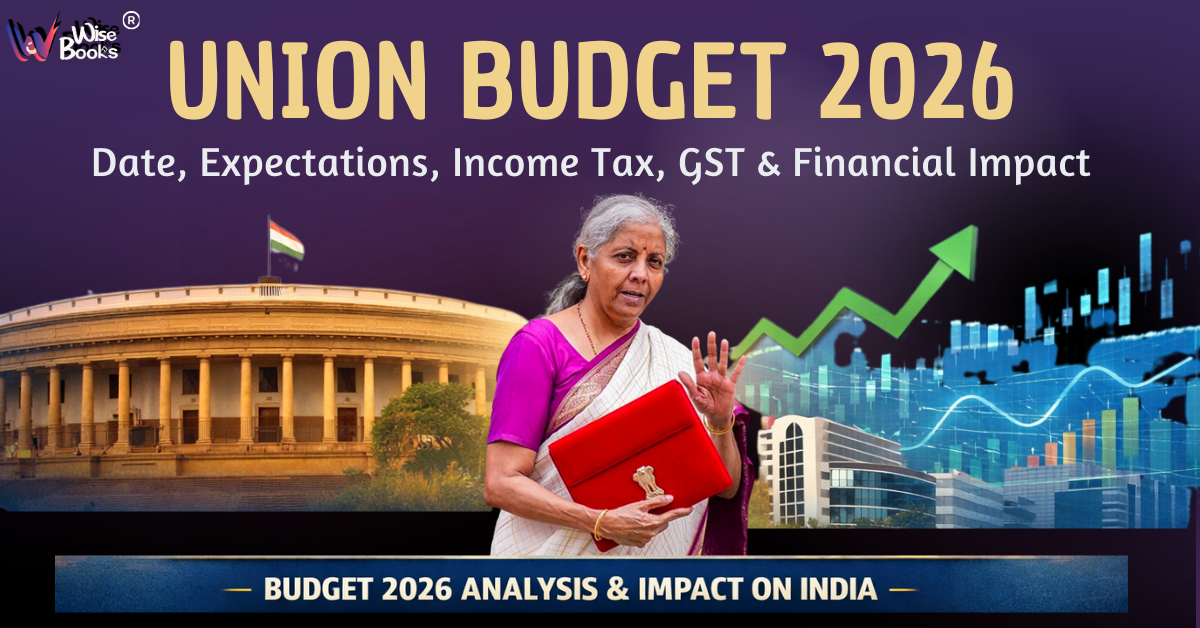
Union Budget 2026 Explained: Date, Income Tax, GST & Financial Impact
The Union Budget 2026–27 is one of the most anticipated economic events in India, as it sets the financial and policy roadmap for the country for the coming year. Presented at a time when taxpayers, businesses, and markets are closely watching economic signals, Budget 2026 carries significant importance for income tax, GST, public spending, fiscal discipline, and overall financial planning.
Finance Minister Nirmala Sitharaman will present the Union Budget 2026–27 on February 1, 2026, at 11:00 AM in Parliament. This will be her ninth consecutive budget, reflecting continuity in economic policy-making and reform-oriented governance.
Union Budget 2026: Date, Time and Parliamentary Significance
The Union Budget for 2026–27 will be presented on Sunday, February 1, 2026, marking a continuation of the tradition started in recent years of presenting the budget on the first day of February. The timing allows taxpayers, businesses, and financial institutions sufficient time to prepare for changes before the new financial year begins on April 1, 2026.
The Budget Session of Parliament is the first parliamentary session of the year and begins with the President of India’s address to a joint sitting of the Lok Sabha and the Rajya Sabha. This address outlines the government’s broad vision, priorities, and legislative agenda for the year ahead. Following this, the Union Budget is presented, debated, and passed, making it a cornerstone of India’s democratic and economic process.
Why Stock Markets Will Remain Open on Budget Day
Since Budget Day falls on a Sunday, the Bombay Stock Exchange (BSE) and National Stock Exchange (NSE) will remain open for trading. This special arrangement ensures that financial markets can immediately react to announcements related to income tax, capital gains, fiscal deficit, government borrowing, and sector-specific incentives.
Historically, budget announcements have had a strong influence on equity markets, especially on sectors such as banking, infrastructure, FMCG, manufacturing, and capital markets. Keeping the markets open promotes transparency, efficient price discovery, and real-time investor response to policy changes.
Importance of Union Budget 2026 for the Indian Economy
Union Budget 2026 is particularly important because it comes at a time when the government is balancing economic growth with fiscal discipline. After several years of tax reforms, infrastructure expansion, and digitalisation, the focus is now on sustaining growth while managing public debt and revenue constraints.
The budget will determine how the government allocates resources toward infrastructure, social welfare, defence, education, healthcare, and employment generation, while also outlining how it plans to raise revenue through taxes and disinvestment.
Income Tax Expectations from Budget 2026
One of the most closely watched aspects of Budget 2026 is income tax relief for individuals and professionals. After earlier reforms and the introduction of simplified tax regimes, taxpayers are expecting further clarity and rationalisation.
Possible Changes in Tax Slabs and Standard Deduction
Experts and industry bodies have suggested that the government may consider increasing the standard deduction for salaried taxpayers to provide relief against rising living costs. There are also expectations of rationalised tax slabs, especially under the new tax regime, to make it more attractive and equitable.
Such changes could improve disposable income, boost consumption, and strengthen household financial stability.
New Income Tax Law Implementation
The new Income Tax Act, expected to come into effect from April 1, 2026, is aimed at simplifying language, reducing litigation, and improving taxpayer understanding. Budget 2026 is expected to provide transition guidelines, compliance frameworks, and clarity on how existing taxpayers will shift to the new system.
This will be crucial for individuals, businesses, and tax professionals preparing for the upcoming assessment years.
GST and Indirect Tax Expectations
Although GST decisions are largely taken by the GST Council, Budget 2026 is expected to signal the government’s intent on indirect tax reforms and GST rationalisation.
GST Simplification and Rate Rationalisation
Industry experts have long demanded simplification of GST rate slabs to reduce classification disputes and compliance burden. Budget 2026 may highlight steps toward streamlining indirect taxes, improving ease of doing business, and strengthening GST compliance through technology.
Focus on MSMEs and Exporters
Micro, Small, and Medium Enterprises (MSMEs) and exporters are expecting relief in the form of smoother input tax credit mechanisms, faster refunds, and continued export incentives. These measures are essential to improve liquidity, global competitiveness, and job creation.
Fiscal Discipline and Government Spending
Fiscal discipline refers to the government’s commitment to managing public finances carefully by keeping expenditure and borrowing under control. In Budget 2026, fiscal management is expected to play a crucial role as the government works to reduce the fiscal deficit while continuing to support economic growth. A controlled fiscal deficit helps maintain macroeconomic stability, limits inflationary pressure, and keeps interest rates at reasonable levels, benefiting both businesses and consumers.
At the same time, the government is likely to maintain a strong focus on capital expenditure, particularly in sectors such as roads, railways, renewable energy, housing, and urban infrastructure. Investment in these areas creates long-term assets, improves connectivity and productivity, and generates employment across multiple industries. Such spending has a multiplier effect on the economy, as it boosts demand, encourages private investment, and supports overall development.
Balancing fiscal discipline with growth-oriented spending requires efficient allocation of resources, improved tax collections, and rationalisation of subsidies. Through this balanced approach, Budget 2026 is expected to strengthen economic growth while ensuring long-term financial sustainability and investor confidence.
Sector-Wise Expectations from Budget 2026
Infrastructure and Manufacturing
Infrastructure development remains a cornerstone of India’s growth strategy. Continued allocation toward highways, logistics, industrial corridors, and manufacturing incentives is expected to support long-term economic expansion.
MSMEs and Startups
Small businesses and startups are looking for easier access to credit, simplified compliance, and targeted tax incentives. Budget 2026 could strengthen the entrepreneurial ecosystem by addressing these concerns.
Financial Markets and Investors
For investors, budget announcements on capital gains tax, securities transaction tax, and market regulations will be crucial. Stable and predictable tax policies encourage long-term investment and market confidence.
How Budget 2026 Impacts Individuals and Businesses
For salaried individuals, Budget 2026 may influence take-home salary, savings, and tax planning strategies. For businesses, it will impact GST compliance, income tax liability, cash flow, and investment decisions. For accounting and finance professionals, the budget sets the agenda for compliance, advisory services, and financial reporting for the coming year.
Conclusion
Union Budget 2026–27 comes at a crucial juncture for the Indian economy, where the emphasis is not only on growth but also on sustainability, stability, and long-term reform. With expectations around income tax rationalisation, GST simplification, disciplined public spending, and continued investment in infrastructure, the budget is set to influence financial decisions at every level from individual taxpayers to large businesses and investors.
As Finance Minister Nirmala Sitharaman presents her ninth consecutive budget on February 1, 2026, the focus will be on how effectively the government aligns fiscal responsibility with economic expansion. The announcements made in this budget will shape tax planning, compliance strategies, and investment outlooks for the coming financial year. For individuals, businesses, and finance professionals alike, Budget 2026 will serve as a key reference point for navigating India’s evolving financial and regulatory landscape.


Comments
No comments yet. Be the first to comment!