


Introduction
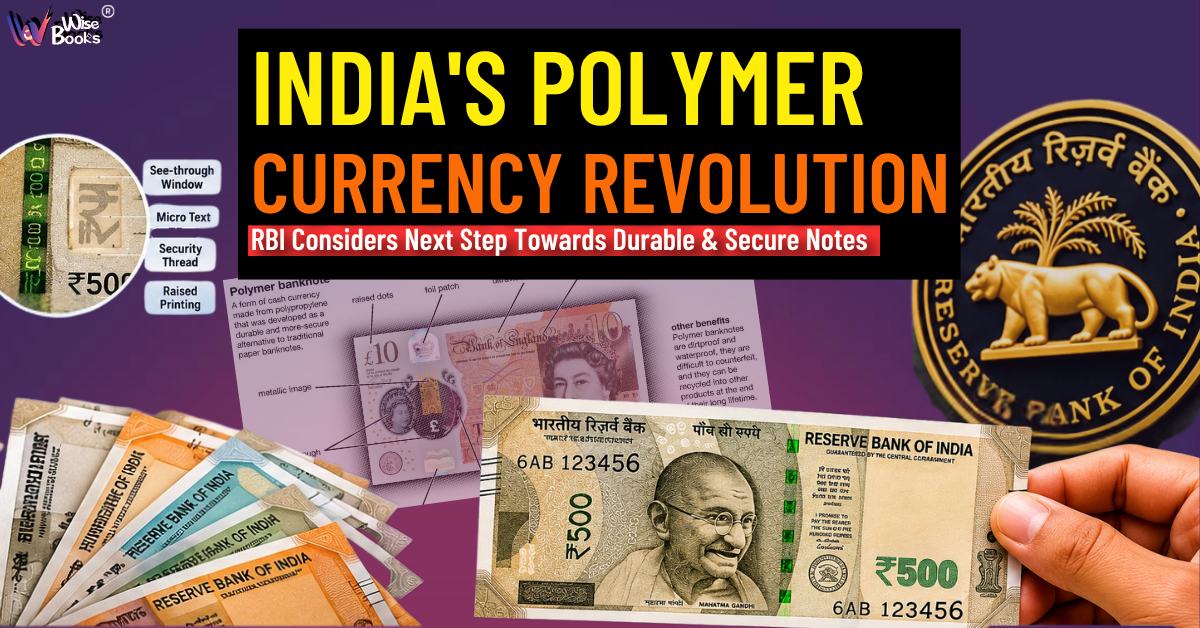
The Reserve Bank of India (RBI) is once again evaluating the possibility of introducing polymer currency notes in India. The proposal has recently been discussed during RBI board meetings as the central bank explores ways to reduce currency printing costs and improve the durability of banknotes.
Although digital payments continue to grow rapidly, cash remains a critical part of India's economy. Every year, millions of currency notes become damaged, dirty, torn, or unusable, forcing the RBI to spend thousands of crores on printing replacement notes.
The renewed interest in polymer notes is driven by a simple objective: make Indian currency last longer while reducing long-term costs.
What Are Polymer Notes?
Polymer notes are banknotes made from a special plastic material instead of traditional cotton-based paper.
These notes are:
1. More durable
2. Water-resistant
3. Dirt-resistant
4. Harder to tear
5. More secure against counterfeiting
Countries such as Australia, Canada, New Zealand, and the United Kingdom have already adopted polymer currency because of its longer lifespan and enhanced security features.
Why Is RBI Considering Polymer Notes?
The biggest reason is cost.
Even though polymer notes cost more to manufacture initially, they remain in circulation much longer than conventional paper notes.
RBI Currency Printing Expenditure
Financial Year - FY17
Printing Cost - ₹7,965 Crore
Financial Year - FY25
Printing Cost - ₹6,372 Crore
Financial Year - FY26
Printing Cost - ₹4,875 Crore
These figures demonstrate that printing currency remains a major expense for the central bank.
If notes last longer, fewer replacements are required, leading to lower long-term expenditure.
The Problem of Damaged Currency
One of India's biggest currency management challenges is the enormous volume of notes withdrawn every year due to wear and tear.
Currency Notes Withdrawn From Circulation (FY26)
Denomination/Notes Withdrawn
₹500 Notes/598.3 Crore Pieces
₹100 Notes/581.1 Crore Pieces
The numbers reveal how heavily used denominations require continuous replacement.
Every damaged note means:
- Additional printing costs
- Increased transportation expenses
- Higher storage and processing requirements
- Additional administrative burden
Polymer notes can significantly reduce these challenges.
How Polymer Notes Are Better
1. Longer Lifespan
Polymer notes can last two to four times longer than traditional paper notes.
2. Water Resistance
Unlike paper notes, polymer notes are less likely to be damaged by rain, moisture, or accidental washing.
3. Better Security
Polymer notes contain advanced security features that are difficult to replicate.
4. Cleaner Currency
Polymer notes resist dirt and contamination better than paper notes.
5. Lower Replacement Costs
Although initial production costs are higher, fewer replacements can reduce overall expenditure.
Countries Already Using Polymer Currency
Several countries have successfully transitioned to polymer currency:
- Australia (Pioneer of polymer notes)
- Canada
- United Kingdom
- New Zealand
- Singapore
- Romania
These countries report improved durability and reduced replacement costs.
India's Previous Polymer Experiment
India is not new to the idea.
The RBI conducted pilot testing of polymer banknotes in 2012.
However, the initiative did not move beyond the trial phase.
Now, with increasing printing expenses and growing pressure on currency management systems, the proposal is being reconsidered.
Benefits for India's Economy
If implemented successfully, polymer notes could provide:
Cost Savings
Reduced replacement requirements can save thousands of crores over time.
Improved Security
Counterfeit currency risks may decrease.
Better Currency Quality
Cleaner and stronger notes improve public confidence.
Environmental Benefits
Fewer notes printed means lower resource consumption over the long term.
Challenges RBI May Face
Despite the advantages, implementation will not be easy.
Potential challenges include:
- Higher initial manufacturing costs
- Changes in printing infrastructure
- Public adaptation to new notes
- ATM and cash handling machine adjustments
The transition would likely be gradual rather than immediate.
The Road Ahead
The RBI has not yet announced a final decision. However, the renewed discussion indicates that policymakers are seriously evaluating polymer currency as a long-term solution.
As India's economy continues to grow and cash circulation remains significant, improving the durability of currency could become an important step toward reducing costs and strengthening the nation's currency management system.
Conclusion
The debate around polymer notes is no longer just about introducing a new type of currency. It is about making India's cash economy more efficient, secure, and cost-effective.
With currency printing costs touching ₹6,372 crore in FY25 and hundreds of crores of notes being withdrawn from circulation every year, the case for polymer currency is becoming increasingly compelling.
If approved, polymer notes could represent one of the most significant changes to India's currency system since the introduction of the new banknote series after demonetisation.


Comments
No comments yet. Be the first to comment!