


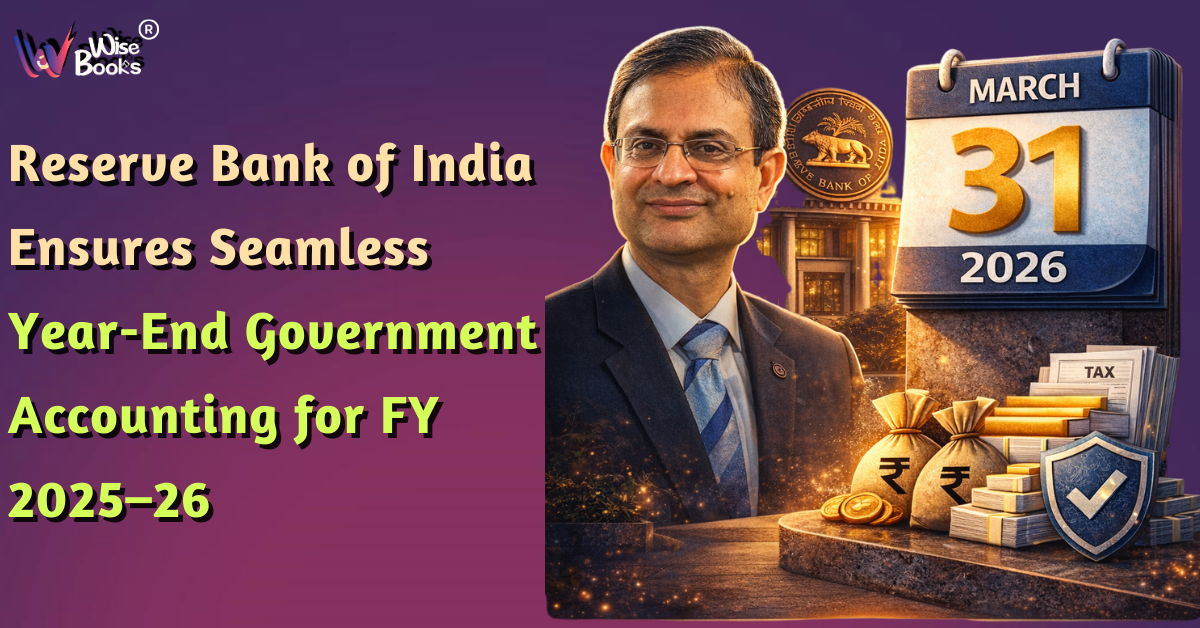
Reserve Bank of India Ensures Seamless Year-End Government Accounting for FY 2025–26
As Financial Year 2025–26 draws to a close, the Reserve Bank of India (RBI) has reinforced India’s fiscal discipline framework by directing designated agency banks to remain open on March 31, 2026, for government-related transactions. The instruction, issued via Circular RBI/2025–26/204 dated February 3, 2026, follows directions from the Government of India and is aimed at ensuring that sovereign receipts and payments are accounted for within the same fiscal year.
This step may appear procedural, but its financial and administrative implications are significant.
The Legal and Accounting Significance of March 31
Under India’s public finance structure, March 31 marks the statutory close of the financial year. Government accounts are maintained on an annual basis, and every rupee received or spent must be recorded in the correct fiscal period.
A delay of even one day can:
- Shift tax receipts into the next financial year
- Distort revenue and deficit calculations
- Affect fiscal responsibility targets
- Create audit observations
- Lead to reconciliation discrepancies between ministries and treasury records
Therefore, uninterrupted banking access on this date is not optional, it is essential for preserving the integrity of government accounts.
Administrative Coordination Behind the Directive
Year-end financial closure involves coordination between multiple stakeholders:
- Central and State Government Departments
- Controller General of Accounts (CGA)
- Pay & Accounts Offices
- Agency Banks
- RBI’s internal settlement and clearing systems
By mandating agency banks to remain open, RBI ensures alignment between operational banking infrastructure and government accounting deadlines. This coordination prevents last-minute congestion in payment systems and ensures that entries are reflected in official ledgers before midnight cut-off.
Operational Readiness: What Banks Must Ensure
Beyond simply keeping branches open, the directive implies deeper operational preparedness:
- Real-time processing of government challans
- Smooth functioning of RBI’s e-Kuber and settlement systems
- Availability of clearing houses for inter-bank settlements
- Proper tagging of transactions under government heads
- Immediate reporting to treasury authorities
In today’s digital ecosystem, most high-value government payments are processed electronically. Hence, IT systems, payment gateways, and core banking platforms must operate without downtime on March 31.
Impact on Government Budget Utilization
For ministries and departments, March 31 is the final opportunity to utilize budget allocations. Unspent funds may lapse or require revalidation in the next financial year. Therefore:
- Grants-in-aid must be released before the deadline
- Departmental vendors and contractors must be paid
- Adjustments and booking of liabilities must be completed
If banking channels are unavailable, departments may face procedural hurdles in closing accounts accurately. RBI’s direction eliminates this risk.
Significance for Businesses and Corporate Tax Planning
For companies, the year-end is strategically important. Many businesses align financial planning, tax provisioning, and statutory payments with fiscal deadlines.
Availability of government banking services on March 31 ensures:
- Timely deposit of advance tax installments
- Closure of GST liabilities
- Settlement of customs obligations
- Payment of government licensing fees
- Completion of compliance-related remittances
Failure to record these transactions within the financial year could impact financial statements, tax positions, and audit reporting.
Strengthening Transparency and Fiscal Credibility
India’s fiscal numbers — including revenue collection, fiscal deficit, and expenditure ratios — are closely monitored by:
- Investors
- Credit rating agencies
- Multilateral institutions
- Parliamentary oversight bodies
Accurate recording of year-end transactions contributes directly to transparent financial reporting. Any slippage in accounting cut-offs could raise questions regarding fiscal accuracy.
By institutionalizing such year-end measures, RBI reinforces confidence in India’s public financial management system.
Digital Infrastructure and Risk Mitigation
In recent years, government banking has transitioned heavily toward digital processing. However, high transaction volumes on March 31 can create pressure on systems.
Therefore, banks must:
- Monitor system load capacity
- Prevent server downtime
- Ensure cybersecurity safeguards
- Maintain backup channels for critical transactions
Operational disruptions on this day could delay thousands of high-value government entries. RBI’s advance communication allows banks to prepare adequately.
A Routine Yet Critical Governance Practice
While such directives are issued almost every financial year, their importance cannot be understated. They serve as a structural safeguard ensuring that India’s fiscal books close accurately and systematically.
It reflects:
- Commitment to fiscal discipline
- Structured administrative planning
- Institutional coordination between RBI and Government
- Stronger public finance governance
Conclusion
The decision of the Reserve Bank of India to keep agency banks operational on March 31, 2026, is more than an administrative formality. It is a carefully designed mechanism to protect the accuracy of India’s fiscal reporting and prevent year-end accounting disruptions.
For government departments, it ensures smooth budget closure.
For businesses and taxpayers, it provides a final opportunity to settle statutory obligations within FY 2025–26.
For the broader economy, it strengthens transparency, accountability, and financial credibility.
As India moves toward increasingly data-driven fiscal governance, such disciplined year-end arrangements continue to play a vital role in maintaining the integrity of public finance.


Comments
No comments yet. Be the first to comment!