


Legal Validity, Risks and Strategic Response
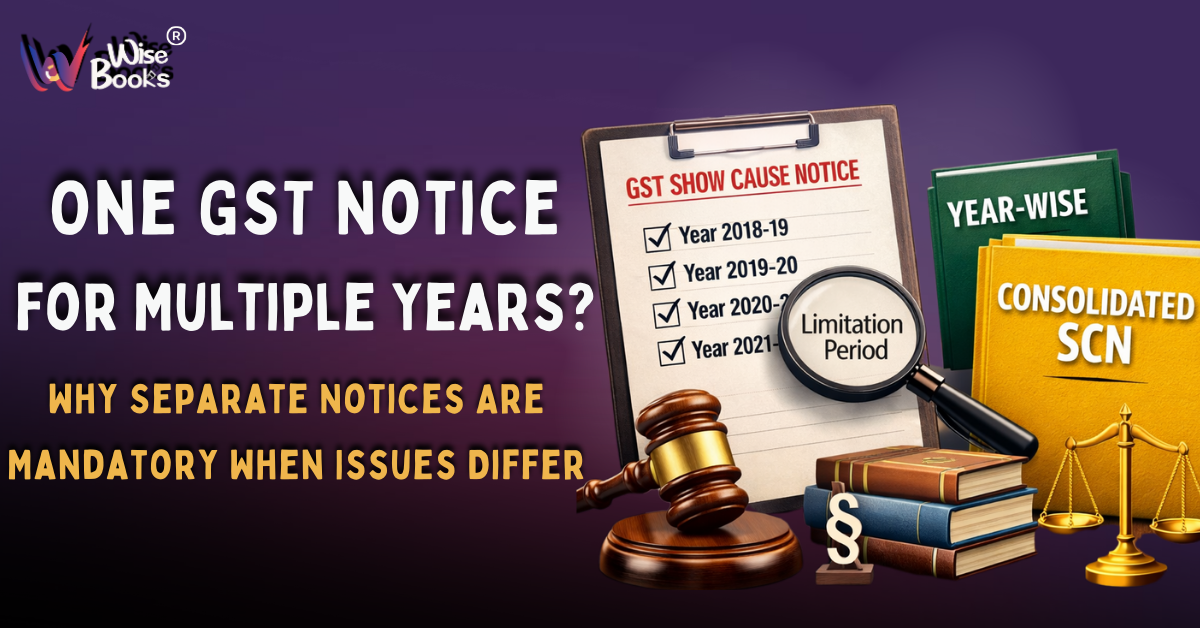
This article deals with a very practical and litigation-oriented issue frequently faced by tax professionals and their clients issuance of a single GST show cause notice (SCN) covering multiple financial years.
With the rise in departmental audits, DGGI investigations, intelligence-based actions and data analytics, issuance of consolidated GST notices spanning three to five financial years has become increasingly common. While such notices may appear administratively convenient, they raise serious legal concerns relating to limitation, natural justice, statutory compliance and procedural fairness.
Understanding the legality of such notices is critical for members to protect taxpayer rights and build strong procedural defences, often even before addressing merits.
Issue: Single GST Show Cause Notice Covering Multiple Financial Years
In actual practice, GST authorities often issue a single consolidated show cause notice (SCN) covering multiple financial years, particularly in matters involving:
- Disputes relating to classification of goods or services
- Valuation-related adjustments
- Alleged wrongful availment or reversal of Input Tax Credit (ITC)
- Alleged misuse of exemptions or concessional tax rates
Such consolidated notices generally arise pursuant to:
- Departmental audits
- Investigations conducted by the DGGI
- Intelligence-based scrutiny and data analytics
Why Authorities Resort to Consolidated Notices
From the departmental perspective, issuing a consolidated SCN is often driven by:
- Administrative convenience
- Reduction in drafting and adjudication effort
- Perceived efficiency in handling multiple years together
- An assumption of continuity of the issue across years
However, it is well settled that administrative convenience cannot override statutory requirements, limitation provisions, or the taxpayer’s procedural safeguards guaranteed under the GST law.
Relevant Statutory Framework under GST
Sections 73 and 74 of the CGST Act, 2017
Sections 73 and 74 of the CGST Act, 2017 constitute the statutory framework governing demand and recovery of tax under GST. These provisions mandate that:
- Tax liability must be computed financial year-wise
- Limitation periods apply independently to each financial year
- Allegations, facts, and where applicable intent must be examined separately for each year
Key Legal Principle
GST law does not envisage tax liability as a continuous or consolidated block across multiple years.
Each financial year is a distinct and self-contained unit of assessment.
Legal Implications
This statutory scheme necessarily entails:
- A separate cause of action for every financial year
- Independent limitation periods, running year-wise
- Distinct evaluation of facts, evidence, and intent, particularly in cases invoking extended limitation under Section 74
Accordingly, clubbing multiple financial years into a single proceeding without independent justification undermines the statutory design of the GST law.
Limitation: The Most Critical Legal Aspect
Limitation is often the most powerful procedural defence available to taxpayers in GST disputes. Even where issues are common across years, failure to satisfy limitation requirements can vitiate the entire demand.
Year-Wise Limitation under GST
Under the GST framework, limitation operates independently for each financial year. Specifically:
- Each financial year has a separate annual return due date
- The limitation period commences independently for each year
- There is no concept of a common or consolidated limitation period spanning multiple years
Impact of a Consolidated Show Cause Notice
When multiple years are clubbed into a single SCN:
- The notice may be within limitation for one year
- Yet time-barred for another year
- Even where the underlying issue is identical, limitation must be tested separately for each financial year
Accordingly, a consolidated SCN is vulnerable to challenge on the ground of partial or complete time-bar.
Extended Limitation under Section 74
Invocation of extended limitation under Section 74 is subject to strict conditions:
- Extended limitation cannot be presumed across multiple years
- It must be specifically pleaded and established year-wise
- Allegations of:
i. Suppression of facts
ii. Willful misstatement
iii. Fraud
Do not automatically carry forward from one year to another
Courts have consistently held that extended limitation must independently survive scrutiny for each financial year, and failure to do so renders the demand unsustainable.
Principles of Natural Justice
Natural justice is not a mere procedural formality; it is a constitutional safeguard that underpins all quasi-judicial proceedings under the GST law. Compliance with these principles is mandatory at the very inception of demand proceedings.
Essentials of a Valid Show Cause Notice
A legally sustainable show cause notice must:
- Contain clear, specific, and unambiguous allegations
- Disclose the precise facts and supporting evidence
- Provide proper year-wise computation of tax, interest, and penalty
- Enable the taxpayer to effectively understand, rebut, and defend the allegations
Deficiencies in Consolidated Show Cause Notices
Consolidated notices covering multiple financial years often suffer from serious infirmities, such as:
- Omnibus and generalized allegations
- Vague or repetitive assertions without year-wise particulars
- Combined or overlapping computations
- Practical difficulty in preparing an effective year-wise defence
Such defects directly impair the taxpayer’s right to a fair hearing and undermine the ability to respond meaningfully, rendering the notice vulnerable to judicial challenge on the ground of violation of principles of natural justice.
GST Demand Process: Why the SCN Stage Is Critical
The GST demand process generally follows a sequential flow:
1. Audit or Investigation
2. Issuance of Show Cause Notice (SCN)
3. Adjudication
4. Appeal or Writ Petition
Among these stages, the SCN forms the very foundation of the entire proceeding.
Any defect at this stage particularly relating to:
- Limitation
- Vagueness or ambiguity
- Improper clubbing of multiple financial years
has the potential to vitiate the entire chain of proceedings, irrespective of the substantive merits of the case.
In practice, carefully scrutinizing the SCN before filing a reply can often provide taxpayers with strong procedural grounds to challenge the notice or protect their rights.
Judicial Approach on Consolidated GST Notices
Courts have consistently taken a balanced yet rigorous stance on consolidated GST show cause notices covering multiple financial years.
General Judicial Position
- Consolidated notices are not automatically illegal, but their validity is conditional.
- Mechanical or convenience-driven consolidation done purely for administrative ease is discouraged.
- Statutory safeguards, including limitation and principles of natural justice, must be strictly observed.
Key Judicial Trends
- Each financial year is treated as an independent unit of assessment, requiring separate scrutiny.
- Limitation periods cannot be diluted or ignored for administrative convenience.
- Natural justice cannot be compromised, even if issues appear similar across years.
- While substance is important, courts emphasize that procedure must not be neglected.
Consequences of Procedural Defects
Courts have frequently quashed consolidated notices where they find:
- Prejudice to the taxpayer
- Non-application of mind by the authority
- Failure to consider taxpayer replies
- Improper limitation analysis
In such cases, courts often set aside the notice but allow the department to re-initiate proceedings lawfully, ensuring due process is observed.
Risk Comparison: Single vs. Consolidated Notices
Litigation Risks in Consolidated SCNs
Consolidated show cause notices spanning multiple financial years inherently carry greater procedural risk for the issuing authority, while providing potential strategic advantages for taxpayers. Key risks include:
- Higher exposure to writ petitions or judicial review, due to procedural infirmities
- Stronger limitation-based objections, since each year must independently satisfy limitation requirements
- Violations of natural justice, arising from vague or omnibus allegations
- Increased likelihood of partial or total quashing by courts
From a litigation strategy perspective, consolidated notices frequently provide taxpayers with robust procedural grounds to challenge the SCN, even in cases where the underlying tax liability may be substantively debatable.
Best Practices for Members
Tax professionals and members should exercise caution before accepting consolidated GST notices at face value. Proper analysis at the SCN stage can significantly strengthen procedural defenses and protect taxpayer rights.
Recommended Approach
- Prefer year-wise notices wherever possible to ensure clarity and compliance with statutory safeguards
- If a consolidated notice is received:
i. Insist on clear, year-wise segregation of tax, interest, and penalties
ii. Test limitation periods independently for each financial year
iii. Scrutinize any invocation of extended limitation under Section 74 on a year-by-year basis
iv. Identify procedural prejudice arising from the clubbing of multiple years
v. Raise procedural objections at the earliest opportunity, ideally in the reply to the SCN
In practice, procedural grounds such as limitation, vagueness, or natural justice violations often succeed even when the substantive merits of the case are disputed, providing taxpayers with strong leverage in litigation or adjudication.
Conclusion
The issuance of a single GST show cause notice covering multiple financial years is not automatically invalid, but its legal sustainability depends on strict adherence to statutory safeguards.
Key takeaways for tax professionals and members are:
- Limitation and natural justice are decisive factors; failure to respect these can render a notice partially or fully invalid.
- Each financial year constitutes a separate cause of action and must be treated independently in terms of computation, limitation, and evidentiary analysis.
- Consolidated notices, while convenient for authorities, carry heightened procedural risk, which taxpayers can strategically leverage.
- Procedural defenses often succeed even when substantive merits are debatable, emphasizing the importance of careful scrutiny at the SCN stage.
- Members must adopt a disciplined, year-wise approach to examining notices, raising objections, and framing replies, thereby safeguarding statutory rights and ensuring compliance with due process.
Ultimately, the legality of a consolidated GST notice is conditional, not absolute, and taxpayers’ rights to fair hearing, clarity of allegations, and independent limitation for each year must always be protected. A strong procedural defense is often the first and most effective line of protection against improperly drafted or convenience-driven notices.


Comments
??????????? ??????? ?????? ???????? ??????? ?????? ?????????? ?????? — [url=https://jokgqeoiuweguoi.icu/]??????? ???-??????[/url], ????? ????? ? ??????? ????????????????? ???-??????? ??????.
????????????? ?????? ??????? ?????? ???-????????, ?? ?????????? ?????? ?????? ?????????. ? ???????? ???????????? ??????? ?? ????????????????????? ?????, ??? ????, ?? ? ??, ?? ?????????????? ?? ??????????? ????? ?????? ????????.
??????? ???????? ??????? — ???????? ?????? ????? ????? ??? ????????????, ??? ??????? ????????? ??????? ????? ?? ????-???? ????: ??-?? ?????????? ?????? ?? ????????? ????? ?? ???????? ?????????? ??????????, ?????????? ????????, ???????? ??????, ??????????? ?????????? ?? ?????????.
????????????? ????????? ???????????? ?? ???????? ??????????? ?? ??????? ?? ??????????? ? ???????? ??????? ??????????, ???????????? ???? ?? ??????-??????????, ??? ???????? ???? ????????? ? ?????????????? ???????? ???????
??????? ?????????????? ????? — ???????. [url=https://iqvel.com/ru/a/%D0%A1%D0%A8%D0%90/%D0%9A%D0%B0%D0%BD%D1%8C%D0%BE%D0%BD%D0%BB%D0%B5%D0%BD%D0%B4%D1%81]??????????? ???????????? ????[/url] ????, ??? ?????????? ???????? ??????. ??? ?????? ?????? ? ?????? ?????????. ??? ???????.