


Introduction
India’s financial and economic landscape is once again witnessing important policy discussions and strategic announcements from Finance Minister Nirmala Sitharaman. Over the past few days, the government has highlighted several critical areas impacting businesses, investors, MSMEs, and the overall economy.
From rising fuel prices and taxation concerns to MSME financing support and capital gains tax discussions, these developments indicate how the government is preparing to manage economic pressure while maintaining fiscal stability.
For finance professionals, accountants, business owners, and investors, understanding these announcements is essential because they directly affect taxation, operational costs, compliance planning, and future investment decisions.
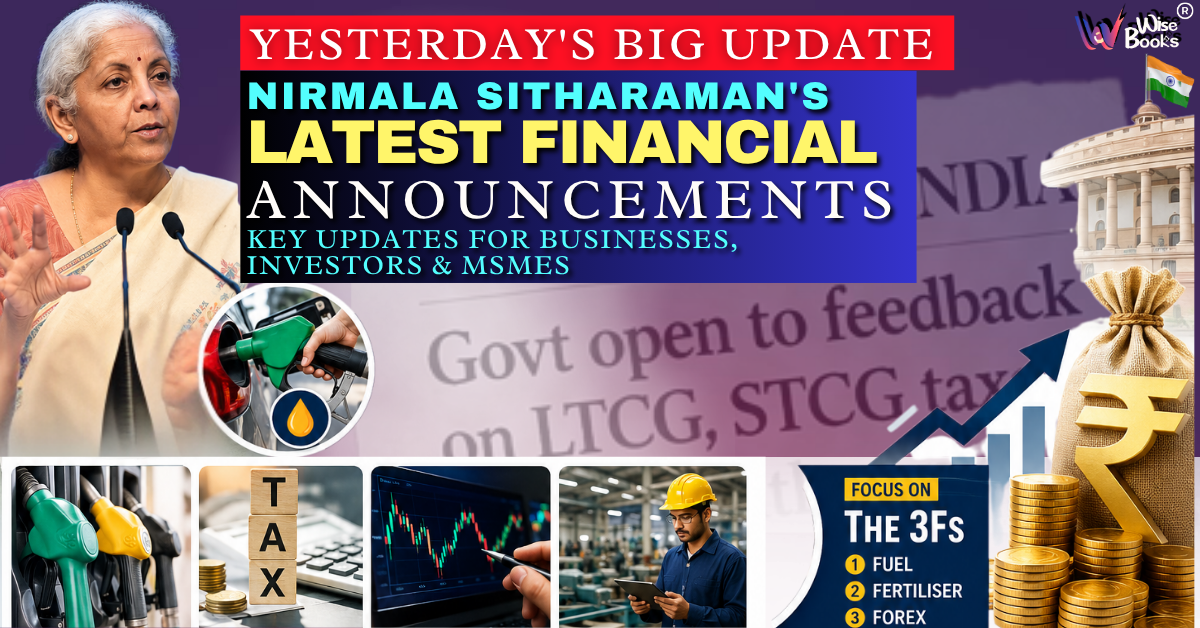
1. Government Focuses on the “3Fs” — Fuel, Fertiliser & Forex
One of the most discussed statements made recently by the Finance Minister was India’s focus on managing the “3Fs”:
- Fuel
- Fertiliser
- Forex (Foreign Exchange)
This announcement comes at a time when global geopolitical tensions and crude oil fluctuations are creating uncertainty in international markets.
Why Is Fuel a Major Concern?
India imports a significant portion of its crude oil requirements. When international crude oil prices rise:
- Petrol and diesel prices increase
- Transportation costs rise
- Logistics expenses increase
- Manufacturing becomes more expensive
- Inflation pressure grows across sectors
For businesses, especially MSMEs and manufacturing industries, higher fuel costs directly impact operational profitability.
Finance teams may also need to revise:
- Budget forecasting
- Cost management strategies
- Cash flow planning
- Pricing structures
2. Excise Duty Reduction Could Impact Government Revenue
Another major point highlighted was that reducing excise duty on petrol and diesel may lead to an estimated revenue loss of nearly ₹1 lakh crore for the government.
What Does This Mean?
The government faces a balancing challenge:
- Reducing fuel taxes may help consumers and businesses
- But lower tax collection can affect fiscal management and public expenditure
This situation is important for:
- Tax professionals
- Economists
- Corporate finance teams
- Policy analysts
If fuel taxes are reduced:
- Transportation sectors may benefit
- Inflation could ease slightly
- Consumer spending may improve
However, reduced government revenue could impact:
- Infrastructure spending
- Welfare schemes
- Fiscal deficit targets
3. Government Open to Feedback on LTCG & STCG Taxes
One of the most trending financial updates is the government’s openness to reviewing:
- Long-Term Capital Gains Tax (LTCG)
- Short-Term Capital Gains Tax (STCG)
Why Is This Important?
Capital gains taxes significantly affect:
- Investors
- Stock market participants
- Mutual fund investors
- High-net-worth individuals
- Startup founders
Recently, investors and market experts have been actively discussing whether current capital gains taxation requires simplification or revision.
The Finance Minister’s statement suggesting willingness to hear public feedback has created strong interest in the financial sector.
Possible Areas of Discussion
Experts believe discussions may involve:
- Tax rate rationalisation
- Holding period changes
- Simplified tax structures
- Investment encouragement policies
Impact on Investors
If future changes are introduced:
- Investment strategies may change
- Equity market participation could increase
- Tax planning methods may evolve
This is especially important for:
- Chartered accountants
- Wealth managers
- Financial advisors
- Investment professionals
4. New MSME Support & SIDBI Initiatives
The government also announced new initiatives focused on MSME growth and financing support.
Key Highlights
Recent discussions included:
- Strengthening MSME financing access
- SIDBI support initiatives
- ECLGS-related assistance
- Additional funding support mechanisms
Why MSMEs Matter
MSMEs contribute significantly to:
- Employment generation
- Manufacturing output
- Economic growth
- Exports
However, many MSMEs continue to face challenges such as:
- Limited access to credit
- Rising compliance costs
- Delayed payments
- Working capital pressure
The new support initiatives aim to improve financial accessibility and business sustainability.
5. India’s Economy Remains Resilient Amid Global Uncertainty
Despite global economic concerns, the Finance Minister emphasized that India’s economy remains resilient.
Current Global Challenges Include:
- Rising oil prices
- Inflationary pressure
- Global conflicts
- Currency fluctuations
- Supply chain disruptions
Yet India continues to maintain:
- Strong economic growth
- Stable financial systems
- Expanding digital infrastructure
- Increasing tax compliance digitisation
This confidence is important for:
- Foreign investors
- Domestic businesses
- Startups
- Financial institutions
What These Updates Mean for Businesses & Finance Professionals
These recent announcements highlight a larger transformation in India’s economic and compliance ecosystem.
Businesses Should Focus On:
Cost Optimisation
Rising fuel and operational costs require better budgeting and financial planning.
Tax Planning
Potential future tax changes may affect investment and corporate strategies.
Compliance Monitoring
Businesses should remain updated on GST, taxation, and financial policy developments.
Financial Automation
Modern finance teams increasingly need:
- Real-time reporting
- AI-based reconciliation
- Automated accounting systems
- Better cash flow visibility
Conclusion
The recent announcements by Finance Minister Nirmala Sitharaman indicate that India is entering a phase of tighter financial monitoring, strategic fiscal balancing, and stronger economic adaptation.
From fuel price management and taxation discussions to MSME support and investor-related tax feedback, these developments will influence:
- Businesses
- Finance departments
- Investors
- Tax professionals
- MSMEs
For companies and finance professionals, staying informed about these updates is no longer optional; it is becoming essential for strategic planning, compliance readiness, and financial stability in 2026.


Comments
No comments yet. Be the first to comment!