

India’s GST compliance ecosystem is continuously evolving toward greater digital tracking, automation, and real-time monitoring. After the introduction of e-Invoicing, Invoice Management System (IMS), AI-based GST scrutiny, and tighter Input Tax Credit verification, GSTN has now introduced another significant compliance development — the new E-Way Bill “Closure” mechanism.
Though currently introduced as a “voluntary” feature, tax professionals and industry experts believe this could gradually become an important compliance checkpoint for businesses involved in movement of goods across India.
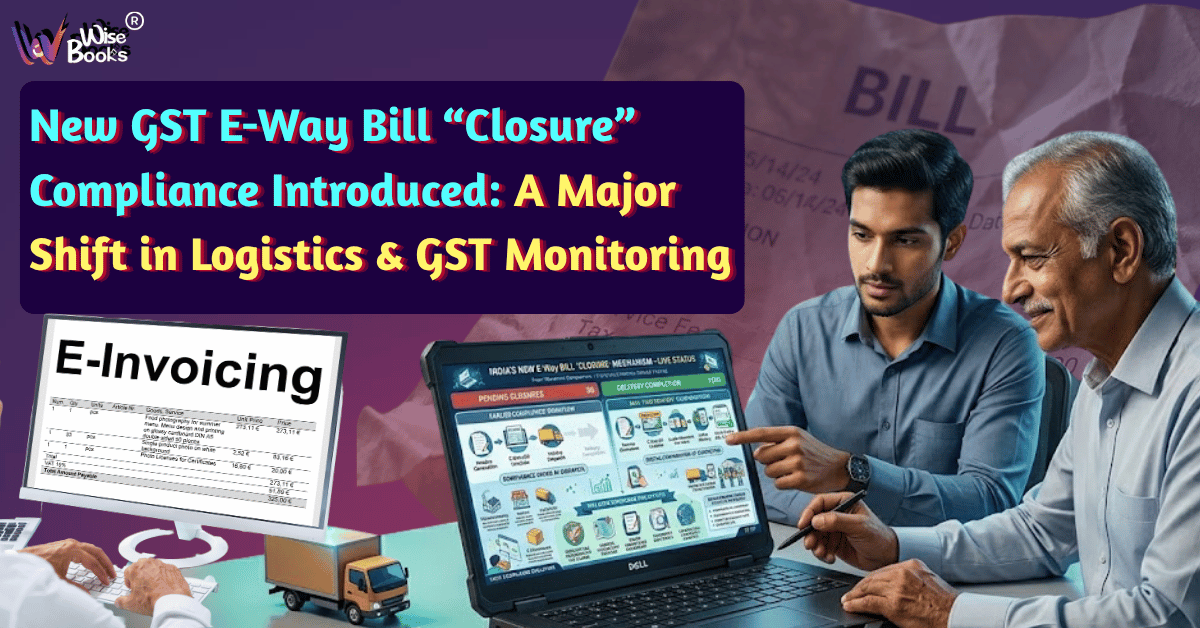
This update changes the traditional approach to E-Way Bill compliance. Earlier, compliance largely ended once the E-Way Bill was generated and goods were dispatched. Now, GSTN is moving toward tracking the complete lifecycle of goods transportation — from dispatch to final delivery confirmation and closure.
What Is the New E-Way Bill Closure Mechanism?
Under the newly introduced facility, taxpayers can now formally “close” an E-Way Bill after successful completion of delivery. This creates a digital confirmation that:
- Goods have reached the destination,
- Transportation has been completed,
- And the transaction cycle has ended.
Earlier, GST systems primarily tracked:
- Invoice generation,
- E-Way Bill creation,
- Vehicle details,
- And movement validity.
However, there was no official mechanism to confirm whether the delivery was actually completed. The new closure system aims to fill this gap by introducing an additional layer of delivery verification.
This indicates GSTN’s broader vision of creating an end-to-end transport tracking framework within the GST ecosystem.
Why Has GSTN Introduced This System?
The government’s increasing focus on digital compliance and anti-tax evasion mechanisms is the key reason behind this update.
Over the years, GST authorities have identified several issues such as:
- Fake E-Way Bills,
- Bogus transportation records,
- Circular trading,
- Fake Input Tax Credit claims,
- And paper-based movement of goods without actual delivery.
In many fraudulent cases, invoices and E-Way Bills were generated merely to pass ITC benefits without genuine supply of goods.
The new closure mechanism is expected to help authorities:
- Improve traceability of goods movement,
- Verify completion of delivery,
- Reduce fake transport documentation,
- And strengthen audit trails.
This system also aligns with GSTN’s growing use of:
- Artificial Intelligence,
- Predictive analytics,
- And automated compliance monitoring.
Major Changes Introduced Under the New System
1. Introduction of E-Way Bill Closure
Businesses can now digitally mark an E-Way Bill as “closed” once transportation and delivery are completed.
This effectively extends GST compliance beyond dispatch.
Now, authorities may eventually track:
- When goods were dispatched,
- How long transportation took,
- And whether delivery was completed properly.
2. Mandatory “Ship To GSTIN” Requirement
One of the major linked changes is that in Bill-To / Ship-To transactions, entering the “Ship To GSTIN” has now become mandatory during E-Way Bill generation.
If the recipient is unregistered, taxpayers are required to enter “URP” (Unregistered Person).
This update aims to:
- Improve consignee identification,
- Reduce fake delivery addresses,
- Strengthen recipient verification,
- And improve ITC matching accuracy.
3. Increased Role of Transporters & Logistics Teams
Earlier, transporters mainly handled:
- Vehicle movement,
- And transport documentation.
Now, transporters and logistics personnel may become part of the compliance workflow itself.
Businesses may need stronger coordination with:
- Transporters,
- Warehouse teams,
- Drivers,
- And recipients
to ensure timely EWB closure and delivery confirmation.
How This Changes GST Compliance
The E-Way Bill system is now moving from:
“Movement compliance”
to:
“Delivery lifecycle compliance.”
Earlier workflow:
Invoice → E-Way Bill → Goods Movement
New workflow:
Invoice → E-Way Bill → Transit → Delivery → Closure
This means compliance responsibility no longer ends at dispatch.
Businesses may now need to maintain:
- Delivery proof,
- Transporter acknowledgments,
- Warehouse confirmations,
- Customer receipt records,
- And closure tracking systems.
Practical Impact on Businesses
The operational impact of this update could be significant, especially for businesses with large logistics operations.
Businesses May Need To:
- Monitor pending/open E-Way Bills,
- Track delivery timelines,
- Coordinate with transporters,
- Maintain closure records,
- And integrate closure workflows into ERP systems.
Large enterprises may need:
- Automated delivery tracking,
- ERP integration,
- Transport management software updates,
- GPS-linked logistics systems,
- And dashboard-based EWB monitoring.
Industries Likely to Be Highly Impacted
Manufacturing Sector
High-volume dispatches may require stronger reconciliation systems.
FMCG & Retail
Frequent movement of goods may increase compliance coordination.
Textile Industry
Multi-location dispatches and job-work transport chains may face tighter scrutiny.
E-Commerce
Complex logistics networks may require automated closure systems.
Logistics & Transport Companies
Transporters may increasingly become compliance participants rather than only service providers.
Risk of Future GST Notices
Although currently termed voluntary, experts believe non-closure or abnormal EWB patterns may eventually become risk indicators for GST authorities.
Potential scrutiny triggers may include:
- E-Way Bills remaining open for long periods,
- Delayed closures,
- Mismatch between invoice and delivery timelines,
- Suspicious transport patterns,
- And repeated inconsistencies.
In future, GSTN may use AI systems to:
- Identify unusual movement patterns,
- Flag fake transactions,
- Detect circular trading,
- And initiate automated compliance notices.
ERP & Technology Implications
Businesses using:
- SAP,
- Tally,
- Oracle,
- Zoho,
- or custom ERP systems
may need to introduce:
- EWB closure modules,
- Delivery status tracking,
- Automated alerts,
- Transporter integration,
- And pending closure dashboards.
This update may also accelerate:
- Digital logistics transformation,
- Automation in warehouse management,
- And integration of GST compliance with supply chain systems.
Existing Tightened E-Way Bill Rules Businesses Must Remember
Alongside this closure mechanism, GSTN has already implemented stricter EWB rules such as:
180-Day Invoice Restriction
E-Way Bills cannot be generated for invoices older than 180 days.
360-Day Validity Extension Cap
EWB validity extension cannot exceed 360 days from original generation.
Blocking of EWB Generation
Taxpayers with continuous GST return defaults may face EWB generation restrictions.
These changes collectively indicate stricter transport monitoring under GST.
What Businesses Should Do Now
To stay prepared, businesses should begin strengthening internal logistics compliance systems.
Recommended Action Steps:
- Maintain proper Proof of Delivery (POD)
- Track all open and pending E-Way Bills
- Coordinate closely with transporters
- Create internal EWB closure SOPs
- Integrate delivery workflows into ERP systems
- Reconcile invoices, e-Invoices, and EWBs regularly
- Ensure accurate “Ship To GSTIN” entry
- Train logistics and dispatch teams on the new process
Conclusion
The new GST E-Way Bill Closure mechanism represents a major shift in India’s tax compliance environment. While currently introduced as a facilitation feature, it signals GSTN’s long-term intention to create a fully traceable and digitally monitored supply chain ecosystem.
The compliance focus is now expanding beyond invoice generation and goods dispatch toward complete delivery verification and transaction lifecycle monitoring.
Earlier, compliance ended with:
“Generate E-Way Bill.”
Now, the process is evolving into:
“Generate → Transport → Deliver → Confirm → Close.”
Businesses that proactively strengthen logistics coordination, ERP systems, and delivery tracking mechanisms will be better prepared for the next phase of AI-driven GST compliance in India.


Comments
No comments yet. Be the first to comment!