


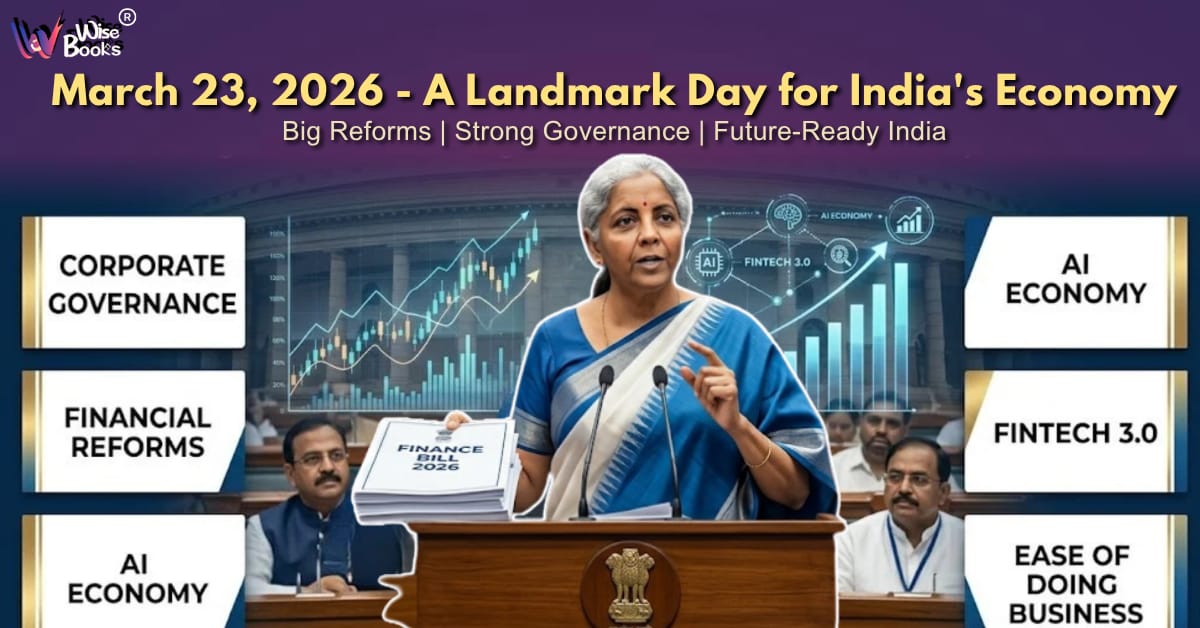
Introduction: A Turning Point in India’s Economic Policy
Yesterday, March 23, 2026, marked a historic milestone for India’s corporate and financial ecosystem. During the second phase of the Budget Session, Finance Minister Nirmala Sitharaman presented a series of crucial bills and policy statements in Parliament.
These developments are not just routine legislative updates, they represent a strategic shift aimed at modernizing India’s business environment, enhancing regulatory clarity, and strengthening investor confidence.
Strengthening Corporate Governance Framework
One of the key highlights of the session was the government’s focus on improving corporate governance standards.
What’s Changing?
- Stricter compliance requirements for companies
- Enhanced transparency in financial disclosures
- Greater accountability for directors and key managerial personnel
Why It Matters
Corporate governance has long been a concern in emerging markets. By tightening regulations, the government aims to:
- Build investor trust
- Reduce instances of fraud and mismanagement
- Align Indian standards with global best practices
Impact on Businesses
- Companies will need to strengthen internal controls
- Increased compliance costs in the short term
- Long-term benefit: improved credibility and valuation
Boost to Financial Sector & Capital Markets
Another major focus area was the strengthening of India’s financial system, particularly banking and capital markets.
Key Developments
- Measures to improve credit flow to MSMEs
- Policy support for capital market expansion
- Encouragement for retail and institutional participation
Strategic Objective
The government aims to:
- Deepen financial inclusion
- Strengthen liquidity in markets
- Support economic growth through easier access to capital
Practical Impact
- Easier funding opportunities for startups and SMEs
- Increased participation in equity markets
- Stronger financial ecosystem
Regulatory Simplification & Ease of Doing Business
A major theme across the announcements was simplification of regulations.
What’s Being Simplified?
- Reduction in redundant compliance requirements
- Streamlining of approval processes
- Digitalization of regulatory frameworks
Why This is Critical
India has historically faced challenges with:
- Complex legal frameworks
- Lengthy approval timelines
The new reforms aim to:
- Make India a more attractive destination for investment
- Reduce bureaucratic hurdles
- Improve global ease of doing business rankings
Forward-Looking Policy Approach
The session clearly reflected a future-ready policy mindset, focusing on the "Amrit Kaal" goals of 2047. The session clearly reflected a future-ready policy mindset.
Focus Areas
- The AI Economy: Special incentives for companies investing in Sovereign AI and indigenous data centers.
- FinTech 3.0: Moving beyond UPI to Programmable Money (CBDC - Central Bank Digital Currency) that can ensure subsidies are spent only on their intended purposes (e.g., fertilizer subsidies only for fertilizers).
- The Startup Exit Route: Simplifying the merger and acquisition (M&A) process so that founders can exit or consolidate without years of litigation.
Government’s Vision
The vision is a "Borderless Digital Economy." By building the world’s best Digital Public Infrastructure (DPI), India is not just catching up with the West; it is setting the global standard for how a government can interact with its citizens and businesses. The reforms indicate a shift towards:
- Technology-driven governance
- Data-backed decision-making
- Sustainable and inclusive growth
Conclusion
March 23, 2026, stands out as a defining moment in India’s economic reform journey, signaling a clear shift towards a more transparent, efficient, and future-ready business environment. The announcements made during the Budget Session reflect the government’s strong intent to simplify regulations, strengthen corporate governance, and boost the financial ecosystem while embracing emerging areas like AI, FinTech, and digital infrastructure. These reforms are not just policy changes—they are a roadmap for long-term growth, innovation, and global competitiveness. For businesses, investors, and professionals alike, adapting early to these changes will be key to unlocking new opportunities and staying ahead in India’s evolving economic landscape.
Frequently Asked Questions (FAQs)
Q1. Why is March 23, 2026 considered a landmark day for India’s financial sector?
Ans: March 23, 2026 is considered significant because Finance Minister Nirmala Sitharaman presented key bills and policy statements during the Budget Session that aim to transform India’s corporate governance, financial systems, and regulatory framework, marking a major step toward a modern and investor-friendly economy.
Q2. What changes are proposed in corporate governance?
Ans: The government has proposed stricter compliance requirements, enhanced transparency in financial disclosures, and increased accountability of directors and key managerial personnel to improve governance standards and reduce fraud.
Q3. How will these reforms impact businesses?
Ans: Businesses will need to adopt stronger internal controls and comply with stricter regulations. While this may increase compliance costs in the short term, it will lead to higher credibility, better valuations, and improved investor trust in the long run.
Q4. What steps are being taken to strengthen the financial sector?
Ans: The government is focusing on improving credit flow to MSMEs, expanding capital markets, and encouraging both retail and institutional participation to create a stronger and more inclusive financial ecosystem.
Q5. How will startups and MSMEs benefit from these changes?
Ans: Startups and MSMEs will benefit from easier access to funding, improved credit availability, and simplified regulatory processes, which will support growth and innovation.
Q6. What does regulatory simplification mean in this context?
Ans: Regulatory simplification refers to reducing unnecessary compliance requirements, streamlining approval processes, and promoting digital systems to make business operations smoother and faster.
Q7. Why is ease of doing business a key focus area?
Ans: Simplifying regulations and reducing bureaucratic hurdles will make India more attractive to investors, improve global rankings, and encourage domestic and foreign investments.
Q8. What is the government’s vision behind these reforms?
Ans: The government aims to build a technology-driven, transparent, and inclusive economy, aligned with long-term goals of “Amrit Kaal” and positioning India as a global leader in digital public infrastructure.
Q9. What role will technology play in future policies?
Ans: Technology will play a central role through initiatives like AI economy development, digital governance, data-driven decision-making, and advanced financial systems such as CBDC and FinTech innovations.
Q10. How will these reforms affect investors?
Ans: Investors will benefit from improved transparency, stronger governance, better regulatory clarity, and increased opportunities in capital markets, leading to higher confidence in the Indian economy.
Q11. What is the biggest takeaway from these reforms?
Ans: The biggest takeaway is that India is shifting towards a simpler, digital-first, and globally competitive economic system, where compliance is clearer, opportunities are broader, and growth is more sustainable.


Comments
No comments yet. Be the first to comment!