


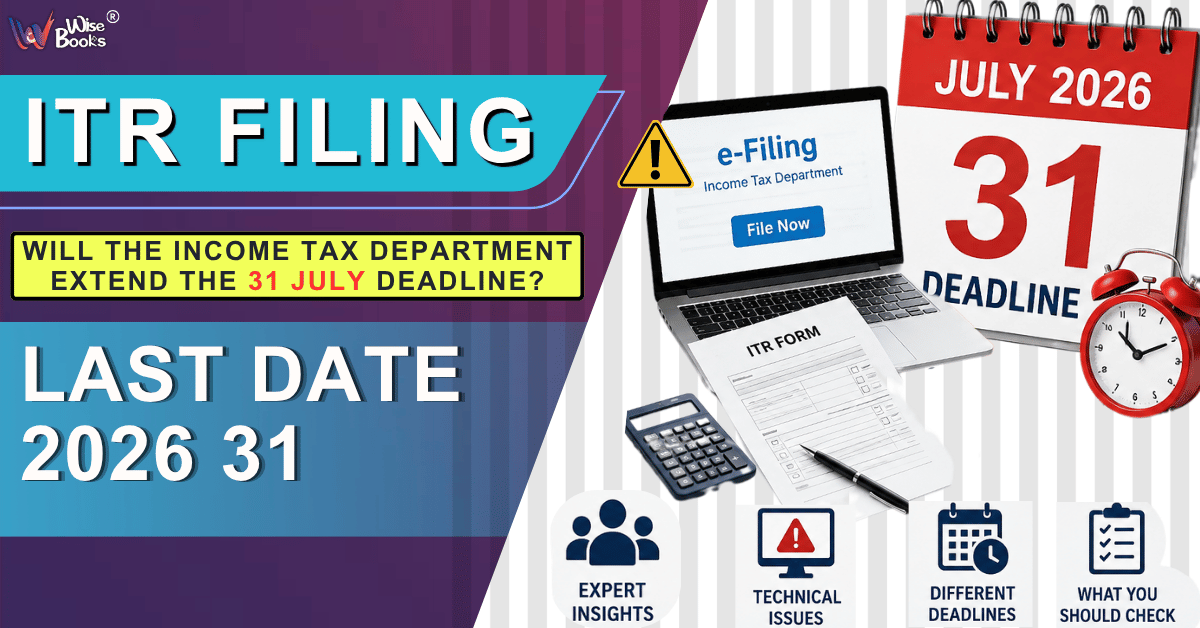
As the ITR filing deadline approaches, many taxpayers are asking one important question: Will the Income Tax Department extend the 31 July 2026 deadline?
With some taxpayers reporting technical issues while filing ITR forms, discussions around a possible extension have increased. However, experts believe that taxpayers should not depend on an extension and should continue preparing their returns based on the current due date.
The possibility of an extension cannot be completely ruled out, but there is currently no official announcement extending the deadline. Therefore, taxpayers should avoid waiting until the last moment.
Is the ITR Deadline Likely to Be Extended?
According to tax experts quoted in the Economic Times report, the chances of a general extension currently appear limited.
One of the major reasons is that the Income Tax Department released the ITR forms and filing utilities earlier than in the previous year. This has given taxpayers more time to prepare and file their returns.
Experts have also pointed out that the filing process has been relatively smoother this year. Although some taxpayers have reported technical issues, these problems have not yet been considered widespread enough to justify a blanket extension.
However, if major portal disruptions continue during the final days and prevent a large number of taxpayers from filing their returns, the government may consider a short extension.
Why Did the Deadline Get Extended Last Year?
The situation was different in the previous filing season.
The deadline was extended because taxpayers faced delays in the availability of ITR forms and filing utilities. Changes in tax rules and technical requirements also created additional challenges.
This year, the forms and utilities were made available earlier, which has helped distribute the filing load over a longer period.
This is one of the main reasons experts believe that an extension may be less likely this time.
What About Technical Issues on the Income Tax Portal?
Some taxpayers have reported difficulties related to the e-filing portal, including issues involving Form 26AS, AIS information, validation, and portal functionality.
One expert suggested that the government should either resolve these issues quickly or consider a short extension if the problems continue during the final days.
However, other experts believe that minor or isolated technical issues may not be enough to justify extending the deadline. A major and widespread disruption would likely be required before the government considers a general extension.
Different ITR Deadlines May Reduce Portal Pressure
Another important factor is that not every taxpayer has the same ITR filing deadline.
The 31 July deadline generally applies to salaried individuals, pensioners, and other taxpayers who are not required to get their accounts audited.
Certain taxpayers with business or professional income may have a later deadline, depending on the applicable ITR form and filing requirements. The separate deadline helps distribute the filing load and may reduce last-minute pressure on the Income Tax portal.
This staggered filing system is also one reason why experts expect the portal to remain relatively stable.
Should You Wait for an Extension?
The simple answer is no.
Taxpayers should not delay their ITR filing based on the expectation that the deadline may be extended.
Waiting can create several problems:
- The portal may become slower as the deadline approaches.
- Last-minute technical issues may delay submission.
- Errors may be missed because there is less time for review.
- Taxpayers may not have enough time to correct missing information.
- An extension may not be announced at all.
Even if an extension is later granted, filing early can help taxpayers avoid unnecessary stress and reduce the risk of last-minute mistakes.
What Should You Check Before Filing Your ITR?
Before submitting your return, review the following information carefully:
- Verify your income details.
- Check Form 26AS and the Annual Information Statement (AIS).
- Confirm that TDS details are correctly reflected.
- Review deductions and exemptions.
- Select the correct ITR form.
- Check your tax calculation under the applicable tax regime.
- Verify your bank account and refund details.
- Complete the ITR verification process after filing.
Taking time to review these details can help reduce errors and avoid the need to revise the return later.
Conclusion
The possibility of an ITR deadline extension cannot be completely ruled out, especially if major technical problems affect a large number of taxpayers. However, based on the current expert views, a general extension of the 31 July 2026 deadline appears unlikely.
The Income Tax Department has made the filing process available earlier, and separate deadlines for different taxpayer categories may have reduced pressure on the portal.
Taxpayers should therefore treat the current due date as final unless an official extension is announced.
Do not wait for a possible extension. Review your tax information, complete your ITR carefully, and file it before the applicable deadline.


Comments
No comments yet. Be the first to comment!