


Imagine running a manufacturing business where your monthly electricity bill suddenly increases by 20%. Fuel expenses for transporting goods become more expensive, suppliers raise their prices, and production costs continue to rise. Even though your sales remain stable, your profit margin begins to shrink.
Now imagine this happening not just to one company, but to thousands of businesses across India.
This is one of the biggest economic questions surrounding India's energy transition.
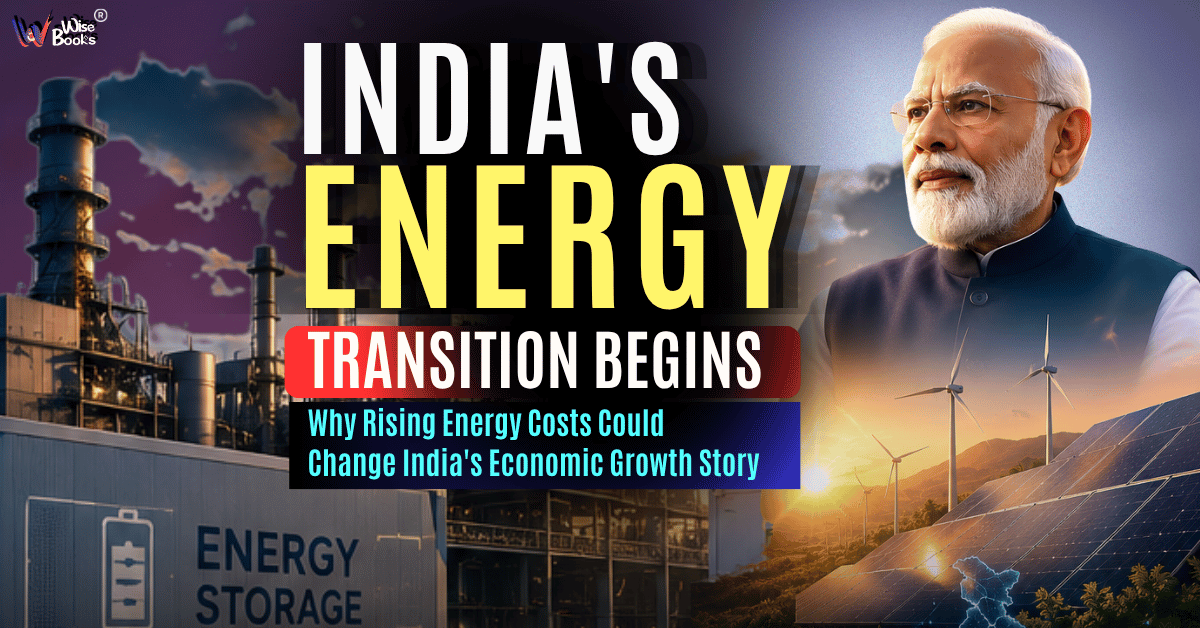
India is steadily moving away from fossil fuels toward renewable energy such as solar, wind, green hydrogen, and electric mobility. While this transition is essential for long-term sustainability and energy security, it also brings short-term financial and economic challenges.
One of the most important among them is the possibility of rising energy costs during the transition period.
For businesses, investors, policymakers, and consumers, understanding this shift is becoming increasingly important because energy influences almost every sector of the economy.
What Is India's Energy Transition?
Energy transition refers to the gradual shift from conventional energy sources like coal, crude oil, and natural gas to cleaner and renewable sources of energy.
India's transition includes:
i. Large-scale solar power generation
ii. Expansion of wind energy
iii. Green hydrogen production
iv. Electric vehicles
v. Battery energy storage systems
vi. Smart electricity grids
vii. Cleaner industrial technologies
The objective is not only to reduce carbon emissions but also to improve India's energy independence by reducing dependence on imported fossil fuels.
However, transforming an energy system that serves more than 1.4 billion people requires enormous planning, investment, and infrastructure development.
Why Energy Is the Foundation of Economic Growth
Energy is often called the backbone of an economy because every economic activity depends on it.
Factories require electricity to operate machinery.
Farmers need power for irrigation.
Hospitals depend on uninterrupted electricity.
Transport companies rely on fuel.
IT companies operate massive data centres that consume huge amounts of power.
Even online shopping depends on warehouses, logistics, and transportation—all powered by energy.
Affordable energy allows businesses to produce goods at lower costs, remain competitive, and expand operations. When energy prices remain stable, inflation also tends to remain under control.
This is one of the reasons why energy policy plays such an important role in a country's economic strategy.
Why Energy Costs May Rise During the Transition
Many people assume renewable energy automatically reduces electricity costs.
While renewable generation has become cheaper over the years, the transition itself requires significant investment.
Several factors contribute to rising costs during this period.
1. Massive Infrastructure Development
Renewable energy needs an entirely different ecosystem.
India must build:
- New transmission lines
- Smart electricity grids
- Battery storage facilities
- Electric vehicle charging stations
- Renewable power parks
These projects require substantial capital before they begin delivering long-term savings.
2. Dependence on Imported Technology
Although India is increasing domestic manufacturing, many clean-energy technologies still rely on imported components.
These include:
- Solar panels
- Lithium-ion batteries
- Rare earth minerals
- Semiconductor chips
- High-efficiency power equipment
Fluctuations in global prices and exchange rates can temporarily increase project costs.
3. Industries Must Modernize
Businesses cannot simply switch from fossil fuels to renewable energy overnight.
Manufacturing plants often require:
- New machinery
- Energy-efficient production systems
- Electrification of industrial processes
- Upgraded technology
These investments increase operating expenses in the short term but improve efficiency over time.
4. Renewable Energy Needs Reliable Backup
Solar energy generates electricity only during daylight hours, while wind energy depends on weather conditions.
To ensure uninterrupted power supply, India must invest in battery storage, pumped hydro systems, and smart grid technologies.
These reliability measures are essential but add to overall infrastructure costs.
How Rising Energy Costs Affect Businesses
Energy is one of the largest operating expenses for many industries.
When electricity or fuel becomes more expensive, businesses experience higher production costs.
Energy-intensive sectors such as manufacturing, steel, cement, chemicals, textiles, logistics, and data centres may see greater financial pressure.
Companies often respond by:
- Improving energy efficiency
- Investing in automation
- Installing rooftop solar systems
- Negotiating long-term energy contracts
- Optimizing supply chains
- Passing part of the increased cost to customers
Businesses that manage energy efficiently may gain a competitive advantage in the coming years.
The Impact on Inflation
Energy prices influence the cost of almost everything.
If transportation costs increase, food prices may rise.
If manufacturing costs increase, consumer products become more expensive.
If electricity costs increase, service providers may adjust their pricing.
As a result, higher energy costs can contribute to inflation, reducing consumers' purchasing power and increasing the cost of living.
This makes energy policy closely linked to monetary policy and economic planning.
New Opportunities Emerging from the Transition
While the transition creates challenges, it also opens the door to entirely new industries.
Some of the fastest-growing sectors include:
Renewable Energy Manufacturing
India is investing in domestic production of solar panels, wind turbines, batteries, and clean-energy equipment.
Green Hydrogen
Green hydrogen has the potential to transform heavy industries such as steel, fertilizers, and shipping by providing a low-carbon fuel alternative.
Electric Mobility
The expansion of electric vehicles creates opportunities in battery manufacturing, charging infrastructure, vehicle servicing, and recycling.
Energy Storage
Battery technology is becoming a critical component of India's future energy system.
Sustainable Finance
Banks, NBFCs, investors, and financial institutions are increasingly funding renewable energy and ESG-focused projects, creating new investment opportunities.
What Should Businesses Do?
Instead of waiting for rising energy costs to affect profitability, businesses should begin preparing today.
Some practical steps include:
- Conducting energy audits
- Investing in energy-efficient equipment
- Exploring rooftop solar installations
- Monitoring electricity consumption
- Optimizing logistics and transportation
- Evaluating government incentives for renewable investments
- Including energy costs in long-term financial planning
Companies that adapt early are likely to remain more competitive as India's energy landscape evolves.
Why This Matters for India's Long-Term Growth
India's energy transition is not simply about replacing one source of energy with another.
It is about building an economy that is more sustainable, resilient, and less dependent on imported fossil fuels.
If managed efficiently, the transition could:
- Improve energy security
- Create millions of new jobs
- Reduce import bills
- Encourage innovation
- Strengthen manufacturing
- Attract global investment
- Support long-term economic growth
However, if rising costs are not managed carefully, businesses and consumers could face temporary financial pressure.
The success of India's next phase of growth will therefore depend on balancing sustainability with affordability.
Final Thoughts
India's energy transition marks one of the most significant economic transformations of the decade.
The journey toward cleaner energy will require investment, innovation, and careful policy planning. While businesses may experience higher costs during the transition, they also have an opportunity to become more efficient, sustainable, and competitive.
For business owners, investors, and finance professionals, understanding these changes is no longer optional—it is becoming an essential part of strategic planning.
The future of India's economy will not depend solely on how much energy it produces, but on how efficiently, sustainably, and affordably that energy powers businesses, industries, and households.
Frequently Asked Questions (FAQs)
1. What is India's energy transition?
India's energy transition is the shift from fossil fuels such as coal and oil to cleaner energy sources like solar, wind, green hydrogen, and electric mobility.
2. Why could energy costs rise during the transition?
Large investments in renewable infrastructure, storage systems, grid modernization, and imported technology can increase costs before long-term savings are achieved.
3. Which industries are most affected?
Manufacturing, steel, cement, chemicals, logistics, textiles, mining, and data centres are among the most energy-intensive sectors.
4. What opportunities does the transition create?
It supports growth in renewable manufacturing, battery technology, green hydrogen, electric vehicles, sustainable finance, and clean technology services.
5. How can businesses prepare?
Businesses can improve energy efficiency, adopt renewable energy, optimize operations, and include energy planning in their long-term financial strategy.


Comments
No comments yet. Be the first to comment!