


Introduction
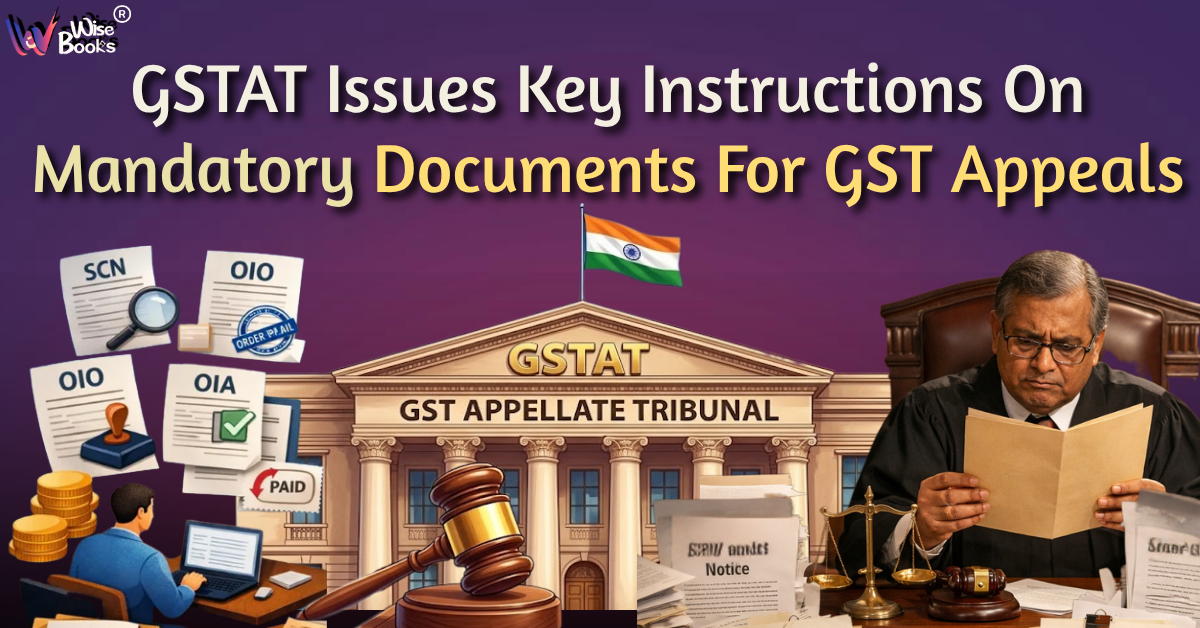
The Goods and Services Tax Appellate Tribunal (GSTAT) has recently introduced important procedural clarifications regarding the documentation required while filing appeals. These instructions are aimed at minimizing filing defects, improving scrutiny efficiency, and ensuring faster disposal of cases.
For taxpayers, professionals, and businesses, this update highlights the importance of submitting a complete and accurate set of documents at the time of appeal filing.
Mandatory Documents for Filing GSTAT Appeals
While filing an appeal through Form GST APL-05, appellants are required to upload soft copies of all essential documents to ensure a complete and defect-free submission. The key documents include:
- Show Cause Notice (SCN)
- Order-in-Original (OIO)
- Order-in-Appeal (OIA)
- Statement of Facts
- Grounds of Appeal
In addition to these, proof of payment for the applicable pre-deposit and court fees must also be provided. However, if an exemption from such payments has been granted by a higher judicial authority, the appeal should not be treated as defective on this basis.
Submitting all required documents accurately at the time of filing helps avoid unnecessary delays and ensures smoother processing of the appeal.
Verification of Certified Documents
In appeals filed under Section 112(1), where the appellant submits scanned copies of orders such as the Order-in-Original (OIO) or Order-in-Appeal (OIA), the scrutiny officer is responsible for verifying their authenticity.
If these documents are properly certified by the issuing authority, they should be accepted without raising any objections. This clarification helps ensure that genuine appeals are not delayed or rejected due to minor technical issues, thereby improving efficiency in the appeal process.
Requirement of Authorisation Proof
Another important requirement is the submission of valid authorization documents to confirm representation.
- If a tax professional represents the appellant → an authorization letter must be submitted
- If an advocate represents the appellant → a Vakalatnama is required
This ensures that only duly authorized individuals act on behalf of the appellant, maintaining transparency and procedural discipline in the appeal process.
Documents Required for Departmental Appeals
When an appeal is filed by the tax department under Section 112(3), a slightly different set of requirements applies. The following documents must be included:
- Show Cause Notice (SCN)
- Order-in-Original (OIO)
- Order-in-Appeal (OIA)
- Commissioner’s directive recommending the appeal
- Statement of Facts
- Grounds of Appeal
Unlike taxpayer appeals, no court fee or pre-deposit is required for departmental filings. However, the appeal must include proper verification and be digitally signed.
Key Objective Behind These Instructions
The primary goal of GSTAT’s clarification is to bring uniformity and efficiency in the appeal filing process. Earlier, many appeals were delayed or rejected due to incomplete documentation.
With these instructions, the focus is on:
- Reducing procedural defects
- Ensuring complete submissions at the initial stage
- Speeding up scrutiny and case processing
- Enhancing transparency in litigation
Practical Impact on Taxpayers and Professionals
These changes have direct implications for businesses and tax professionals:
i. Greater emphasis on documentation accuracy
All required documents must be complete and correctly uploaded to avoid defects.
ii. Need for better preparation before filing appeals
Proper review and arrangement of documents is essential before submission.
iii. Reduced chances of rejection due to technical errors
Clear guidelines help minimize mistakes that earlier led to appeal defects.
iv. Faster resolution timelines
Complete filings enable quicker scrutiny and disposal of cases.
While the compliance burden may slightly increase initially, the long-term benefit lies in smoother litigation and reduced delays.
Conclusion
The GSTAT’s latest instructions mark a significant step toward improving the efficiency of the GST dispute resolution framework. By clearly defining the mandatory documentation requirements, the tribunal aims to eliminate unnecessary delays and ensure that appeals are processed without procedural hurdles.
For taxpayers and professionals, the key takeaway is simple: a well-prepared and complete appeal is essential for timely justice. Adapting to these requirements early will help avoid defects and streamline the entire appellate process.
FAQs
Q1. What form is used to file an appeal before GSTAT?
Appeals are filed using Form GST APL-05 along with the required documents.
Q2. Are pre-deposit and court fees mandatory?
Yes, unless a higher court has granted an exemption.
Q3. What happens if documents are not properly submitted?
Incomplete documentation may lead to defects, delays, or rejection of the appeal.
Q4. Is authorization proof necessary?
Yes, either an authorization letter or Vakalatnama must be submitted.
Q5. Are departmental appeals required to pay fees?
No, appeals filed by the department do not require pre-deposit or court fees.


Comments
??????????? ??????? ?????? ???????? ????????? ?????? ?????????? ?????? — <a href=https://lscatin.icu/>?????? ????????-????????</a>, ?????????? ??'?????? ???????????? ?????????? ?????.
?????????? ?????? ?????? ?????????????? ?? ???????, ?? ?????????? ?????? ?????? ?????????. ?? ???????? ??????? ??????? ?? ????????????????????? ?????, ??? ????, ?? ? ??, ?? ??????????? ?? ??????????? ????? ?????? ????????.
??????? ???? ??????? — ????? ????????????? ??????????? ??? ????????????, ??? ??????? ?? ????????? ??????? ????? ?? ????-??? ????????? ????????: ??-?? ?????????? ?????? ?? ????????? ????? ?? ?????????? ? ???????, ?????????? ??????, ????? ?????, ??????????? ?????????? ?? ????????????.
??? ?????? ???????????? ?? ?????? ????????? ?? ????????? ?? ????????? ? ?????, ?????????????? ????? ?? ??????????, ?? ???????? ???????, ??? ??????? ??????? ??? ???? ? ?????????????? ???????? ???????