


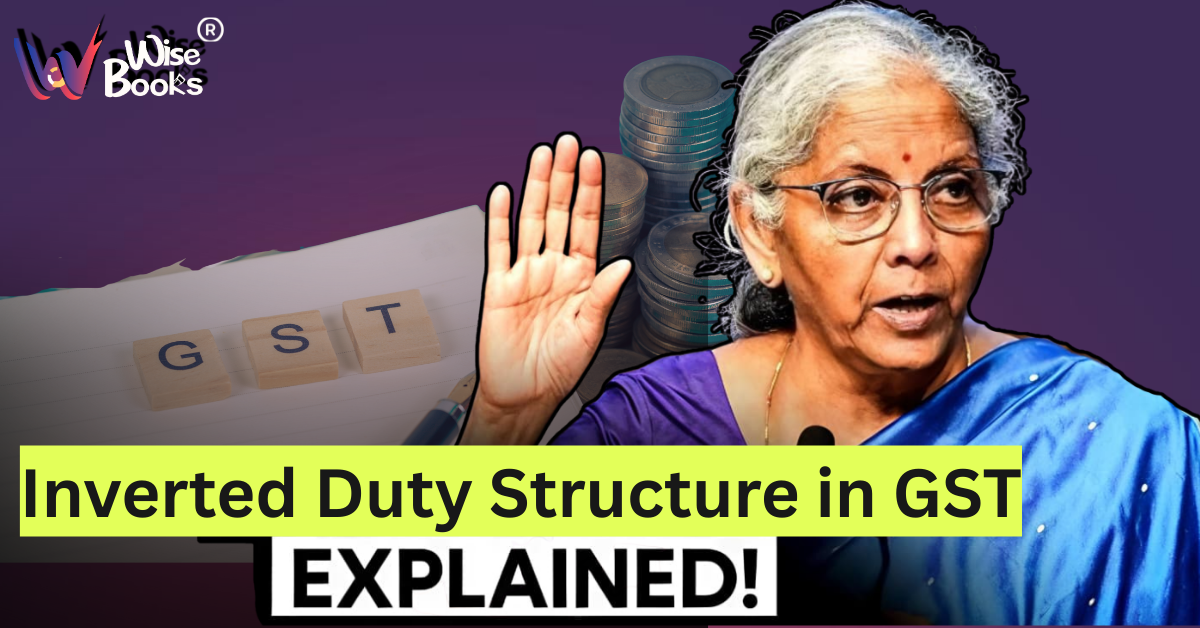
Finance Minister Nirmala Sitharaman said on Tuesday that the recent rationalisation of the Goods and Services Tax rate has “largely corrected” the inverted duty structure faced by several industries for years. During the discussion on the Manipur Goods and Services Tax (Second Amendment) Bill, 2025, in the Rajya Sabha, she underscored that the latest reform by the government has made large strides in reducing anomalies and bringing about more symmetry in the tax rates of goods across sectors.
Under the GST rate rationalisation, all essential goods attract nil GST or the minimum 5% slab to ensure affordability while easing compliance costs for companies. Sitharaman added that the remaining inverted duty structures pointed out by industry bodies would be reviewed and resolved, hinting that the government will not rest on its oars until a certain, predictable, and industry-friendly GST regime is attained. This should improve working capital efficiency, reduce delays in refunds, and make the tax environment much more equitable, particularly for MSMEs, manufacturers, and exporters whose data showed mismatched tax rates for inputs and outputs.
What Was the Problem & Why It Mattered
IDS in several industries was probably the biggest challenge under the previous GST structure. It took place when the GST on inputs or raw materials was higher compared to the GST charged on the final product. In other words, while buying raw materials, businesses were paying more tax and earning back fewer credits after the sale of the finished goods. It caused an imbalance in taxation that mostly turned out to be heavier for the manufacturing, export-oriented, and labour-intensive sectors.
In this regime, businesses often amassed big amounts of unused ITC as the output tax was not adequate to set off against the input tax credit paid. While the refund mechanism existed, the process was often slow and documentation-heavy, leading to long delays and creating huge cash-flow pressure. This basically meant that for the MSMEs and small manufacturers, capital remained stuck for months, hampering their ability to reinvest or manage day-to-day operations.
Inverse duty structure further distorted the pricing. The cost of production increased as raw materials were more heavily taxed, but due to market pressures, businesses were forced to sell finished goods at competitive or lower prices. Profit margins consequently shrank, thereby reducing the viability of many small and medium manufacturers. For exporters, the matter was worse because higher input costs made Indian products less competitive in global markets. Competitor countries with less complex tax systems and low input taxes had an upper hand, and this weakened India's export competitiveness.
What Changed in the 2025 GST Overhaul?
The 2025 GST overhaul introduced some of the most significant structural reforms since the implementation of GST in India. The GST Council moved toward a simplified two-slab system, placing essential and merit goods under 0% or 5% while keeping the standard rate at 18%, with higher slabs reserved for luxury and demerit items. This rationalisation not only reduced classification disputes but also created a more predictable tax structure for businesses.
According to the India Brand Equity Foundation, the reforms also ushered in all-encompassing rate reductions across a host of categories: FMCG products, household goods, renewable-energy components, basic consumer items, and small vehicles aimed at bringing respite to consumers and industries at large. More importantly, the overhaul has provided targeted solutions for sectors facing inverted duty structures by ensuring faster refund processing, clearer ITC rules, and less cumbersome compliance requirements thing which has benefited MSMEs and smaller manufacturers the most, who used to struggle with working-capital blockages.
Finance Minister Nirmala Sitharaman said the rationalisation has "largely fixed" inverted duty issues in most of the sectors, and those anomalies that the industry identified would be dealt with separately. In a nutshell, the 2025 reforms have ushered in a simpler, more stable, and business-friendly GST ecosystem.
Why This Reform Matters — For Businesses, Consumers & the Economy
For Businesses & Manufacturers
- Improved cash flow: Less accumulation of blocked ITC; timely refunds; better working capital.
- Reduced cost burdens: Lower tax on inputs/outputs can help reduce production costs, improve margins, and enable competitive pricing.
- Better export potential: With input-output tax parity and streamlined compliance, Indian exporters may become more competitive globally.
- Simpler compliance: Reduced disputes on classification, easier accounting, and stable tax slabs.
For Consumers / Common People
- Everyday essentials and FMCG items becoming cheaper thanks to lower GST rates on basic goods.
- Goods like household items, renewable energy equipment, and small vehicles may get more affordable good for middle-class consumers, small businesses, and first-time buyers.
For the Economy & MSMEs
- Boost to MSMEs and small manufacturers, they often suffer the most under inverted duty mismatches.
- Reduced tax-related distortions in pricing, leading to healthier markets, better demand and potentially more formalisation of the economy.
- Encourages investment, production, and export-oriented growth under a predictable GST framework rather than ad-hoc rate changes.
What to Stay Cautious About
Though the government says "largely fixed", certain sectors could still be facing residual inversion or classification related issues and need to check whether new slabs apply to their inputs/outputs.
Businesses have to upgrade their accounting systems, invoices, stock valuation and compliance processes, besides tracking ITC.
Inverted-duty refunds, even though speedier, may have conditions and risk checks, and as such, documentation and filing accuracy remain critical.
In the case of certain luxury, sin, or demerit goods, higher GST or special rates are still applicable; one has to check item-wise rather than presume an across-the-board benefit.
Conclusion
The 2025 GST rate rationalisation through slab simplification and inverted duty mismatch removal is an important milestone in the field of indirect taxation in India. Indeed, for manufacturers, MSMEs, and exporters, even consumers, this move promises relief in cash flow, reduction of cost burdens, price stability, and ease of compliance.
The reform will inspire confidence in GST, spur production, cut retail prices and make the economy more formal if enforced conscientiously at the level of accounting, compliance and bookkeeping.
This could mark the beginning of a more stable, predictable, and growth-oriented GST regime in India, as the government is clearing up any remaining issues flagged by the industry.


Comments
No comments yet. Be the first to comment!