


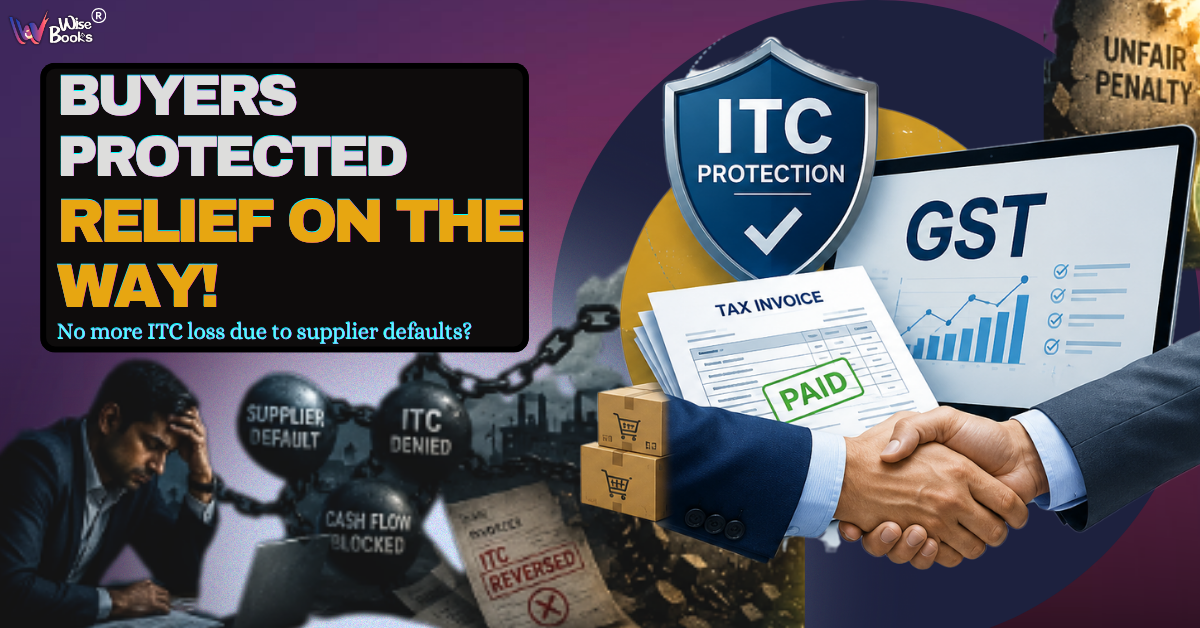
The GST Law Committee has approved a proposal to protect genuine buyers from losing Input Tax Credit due to supplier defaults. Here's what the proposal means for businesses and taxpayers.
GST Compliance Could Soon Become Fairer for Honest Businesses
For years, one of the biggest concerns under the GST regime has been the denial of Input Tax Credit (ITC) to genuine buyers because their suppliers failed to deposit GST with the Government.
Although businesses paid GST, received valid tax invoices, and completed transactions through proper banking channels, many still received tax notices asking them to reverse their ITC.
Now, the GST Council's Law Committee has approved a proposal that aims to change this position.
If approved by the GST Council, this could become one of the most significant GST reforms for businesses.
Let's understand what this proposal means and why it matters.
What Is the New Proposal?
The GST Law Committee has recommended that:
A genuine buyer should not lose Input Tax Credit merely because the supplier failed to deposit GST with the Government.
The proposal seeks to protect buyers who have fulfilled all their compliance responsibilities but are penalized due to supplier defaults.
The recommendation will now be placed before the GST Council for approval.
Why Was This Change Needed?
Under the current GST framework, buyers have often faced ITC reversals even after:
- Purchasing goods from a registered supplier
- Receiving a valid GST invoice
- Making payment through banking channels
- Paying the GST amount to the supplier
The problem arises when the supplier fails to deposit the collected GST or does not file GST returns correctly.
In many cases, tax authorities ask the buyer to reverse the ITC despite the buyer having no control over the supplier's compliance.
This has remained one of the most debated issues under GST.
What Problem Does This Proposal Solve?
The proposal aims to shift the responsibility to the actual defaulter instead of penalizing genuine buyers.
If implemented, businesses may receive protection where:
- The transaction is genuine.
- GST has been paid to the supplier.
- Proper documentation is available.
- Payment has been made through prescribed banking channels.
- The buyer has acted in good faith.
This could significantly reduce unnecessary litigation and provide greater certainty to businesses.
Why Is This Proposal Important for Businesses?
This proposal could benefit businesses in several ways.
Better Protection for Genuine Taxpayers
Businesses may no longer lose ITC simply because of supplier defaults.
Improved Cash Flow
ITC directly affects working capital.
Protecting ITC means businesses may avoid unnecessary tax outflows.
Reduced Litigation
The proposal could reduce disputes related to supplier non-compliance.
Greater Ease of Doing Business
Businesses would gain more confidence while claiming eligible Input Tax Credit.
Does This Mean Buyers Can Stop Verifying Suppliers?
No. Even if the proposal is approved, businesses should continue following proper GST compliance.
Good practices include:
- Verifying supplier GST registration.
- Matching invoices with GSTR-2B.
- Maintaining tax invoices.
- Keeping payment proofs.
- Preserving purchase documentation.
Strong documentation will remain essential.
What Happens Next?
It is important to understand that this is currently only a proposal.
The next steps include:
1. Approval by the GST Council.
2. Necessary amendments or notifications.
3. Official implementation.
Until then, businesses must continue complying with the existing GST provisions.
Key Takeaways
- The GST Law Committee has approved a proposal to protect genuine buyers.
- ITC may not be denied solely because of supplier defaults.
- The proposal still requires GST Council approval.
- Businesses should continue maintaining proper compliance and documentation.
- If implemented, the proposal could significantly reduce GST disputes.
Final Thoughts
The proposed reform reflects a more balanced approach to GST compliance.
Instead of placing the burden on honest taxpayers, the proposal seeks to hold defaulting suppliers accountable while protecting genuine buyers who have fulfilled their obligations.
Although the proposal is yet to receive final approval, it represents a positive step towards making the GST regime more practical, transparent, and business-friendly.


Comments
No comments yet. Be the first to comment!