


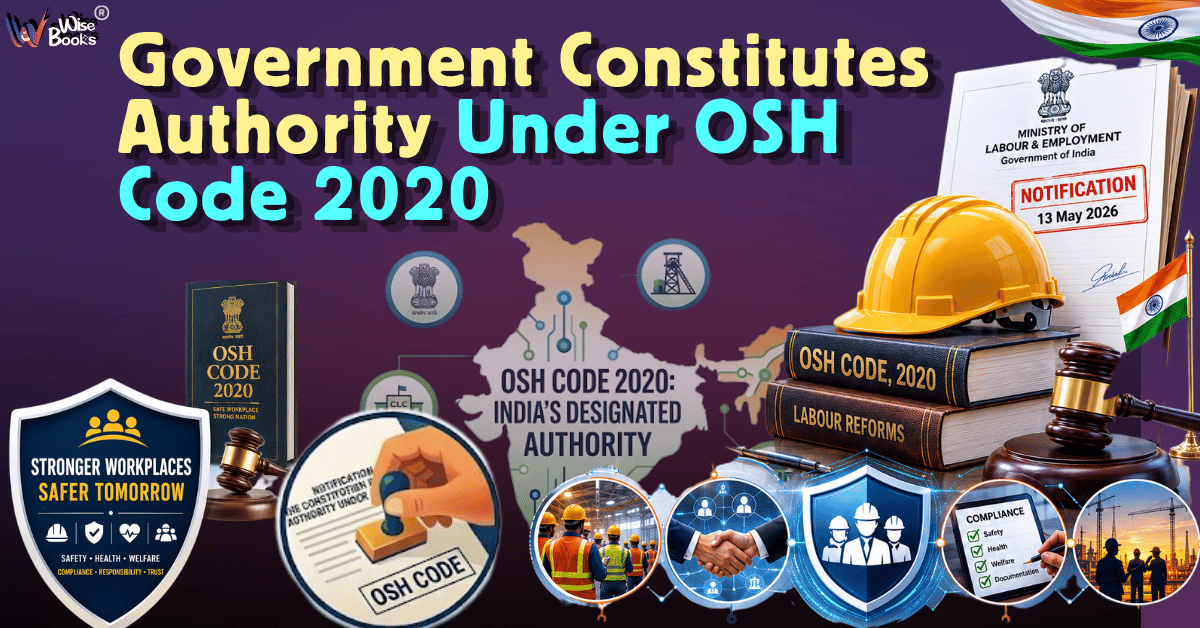
India Strengthens Workplace Safety Governance Under Labour Reforms
India’s labour compliance landscape is continuing to evolve as the government moves forward with the implementation of the Occupational Safety, Health and Working Conditions (OSH) Code, 2020. In a recent development, the Ministry of Labour & Employment issued a notification on 13 May 2026 regarding the constitution of a designated authority under Section 57(2)(a) of the OSH Code.
This step is being viewed as another important milestone in India’s broader labour law reform framework. The newly formed authority is expected to improve coordination, strengthen workplace safety administration, and support better implementation of labour welfare provisions across industries.
For businesses, HR departments, compliance teams, factory operators, and labour law professionals, this development highlights the government’s increasing focus on occupational safety and structured compliance systems.
Understanding the OSH Code, 2020
The Occupational Safety, Health and Working Conditions Code, 2020 was introduced as part of India’s major labour law consolidation initiative. The government combined multiple labour legislations into four broader labour codes to simplify compliance and modernize labour governance.
The OSH Code primarily focuses on improving:
- Workplace safety standards
- Health and welfare conditions
- Employee protection measures
- Working environment regulations
- Employer compliance responsibilities
The Code applies to several sectors, including:
- Factories
- Mines
- Construction establishments
- Industrial units
- Contract labour operations
- Other notified workplaces
The objective behind the Code is not only regulatory control but also creating safer, healthier, and more organized working environments for employees across industries.
Government Constitutes Authority Under Section 57(2)(a)
Under Section 57(2)(a) of the OSH Code, the Central Government has now officially constituted a designated authority responsible for matters connected to occupational safety administration and welfare oversight.
This authority will function as an institutional mechanism to support implementation, coordination, and supervision related to provisions under the OSH framework.
The formation of such an authority indicates that the government is gradually operationalizing labour reforms through dedicated administrative structures rather than keeping the reforms only at the legislative level.
Composition of the Newly Constituted Authority
According to the notification, the authority will include representatives from key labour and industrial safety institutions.
Chairperson
- Director General, Directorate General of Labour Welfare
Members
- Representative of the Chief Labour Commissioner (Central)
- Representative of the Directorate General of Mines Safety
- Representative of the Directorate General Factory Advice Service and Labour Institutes
This multi-departmental structure brings together expertise from labour welfare, industrial regulation, mine safety, and factory administration.
The inclusion of multiple departments is expected to improve coordination and strengthen decision-making related to occupational health and workplace standards.
Why This Development Is Important
The constitution of this authority is significant because it reflects the government’s intention to actively implement labour reforms through practical administrative systems.
Many labour reforms often remain delayed due to lack of operational structures. However, by creating a dedicated authority, the government is moving toward stronger enforcement and centralized oversight.
Key Areas Where This Authority May Have Impact
1. Stronger Workplace Safety Oversight
Industries dealing with manufacturing, mining, construction, and hazardous operations may witness stricter monitoring of workplace safety protocols.
Businesses may need to ensure:
- Proper employee safety equipment
- Workplace hazard management
- Updated safety procedures
- Employee training systems
- Emergency preparedness mechanisms
2. Improved Coordination Between Departments
Labour administration often involves multiple regulatory bodies working independently. This authority can help create a more coordinated framework between departments handling labour welfare, factory inspections, and industrial safety.
Better coordination may also reduce confusion regarding implementation procedures and compliance interpretation.
3. Increased Compliance Expectations for Businesses
As labour governance becomes more structured, employers may face higher expectations regarding documentation, compliance reporting, and employee welfare standards.
Organizations may need to:
- Review internal labour policies
- Maintain safety compliance records
- Conduct periodic safety audits
- Improve welfare facilities
- Strengthen HR compliance systems
Businesses operating in regulated industries should closely monitor future guidelines issued under the OSH framework.
4. Better Protection for Employees
For workers, this development may contribute toward:
- Safer working environments
- Better monitoring of occupational standards
- Improved welfare administration
- Increased accountability from employers
The government’s focus appears to be shifting toward preventive workplace safety rather than only post-incident enforcement.
What Businesses Should Do Now
Although detailed operational guidelines may continue to evolve, companies should begin preparing proactively.
Businesses can start by:
- Reviewing workplace safety measures
- Updating labour compliance processes
- Conducting internal compliance assessments
- Training HR and compliance teams
- Maintaining proper documentation and registers
Companies that adopt structured compliance systems early may find it easier to adapt to future regulatory developments.
Growing Importance of Labour Compliance in India
India’s business environment is rapidly becoming more compliance-driven across taxation, finance, labour laws, and corporate governance.
Just as GST compliance and digital tax monitoring have become more advanced, labour compliance is also moving toward stronger institutional oversight and structured governance.
For employers, labour compliance is no longer only a legal requirement, it is increasingly becoming an important part of operational risk management and corporate responsibility.
Final Thoughts
The government’s decision to constitute an authority under Section 57(2)(a) of the OSH Code, 2020 represents another major step toward implementing India’s labour reforms more effectively.
As India modernizes its labour governance framework, businesses will need to focus not only on profitability but also on workplace safety, employee welfare, and regulatory accountability.
Organizations that proactively strengthen compliance systems and employee safety standards today will likely be better prepared for the evolving regulatory environment of tomorrow.


Comments
No comments yet. Be the first to comment!