


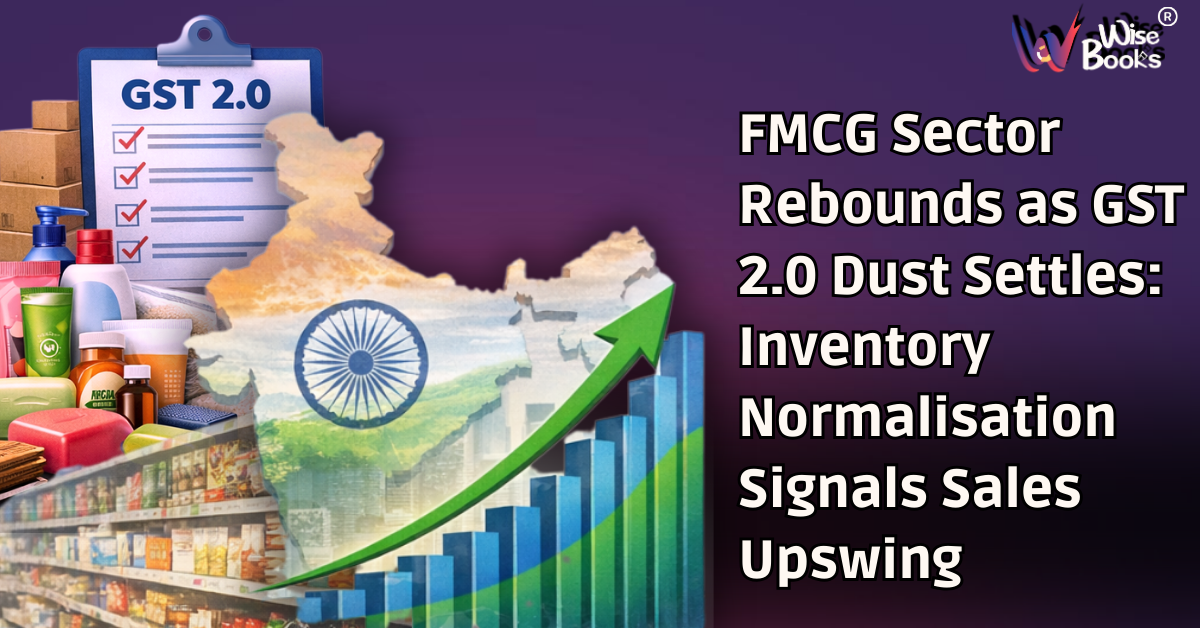
Introduction: FMCG Enters a Recovery Phase After GST 2.0 Transition
India’s Fast-Moving Consumer Goods (FMCG) sector is entering a phase of renewed optimism after nearly three months of operational disruption triggered by the rollout of the revamped Goods and Services Tax framework, widely referred to as GST 2.0. What initially appeared as a setback is now shaping into a strong foundation for demand revival.
With inventory levels stabilising across distribution channels, companies are ramping up production, refilling trade pipelines, and preparing for a meaningful rebound in consumption beginning in the January–March quarter. The sector’s recovery reflects not just improved supply chains but also renewed confidence among distributors, retailers, and consumers.
Industry leaders such as Dabur, Emami, Godrej Consumer Products, Parle Products, Zydus Wellness, AWL Agri Business, and others confirm that operations have returned to normal. Manufacturing units are running at full capacity, trade disruptions have eased, and the FMCG ecosystem is gradually returning to business as usual.
What Caused the FMCG Disruption After GST 2.0?
GST Rate Rationalisation: A Structural Reform with Short-Term Pain
On September 22, the government implemented GST 2.0, a major tax rationalisation exercise aimed at simplifying the GST structure and boosting mass consumption. Tax rates were reduced on a wide range of essential consumer goods, including:
- Soaps and detergents
- Shampoos and personal care products
- Toothpaste and oral care items
- Packaged food products
- Household essentials
The policy intent was clear: lower prices → higher affordability → increased consumption. However, the transition phase brought unavoidable short-term challenges.
Operational Challenges During the Transition Phase
The FMCG sector faced several practical issues during the shift to new GST rates:
- Repricing of existing stock to align with revised tax rates
- Redesigning packaging and updating Maximum Retail Prices (MRPs)
- Managing old stock alongside new GST-compliant inventory
- Delays in printing and distributing revised packaging
- Temporary confusion across retail shelves
While necessary, these changes disrupted the smooth functioning of supply chains and slowed down trade momentum for several weeks.
Why Did Inventory Levels Drop Initially?
Channel-Level Working Capital and Pricing Concerns
One of the primary reasons for the temporary drop in inventory levels was hesitation among distributors and retailers during the GST transition phase. As GST 2.0 introduced revised tax rates, trade partners became cautious about placing fresh orders while old-priced stock was still in circulation.
Distributors were reluctant to block their working capital in products carrying old GST prices, as they were uncertain about how quickly revised pricing would be implemented and adjusted. There was also confusion around credit notes, price difference settlements, and margin adjustments, which made distributors adopt a wait-and-watch approach.
Retailers, particularly small kirana stores, feared potential losses if product prices were revised downward after they had already procured stock. This risk of inventory devaluation led many retailers to slow down or temporarily halt ordering. Together, these concerns disrupted the normal flow of goods across the supply chain, resulting in lower inventory levels and a short-term slowdown in FMCG production and distribution.
Impact on Kirana Stores and Small Retailers
Small kirana stores, especially in semi-urban and rural areas, faced additional difficulties:
- Products temporarily moved away from familiar price points like ₹5, ₹10, ₹15, and ₹20
- New “odd pricing” such as ₹4.70 or ₹9.80 caused billing and change-management issues
- Mixed inventory with old and new MRPs created confusion at the point of sale
As a result, FMCG companies were forced to slow production, leading to uneven availability across markets during the transition phase.
Inventory Levels Have Now Normalised Across India
Companies Confirm “Back to Business as Usual”
The situation has now significantly improved. Leading FMCG players confirm that:
- Inventory levels have fully stabilised across regions
- Supply chains are functioning smoothly
- Pricing and packaging inconsistencies have been resolved
- Trade partners have resumed regular ordering cycles
At Emami, the maker of BoroPlus and Zandu Balm, management confirmed that inventory positions are fully stabilised and supply flows are seamless across all channels.
Similarly, Parle Products, India’s largest biscuit manufacturer, stated that revised packs with updated pricing are now fully available in the market, restoring order volumes and trade confidence.
Production Running at Full Capacity Signals Demand Confidence
Manufacturing Activity Picks Up Across the Sector
With channel disruptions easing, FMCG companies have:
- Increased manufacturing output
- Restarted full-capacity operations at plants
- Accelerated inventory building to meet anticipated demand
Industry executives confirm that most manufacturing units are now operating at peak capacity, a strong indicator that companies expect sustained demand growth in the coming quarters.
This return to full-scale production also reflects confidence that GST-related uncertainties have largely been resolved.
Return to Popular Price Points Benefits Kirana Stores
Pricing Strategy Adjustments Post-GST
During the transition, companies had temporarily introduced odd price points to pass on GST benefits on old stock. However, recognising the challenges this created for retailers, companies have now recalibrated their pricing strategies.
Key corrective measures include:
· Returning to popular price points such as ₹5, ₹10, and ₹20
· Increasing pack weight or quantity instead of reducing prices
· Simplifying MRPs to improve ease of sale for small retailers
These steps have significantly improved acceptance at kirana stores, especially in rural and semi-urban markets, where price familiarity plays a crucial role in purchasing decisions.
Demand Revival Expected from January–March Quarter
Management Outlook Turns Optimistic
Executives across FMCG majors believe that the full benefit of GST rationalisation will be visible in Q4. With pricing stabilised and supply chains normalised, sales momentum is expected to strengthen.
- Zydus Wellness confirmed that issues related to old packaging and mixed pricing have been largely streamlined.
- Dabur India expects stronger performance in the second half of the fiscal year and is targeting mid-to-high single-digit growth.
Growth drivers include:
- Rising rural consumption
- Improved trade sentiment
- Better product availability
Rural Demand Leads the Recovery, Urban Growth Evolves
Shifting Consumption Patterns
According to industry leaders:
- Rural demand continues to outperform urban demand, supported by stable incomes and improved distribution reach
- Urban demand growth is increasingly driven by:
- Modern trade outlets
- E-commerce platforms
This shift highlights a structural change in urban consumption, where organised retail and digital channels are gaining prominence over traditional formats.
Allied Sectors Also Witness Inventory Recovery
Edible Oils, Snacks, and Consumer Durables
The recovery is not limited to core FMCG categories:
- AWL Agri Business reports strong revival in edible oil demand from biscuit, bakery, and snack manufacturers
- Oil consumption levels have returned to normal and are showing steady growth
Even consumer durables are seeing improvement. Air-conditioners, which suffered weak demand earlier due to a poor summer season, are witnessing inventory correction. With GST on ACs reduced from 28% to 18%, companies have resumed peak production levels from this month.
Why This News Matters for Businesses, MSMEs, and Compliance Professionals
Key Takeaways and Business Implications
- GST 2.0 disruptions were temporary and transitional
- Inventory normalisation is a strong indicator of demand revival
- GST benefits are now fully embedded in product pricing and packaging
- FMCG sector sentiment is bullish heading into early 2026
- Higher consumption supports broader economic growth, tax collections, and business confidence
For businesses, accountants, and compliance professionals, this recovery reinforces the importance of GST preparedness, pricing agility, and supply-chain coordination during tax reforms.
Conclusion
The FMCG sector’s transition under GST 2.0 highlights the temporary challenges that often accompany major tax reforms. While the initial phase saw inventory disruptions, pricing confusion, and cautious ordering by trade partners, these issues have now largely been resolved. Inventory levels have normalised, supply chains are operating smoothly, and manufacturing activity has returned to full capacity across the industry.
As pricing stabilises and revised packs become fully integrated into the market, the benefits of GST rationalisation are expected to translate into stronger consumer demand from the January–March quarter. Supported by resilient rural consumption and growing traction in modern trade and e-commerce, the FMCG sector appears well-positioned for a sustained recovery. Overall, GST 2.0 is beginning to deliver on its objective of improving affordability, efficiency, and long-term growth across India’s consumer goods ecosystem.
FAQ
Q1. What does “GST 2.0” refer to in the context of the FMCG sector?
Answer:
GST 2.0 refers to the revamped GST framework implemented on September 22, which focused on rate rationalisation and simplification. Under this reform, tax rates on several essential FMCG products such as soaps, shampoos, toothpaste, packaged foods, and household items were reduced to improve affordability and boost consumption.
Q2. Why did the FMCG sector face disruption after the implementation of GST 2.0?
Answer:
The disruption occurred due to the transition from old GST rates to revised rates, which required repricing, packaging changes, and inventory adjustments. FMCG companies and their trade partners faced operational challenges such as managing old stock, updating MRPs, and handling mixed-priced inventory, which temporarily slowed production and distribution.
Q3. What were the main operational challenges faced by FMCG companies during the transition phase?
Answer:
Key operational challenges included:
- Repricing existing inventory
- Redesigning packaging and updating MRPs
- Managing old stock alongside GST-compliant new stock
- Delays in printing revised packaging
- Confusion at retail outlets due to mixed pricing
These issues disrupted supply chains and reduced trade momentum for several weeks.
Q4. Why did inventory levels drop initially across the FMCG sector?
Answer:
Inventory levels dropped mainly due to hesitation among distributors and retailers. Trade partners slowed orders to avoid blocking working capital in old-priced stock and to prevent losses from potential price revisions. Uncertainty around credit notes, price difference settlements, and margin adjustments further contributed to cautious ordering.
Q5. How were kirana stores affected during the GST transition?
Answer:
Kirana stores faced difficulties because products temporarily shifted away from familiar price points like ₹5, ₹10, and ₹20 to odd prices such as ₹4.70 or ₹9.80. This created billing issues, confusion at the point of sale, and customer resistance, especially in rural and semi-urban areas.
Q6. What changes helped restore normalcy at the retail level?
Answer:
Companies recalibrated their pricing strategies by:
- Returning to popular price points
- Increasing pack sizes instead of reducing prices
- Simplifying MRPs
These measures improved retailer acceptance and eased transactions, particularly for small kirana stores.
Q7. How has the inventory situation improved now?
Answer:
Inventory levels have normalised across regions, supply chains are functioning smoothly, and pricing inconsistencies have been resolved. Companies such as Emami and Parle Products confirmed that revised packs are fully available, and trade partners have resumed regular ordering cycles.
Q8. What does production running at full capacity indicate?
Answer:
Full-capacity production indicates strong demand confidence. It reflects that FMCG companies expect sustained consumption growth and believe GST-related uncertainties have largely been resolved.
Q9. When is the demand revival expected to become visible?
Answer:
The full impact of GST rationalisation on demand and sales is expected to be visible from the January–March quarter (Q4), as pricing stabilises and revised products are fully integrated into the market.
Q10. Which demand segment is currently leading the recovery—rural or urban?
Answer:
Rural demand is leading the recovery, supported by stable incomes and improved distribution. Urban demand growth is increasingly driven by modern trade and e-commerce platforms, indicating a shift in consumption patterns.
Q11. How are allied sectors responding to GST 2.0 stabilisation?
Answer:
Allied sectors such as edible oils, snacks, and consumer durables are also recovering. For example:
- Edible oil demand from bakery and snack manufacturers has normalised
- Consumer durables like air-conditioners are seeing inventory correction after GST was reduced from 28% to 18%
This shows the broader economic impact of GST rationalisation.
Q12. Why is this development important for businesses and MSMEs?
Answer:
This recovery highlights the importance of:
- GST preparedness
- Flexible pricing strategies
- Efficient inventory and supply-chain management
For MSMEs and compliance professionals, it reinforces the need for proactive planning during tax reforms to minimise disruption and working capital strain.
Q13. What is the overall outlook for the FMCG sector post-GST 2.0?
Answer:
The FMCG sector outlook is positive and bullish, especially heading into early 2026. With stabilised inventories, full-capacity production, and improving consumption trends, GST 2.0 is beginning to support long-term efficiency, affordability, and sustainable growth.


Comments
SCwdLD