


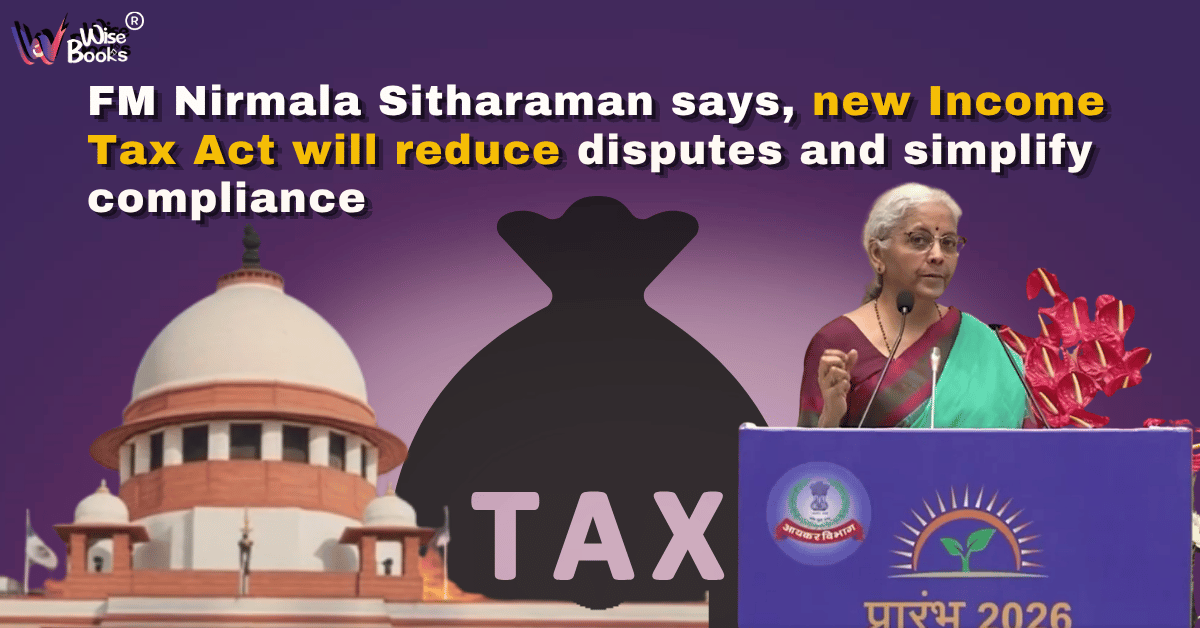
India is preparing for a major transformation in its tax system with the introduction of the Income Tax Act 2025. Finance Minister Nirmala Sitharaman recently announced that the new law is designed to simplify tax compliance, reduce disputes, lower errors, and make the tax system easier for taxpayers to understand.
While addressing PRARAMBH 2026, a nationwide awareness campaign in New Delhi, the Finance Minister explained that the new Act has been completely redesigned with simpler language, fewer sections, and a more structured format.
The new Income Tax Act will come into effect from 1 April 2025 and is expected to modernize India’s taxation framework in line with the country’s rapidly growing digital economy.
Why Was a New Income Tax Act Needed?
The existing Income Tax Act, 1961 had become highly complex after decades of amendments, explanations, and legal interpretations. Many taxpayers, especially small businesses and professionals, found it difficult to understand and comply with tax provisions.
This often resulted in:
- Filing mistakes
- Increased notices
- Tax disputes
- High compliance costs
- Confusion in interpretation
To solve these issues, the government introduced a simplified and modernized tax structure under the new Income Tax Act 2025.
Major Highlights of the Income Tax Act 2025
1. Fewer Sections & Chapters
One of the biggest reforms is the reduction in the size of the law.
- Sections reduced from 819 to 536
- Chapters reduced from 47 to 23
Short Explanation:
This makes the Act more organized and easier to understand. Tax professionals and taxpayers will spend less time interpreting complicated provisions.
2. Simpler Language for Taxpayers
According to Nirmala Sitharaman, difficult legal terms have been simplified and many provisions are now explained through tables and formulas.
Short Explanation:
The government wants ordinary taxpayers, freelancers, and small business owners to understand tax rules without confusion.
3. Reduced Tax Disputes
The new Act aims to reduce ambiguity and multiple interpretations that often lead to litigation.
Short Explanation:
Clear wording means fewer disagreements between taxpayers and the Income Tax Department, reducing notices and legal cases.
4. Lower Compliance Costs
Businesses spend a large amount on:
- Tax consultants
- Documentation
- Litigation
- Error correction
The simplified structure is expected to reduce these expenses.
Short Explanation:
Businesses may save both time and money while handling taxation and compliance.
5. Stronger Presumptive Taxation Scheme
The Finance Minister stated that presumptive taxation has been strengthened under the new law.
This will benefit:
- Small businesses
- Professionals
- Freelancers
- Retail traders
Short Explanation:
Eligible taxpayers may not need to maintain detailed books of accounts, making compliance easier.
6. Better Digital & AI Integration
India’s tax system is becoming increasingly technology-driven through:
- AIS
- TDS/TCS systems
- GST integration
- E-invoicing
- AI-based scrutiny
The new Act is designed to work smoothly with these digital systems.
Short Explanation:
Automated compliance and data matching will improve transparency and reduce manual errors.
7. Easier for Startups & MSMEs
MSMEs and startups often struggle with complicated tax laws and compliance requirements.
Short Explanation:
The simplified framework can help small businesses focus more on growth and less on paperwork.
8. Massive Reform Exercise
The Finance Minister revealed that around 75,000 person-hours were spent by Income Tax officials to restructure and rewrite the Act.
Short Explanation:
This shows the government’s serious effort to modernize and simplify India’s direct tax system.
Impact of the New Income Tax Act 2025
For Salaried Individuals
- Easier return filing
- Better understanding of deductions
- Fewer filing mistakes
For Businesses
- Reduced compliance burden
- Faster tax processing
- Better clarity in tax provisions
For Tax Professionals
- Less time spent on interpretation
- More focus on strategic advisory services
Businesses Must Still Stay Careful
Even though the law is becoming simpler, businesses must continue maintaining:
- Proper bookkeeping
- Accurate GST reconciliation
- Correct TDS filing
- Clean financial records
As tax systems become AI-driven, incorrect reporting can still trigger notices and scrutiny.
What Businesses Should Do Now
To prepare for the new Income Tax Act 2025, businesses should:
iv. Upgrade Accounting Systems
Use automated accounting and reconciliation tools.
v. Review Tax Compliance
Ensure GST, TDS, and AIS data are properly matched.
vi. Maintain Proper Documentation
Digital records and invoice management will become more important.
vii. Train Finance Teams
Employees should understand the updated tax framework.
Conclusion
The Income Tax Act 2025 is a major step toward building a simpler, more transparent, and technology-friendly tax system in India. By reducing sections, simplifying language, and strengthening digital integration, the government aims to make tax compliance easier for businesses and individual taxpayers.
For taxpayers, this reform could mean:
- Easier compliance
- Lower disputes
- Reduced errors
- Better clarity
- Faster tax processes
However, businesses must continue maintaining strong financial discipline and accurate accounting practices to stay fully compliant in India’s evolving digital tax environment.


Comments
No comments yet. Be the first to comment!