


Introduction
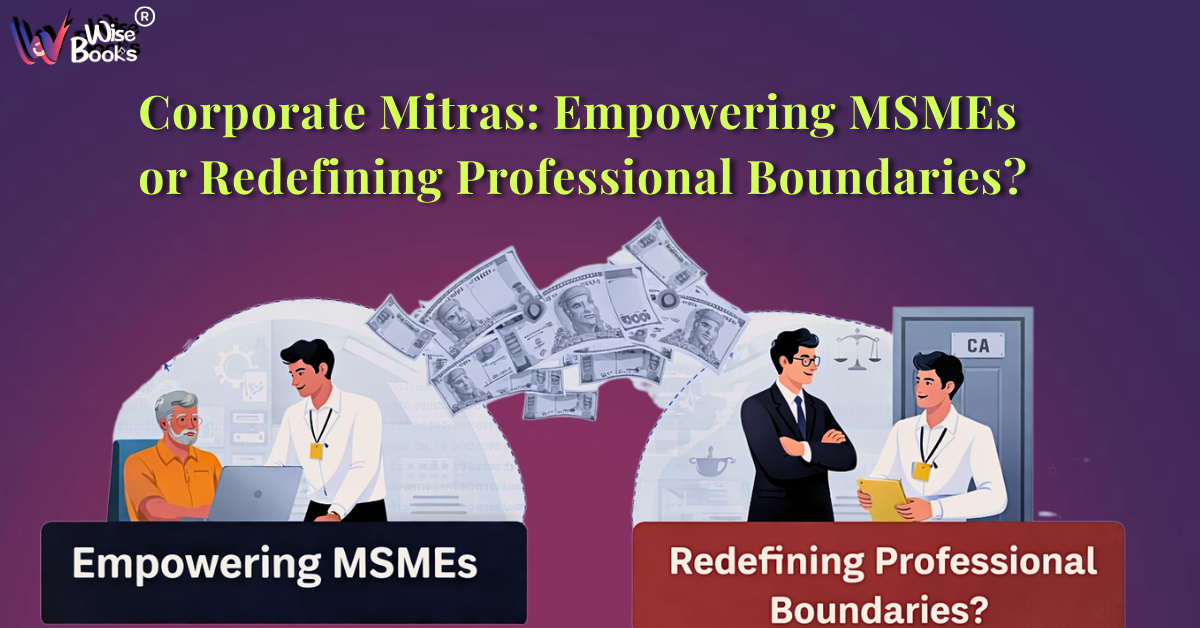
The Union Budget 2026–27 introduced a noteworthy proposal that has ignited significant discussion across India’s compliance, taxation, and professional services ecosystem the introduction of Corporate Mitras. The initiative aims to create a structured network of trained para-professionals who can assist Micro, Small and Medium Enterprises (MSMEs) in managing regulatory and compliance requirements at a lower cost.
The government proposes that these individuals would be trained through short-term modular programs in collaboration with professional institutions such as the Institute of Chartered Accountants of India, Institute of Company Secretaries of India, and Institute of Cost Accountants of India.
While the proposal reflects the government’s commitment to strengthening compliance access and improving ease of doing business, it has simultaneously raised important questions about professional accountability, quality of advisory services, and long-term regulatory impact.
The Vision Behind Corporate Mitras
Bridging the Compliance Accessibility Gap
India’s MSME sector is widely recognized as the backbone of economic growth, employment generation, and industrial expansion. Despite its significance, a large portion of MSMEs struggles to comply with complex regulatory frameworks involving taxation, corporate governance, labour laws, and financial reporting.
Many small businesses operate with limited financial resources and lack access to full-time professional advisory services. Corporate Mitras are intended to function as compliance facilitators who can help MSMEs with routine documentation, regulatory filings, and procedural guidance at affordable rates.
Expanding Compliance Reach in Emerging Business Regions
The proposal also focuses on strengthening compliance support in Tier-2 and Tier-3 cities, where professional advisory services are relatively less accessible. By creating locally available compliance support personnel, the government aims to:
- Improve voluntary compliance rates
- Reduce filing errors and delays
- Encourage formalization of small businesses
- Promote regulatory awareness among new entrepreneurs
Why the Proposal Has Triggered Professional Debate
Although Corporate Mitras aim to improve compliance accessibility, members of established professional communities have expressed concerns regarding structural and regulatory implications.
Compliance Is More Than Documentation
Chartered Accountants, Company Secretaries, and Cost Accountants undergo years of structured academic training, professional certification, and practical exposure. Their work involves not only preparing returns and maintaining records but also:
- Interpreting evolving legal provisions
- Assessing financial and regulatory risks
- Advising businesses on tax planning and governance
- Ensuring statutory and ethical compliance
- Representing clients in litigation and regulatory proceedings
Critics argue that reducing compliance assistance to short-term training programs may unintentionally dilute the depth of advisory expertise required in complex financial matters.
Concerns Regarding Professional Dilution
Risk of Undervaluing Regulated Expertise
Professional certifications involve rigorous examinations, mandatory articleship training, and ongoing continuing education requirements. These frameworks are designed to ensure that professionals maintain updated knowledge and ethical accountability.
Introducing a parallel, low-cost workforce may create market confusion and could gradually reduce the perceived value of qualified professional services.
Ambiguity in Accountability
One of the most critical concerns relates to responsibility for compliance failures. When an MSME receives incorrect compliance advice or files inaccurate returns, legal liability typically falls on the business entity. However, ambiguity arises if compliance assistance is provided by personnel without formal licensing or disciplinary oversight.
This could create situations where businesses are exposed to regulatory penalties without clear accountability mechanisms.
Increased Risk of Surface-Level Compliance
Short-term trained compliance facilitators may focus primarily on procedural filing rather than analytical review. In areas such as GST input credit eligibility, corporate restructuring, or tax litigation, incomplete understanding can result in:
- Incorrect return filings
- Ineligible tax claims
- Increased audit risks
- Long-term financial penalties
The Cost vs Risk Debate
Understanding Professional Fee Structures
A significant part of the debate revolves around affordability of professional services. However, professional fees often reflect the broader responsibility undertaken by qualified advisors, including:
- Legal and financial liability exposure
- Continuous training and regulatory licensing
- Ethical standards and disciplinary control
- Risk mitigation strategies for clients
Lower-cost compliance alternatives may reduce immediate expenses but can potentially increase long-term financial risks for businesses.
Compliance as a Risk Management Function
Compliance should not be viewed as a routine administrative process. Instead, it represents a strategic function that protects businesses from regulatory disputes, financial penalties, and reputational damage. Businesses often realize the importance of expert advisory only after facing litigation or tax investigations.
Identifying the Real Compliance Challenges Faced by MSMEs
Several professionals believe that MSME compliance challenges arise not only due to advisory access but also due to systemic complexities in regulatory frameworks.
Complex and Frequently Changing Laws
India’s tax and corporate regulatory landscape is continuously evolving. MSMEs often struggle to keep pace with:
- Frequent amendments in GST provisions
- Changing income tax compliance requirements
- Expanding digital reporting obligations
- Increased data reconciliation expectations
Administrative Bottlenecks
Delays in notice resolution, refund processing, and litigation management contribute significantly to compliance difficulties. Simplifying government processes and strengthening digital systems may provide more sustainable compliance improvements than expanding intermediary layers.
Potential Benefits of Corporate Mitras If Properly Structured
Despite professional concerns, Corporate Mitras can deliver substantial benefits if implemented with well-defined boundaries.
Enhancing Compliance Awareness
Corporate Mitras can play a critical role in educating MSMEs about basic compliance requirements, filing deadlines, and documentation practices.
Supporting Entry-Level Business Formalization
Start-ups and small traders often avoid formal compliance due to fear of complexity. Affordable compliance support can encourage business registration, tax filings, and financial record maintenance.
Reducing Professional Workload for Routine Tasks
Qualified professionals can focus on advisory, audit, and litigation services while Corporate Mitras assist with basic procedural work under supervision.
A Balanced Implementation Approach
To ensure that Corporate Mitras strengthen rather than disrupt the compliance ecosystem, policymakers may consider structured safeguards.
Clear Role Definition
Corporate Mitras should be limited to documentation support, compliance facilitation, and procedural assistance, without engaging in professional advisory or certification services.
Mandatory Professional Supervision
Critical filings, audit certifications, and legal advisory services should remain under the supervision of licensed professionals.
Establishing Accountability Mechanisms
Training modules should include ethical guidelines, legal responsibilities, and quality assurance standards to minimize compliance errors.
Integration with Digital Compliance Platforms
Technology-driven compliance solutions can allow Corporate Mitras to function as facilitators while maintaining transparency and audit trails.
Long-Term Impact on India’s Compliance Ecosystem
The Corporate Mitras initiative represents a significant shift in India’s regulatory support model. If implemented carefully, it can improve compliance outreach and support MSME growth. However, if executed without structural safeguards, it could weaken professional accountability frameworks and increase regulatory risks for businesses.
India’s economic expansion requires both accessibility and reliability in compliance services. Policymakers must balance affordability with regulatory discipline to maintain trust in financial and governance systems.
Conclusion
The Corporate Mitras proposal reflects the government’s intent to simplify compliance processes and strengthen MSME participation in the formal economy. While the initiative holds promise for improving regulatory accessibility, it also raises critical concerns regarding professional standards, accountability, and compliance quality.
The debate surrounding Corporate Mitras is not a resistance to reform but a call for structured implementation. A collaborative framework that integrates para-professionals under professional supervision can deliver the intended benefits without compromising compliance integrity.
True ease of doing business lies in creating a system that is accessible, accountable, and professionally robust. If designed thoughtfully, Corporate Mitras can become a supportive compliance bridge rather than a disruptive structural shift.


Comments
No comments yet. Be the first to comment!