


Introduction
India’s internet culture moves fast. Every day, social media creates new jokes, trends, memes, and viral moments. Most of them disappear within a few hours or days. However, sometimes a simple meme evolves into something much larger — a symbol of public emotion, frustration, and collective identity.
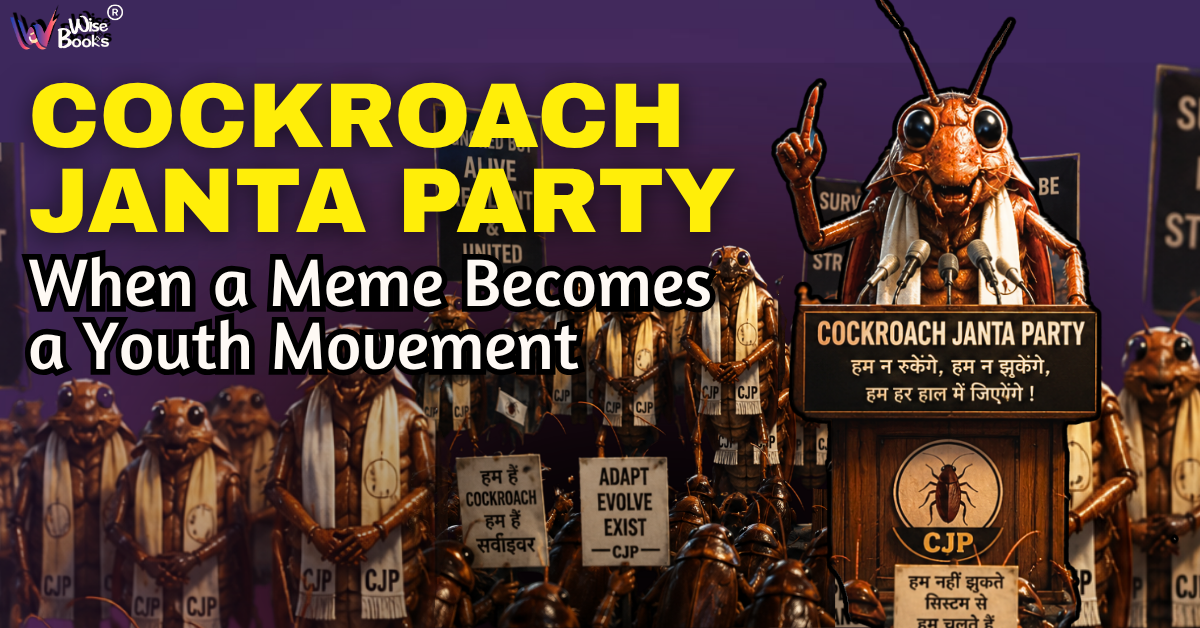
That is exactly what happened with the Cockroach Janta Party (CJP).
What started as internet satire slowly transformed into one of the most discussed youth-driven online movements in recent times. Across Instagram reels, X (Twitter) threads, YouTube videos, meme pages, and discussion forums, the phrase “Cockroach Janta Party” became more than just a joke. It became a digital expression of how many young Indians feel about unemployment, economic pressure, public neglect, and internet-era activism.
The movement reflected a changing reality, today’s generation often uses humour, sarcasm, and memes not only for entertainment, but also as tools of communication and protest.
What Is Cockroach Janta Party?
Cockroach Janta Party is not an officially registered political party. It is an internet-born satirical movement created and spread by social media users.
The movement gained popularity because it used humour to discuss serious social emotions. Instead of traditional political speeches or organised protests, people communicated through memes, satire, edited videos, humorous posters, AI-generated graphics, and viral reels.
The term “Cockroach Janta Party” itself was intentionally sarcastic. Supporters online adopted the word “cockroach” as a metaphor for ordinary citizens who feel ignored, underestimated, or disrespected by powerful systems — yet continue surviving despite every difficulty.
The movement quickly became symbolic of resilience, frustration, and public emotion, especially among young internet users.
How Did the Trend Begin?
The origin of the movement can be traced back to viral online discussions surrounding remarks associated with Chief Justice Surya Kant.
Several users on social media interpreted those remarks as insensitive toward unemployed youth and struggling citizens. Whether intentional or not, many people online felt that the comments reflected a disconnect between institutions and the realities faced by ordinary people.
Instead of responding through aggressive protests, the internet reacted in its own language — humour.
Memes began spreading rapidly. Soon, creators started using cockroach imagery in a symbolic way. The joke quickly escalated into a larger online identity movement.
Users started posting statements like:
- “We survive no matter what.”
- “Ignore us, but we still exist.”
- “If society treats us like cockroaches, we will survive like cockroaches.”
This emotional connection transformed the meme from simple entertainment into a relatable social statement.
Why Was the Cockroach Chosen as the Symbol?
At first glance, the cockroach symbol looked absurd and funny. But internet users attached deeper meaning to it.
Cockroaches are commonly associated with:
1. Survival
Cockroaches are known for surviving in extremely difficult conditions. Many young people connected this idea with their own struggles — unemployment, rising expenses, unstable careers, and social pressure.
2. Being Ignored
People often dislike or ignore cockroaches. Similarly, many citizens feel their concerns are overlooked by institutions, systems, and decision-makers.
3. Adaptability
Cockroaches adapt quickly to changing environments. Internet users related this to modern youth constantly adjusting to economic uncertainty, digital competition, and changing career landscapes.
4. Resilience
Despite attempts to remove them, cockroaches continue surviving. This became a metaphor for ordinary people continuing life despite financial stress, rejection, or societal challenges.
Because of these symbolic meanings, the cockroach became an unexpectedly powerful internet icon.
From Meme Culture to Viral Public Movement
One of the most interesting aspects of Cockroach Janta Party was how rapidly it spread without any formal organisation.
There were no official campaigns, offices, or leaders. The movement grew entirely through digital participation.
People contributed by creating:
- Viral memes
- Satirical political posters
- AI-generated campaign edits
- Fake manifestos
- Funny election slogans
- Instagram reels
- YouTube commentary videos
- Twitter/X threads
- Digital artwork
Within days, the internet was flooded with creative content related to CJP.
What made the movement unique was that every user became part of the campaign simply by participating online.
This demonstrated the power of modern internet communities where humour spreads faster than traditional messaging.
The Real Issues Hidden Behind the Humour
Although the movement looked funny on the surface, many discussions connected to it involved genuine public concerns.
Youth Unemployment
A large number of users linked the movement to frustration around job scarcity, competitive exams, delayed recruitments, and economic uncertainty.
Many young graduates today feel trapped between education, unemployment, and rising expectations.
The meme became a way to express disappointment without directly engaging in confrontation.
Public Frustration With Systems
Another major discussion centered around how ordinary people often feel unheard.
Through satire, users expressed feelings that:
- Public struggles are not always understood.
- Economic pressure is increasing.
- Young people face uncertainty about the future.
- Institutions appear disconnected from ground realities.
Humour became a socially acceptable outlet for frustration.
Rise of Internet Activism
Cockroach Janta Party also showed how activism itself is changing.
Previous generations relied heavily on:
- Public gatherings
- Printed posters
- Physical protests
- Political speeches
Today’s internet generation uses:
- Memes
- Viral hashtags
- Reels
- AI edits
- Satire
- Online communities
Digital culture has become a new space for collective opinion and emotional expression.
Why Did Gen Z Relate So Strongly to It?
Gen Z connected with the movement because it perfectly matched internet communication styles.
This generation often communicates emotions through:
- Irony
- Humour
- Relatable memes
- Viral trends
- Short-form content
Instead of directly expressing anger, many young users prefer layered humour that carries emotional meaning underneath.
Cockroach Janta Party succeeded because it felt:
- Relatable
- Funny
- Emotionally symbolic
- Socially expressive
- Easy to participate in
Anyone could join the conversation simply by sharing a meme.
How Social Media Helped the Movement Grow
Platforms like Instagram, X (Twitter), Reddit, and YouTube played a huge role in amplifying the trend.
Algorithms boosted:
- Viral meme pages
- Short-form videos
- Trending hashtags
- Satirical commentary
As engagement increased, mainstream discussions also began covering the movement.
This created a cycle where:
1. Memes generated attention.
2. Attention created discussions.
3. Discussions increased visibility.
4. Visibility created more memes.
This is how modern internet culture transforms jokes into large-scale online movements.
Is Cockroach Janta Party a Real Political Party?
As of now, Cockroach Janta Party is widely viewed as a satirical online movement rather than a legally recognised political organisation.
Its influence came from cultural relevance, public discussion, and internet participation — not electoral politics.
However, its popularity revealed something important:
Modern online movements no longer require traditional structures to gain national attention.
Sometimes, public sentiment spreads faster through humour than through formal political messaging.
What Does This Trend Tell Us About Modern India?
The rise of Cockroach Janta Party reflects several larger social changes happening in India:
Digital culture is shaping public opinion.
Memes today influence discussions almost as much as news debates.
Humour has become a form of protest.
Young people increasingly use satire instead of direct confrontation.
Internet communities are emotionally powerful.
Online trends now create shared identities and collective emotions.
Gen Z communicates differently.
Relatable humour often carries deeper social meaning.
Viral culture can influence national conversations.
A single meme can now become part of mainstream discourse within hours.
Final Thoughts
Cockroach Janta Party may have started as a joke, but its rapid rise revealed something much deeper about modern society.
Behind the memes were conversations about unemployment, frustration, resilience, public identity, and the emotional realities faced by many young people today.
The movement demonstrated how internet culture has evolved beyond entertainment. Social media is now a place where people process emotions, express dissatisfaction, build communities, and participate in public conversations.
Whether viewed as satire, social commentary, or digital activism, Cockroach Janta Party became an example of how powerful online culture can be in shaping modern public narratives.
In today’s world, memes are no longer “just jokes.”
Sometimes, they become movements.


Comments
No comments yet. Be the first to comment!