


CBIC Proposes Centralised GST Registration Under One PAN: Meaning, Benefits & Business Impact
Since the implementation of the Goods and Services Tax (GST) in 2017, India has made significant progress in creating a unified indirect tax system. However, businesses operating in multiple states still face a major compliance challenge maintaining separate GST registrations and dealing with multiple tax authorities.
To address this issue, the Central Board of Indirect Taxes and Customs (CBIC) is reportedly examining a proposal for centralised GST administration under one Permanent Account Number (PAN). While the proposal is still under discussion and has not been approved, it has the potential to become one of the most significant GST administrative reforms in recent years.
In this article, we explain what the proposal is, why it is being considered, how it could work, and what it could mean for businesses across India.
Why Is a Change Being Considered?
Under the current GST framework, every business must obtain a separate GST registration in each state or Union Territory where it conducts taxable business activities.
For example, if a company has branches in Maharashtra, Karnataka, Gujarat, and Delhi, it needs four different GST registrations. Each registration has its own compliance requirements, return filings, departmental communications, and jurisdictional tax officers.
As businesses expand across states, this system increases compliance costs, administrative work, and the possibility of receiving multiple notices from different tax authorities for similar issues.
The proposed reform aims to simplify this process by improving the way GST registrations are administered.
What Is the Centralised GST Administration Proposal?
One of the biggest misconceptions is that the government plans to introduce one GST number for the entire country. That is not what is currently being discussed.
The proposal focuses on centralised administration, not centralised registration.
Businesses would continue to hold separate GST registrations in every state, as required under the GST law. However, instead of interacting with different Central GST authorities in every state, all GST registrations linked to the same PAN could be administered by a single designated Central GST authority.
In simple terms:
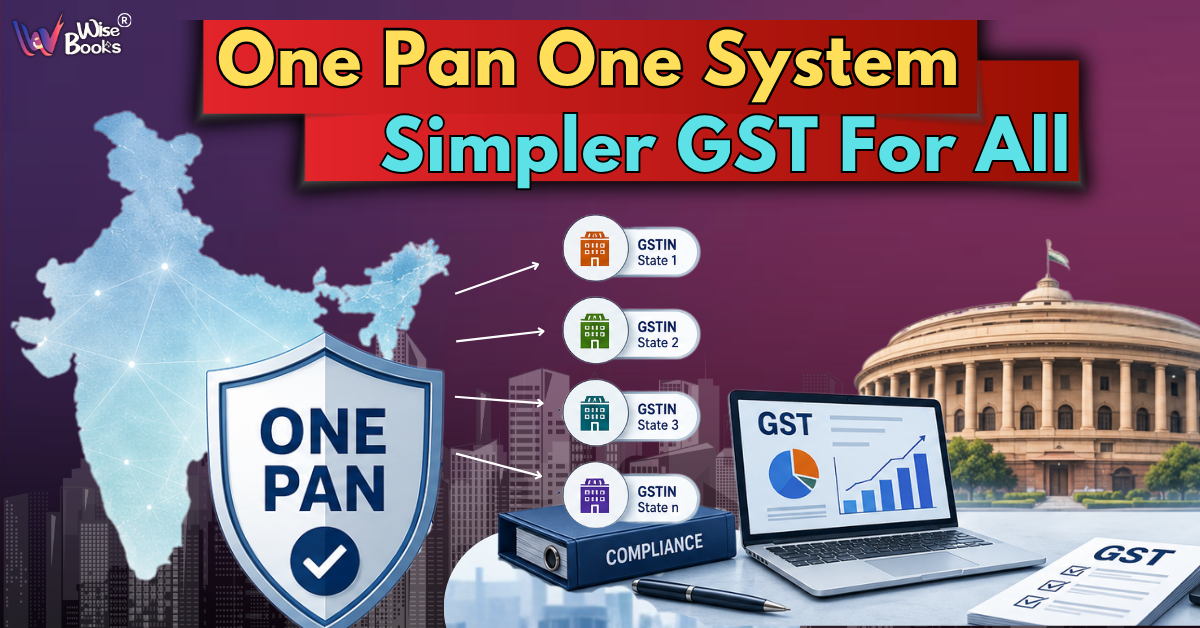
One PAN → Multiple GSTINs → One Central Administrative Authority
This approach aims to reduce duplication while keeping the existing legal registration structure intact.
How Does the Current System Work?
At present, each GST registration functions independently.
A business operating in several states may have to:
- File GST returns for every registration.
- Respond to notices issued by different tax officers.
- Handle separate audits and assessments.
- Coordinate with multiple GST jurisdictions.
- Maintain state-wise compliance records.
Although all registrations belong to the same company, the administrative process remains fragmented.
How Could the Proposed System Work?
If the proposal is implemented, businesses would still maintain separate GST registrations in each state. The key difference would be that a single Central GST authority would oversee the administration of all those registrations linked to the same PAN.
This could create a single point of contact for many central tax-related matters, making compliance more organised and reducing repetitive interactions with different offices.
Why Is CBIC Exploring This Proposal?
1. Reduce Compliance Burden
Large businesses spend considerable time managing GST compliance across multiple states. Different jurisdictions often require separate responses, documentation, and follow-ups. Centralised administration could significantly reduce this administrative workload.
2. Improve Ease of Doing Business
India has consistently focused on improving the ease of doing business. Simplifying GST administration for companies operating nationwide could reduce unnecessary procedural hurdles and make tax compliance more business-friendly.
3. Ensure Uniform Interpretation of GST Laws
Different tax jurisdictions may interpret GST provisions differently. As a result, businesses sometimes receive conflicting decisions on similar issues.
A centralised administrative system could promote greater consistency in interpreting GST laws, reducing uncertainty for taxpayers.
4. Minimise Duplicate Notices and Litigation
Businesses operating in multiple states occasionally receive notices from different jurisdictions on similar matters. Handling these separately consumes time and resources.
Centralised administration could improve coordination and reduce the chances of duplicate proceedings, helping businesses manage disputes more efficiently.
5. Improve Administrative Efficiency
Managing registrations, responding to notices, processing amendments, and coordinating audits across several offices can be complex.
A unified administrative framework could streamline these activities, allowing both businesses and tax authorities to work more efficiently.
Who Will Benefit the Most?
Although the proposal could eventually benefit many taxpayers, some sectors are likely to gain the most.
Large Corporate Groups
Companies with operations across multiple states would experience a significant reduction in administrative complexity.
Manufacturing Companies
Manufacturers operating several factories across India often deal with multiple GST jurisdictions. Centralised administration could simplify compliance management.
E-commerce Businesses
Online marketplaces and sellers with warehouses across different states maintain numerous GST registrations. A streamlined system could make compliance much easier.
Logistics and Transport Companies
Businesses with nationwide transportation networks regularly interact with multiple GST offices. Central administration may reduce this burden.
Banking, Insurance, and Financial Services
Financial institutions operate through extensive branch networks across India. A centralised administrative approach could improve coordination and compliance efficiency.
Key Advantages of the Proposal
If implemented successfully, the proposal may offer several benefits:
- Lower compliance costs for businesses.
- Reduced interaction with multiple GST authorities.
- Faster resolution of administrative matters.
- Better coordination during audits.
- More consistent interpretation of GST provisions.
- Reduced duplication of notices and proceedings.
- Improved ease of doing business.
- Greater efficiency for companies operating across India.
Challenges That Need to Be Addressed
While the proposal offers promising advantages, several practical and legal questions remain.
GST is jointly administered by the Central Government and State Governments. Therefore, policymakers will need to determine how responsibilities will be shared under a centralised administrative framework.
Other important considerations include whether legal amendments will be required, how existing GST jurisdictions will be reorganised, and whether the new system will apply to all taxpayers or only to businesses above a certain turnover threshold.
These issues are expected to be examined by the working group before any final decision is made.
Current Status
At present, no new GST registration system has been introduced.
The CBIC has only initiated discussions and constituted a working group to study the feasibility of centralised GST administration. The group is expected to evaluate its legal, technological, and operational implications before any proposal is formally placed before the GST Council or implemented.
Businesses should therefore note that the existing GST registration and compliance rules continue to apply until any official notification is issued.
Conclusion
The proposal for centralised GST administration under one PAN represents an important step toward simplifying India's GST compliance framework. Rather than changing the requirement for state-wise GST registrations, it seeks to make the administrative process more efficient by providing businesses with a single Central GST authority for multiple registrations linked to the same PAN.
If implemented, the reform could reduce compliance costs, minimise administrative duplication, improve consistency in tax administration, and strengthen India's ease of doing business. However, as the proposal is still under examination, businesses should continue following the current GST provisions while keeping an eye on future announcements from the CBIC and the GST Council.
As India's tax system continues to evolve, reforms like these demonstrate the government's ongoing effort to modernise GST administration and create a more efficient compliance environment for businesses operating across the country.


Comments
No comments yet. Be the first to comment!