

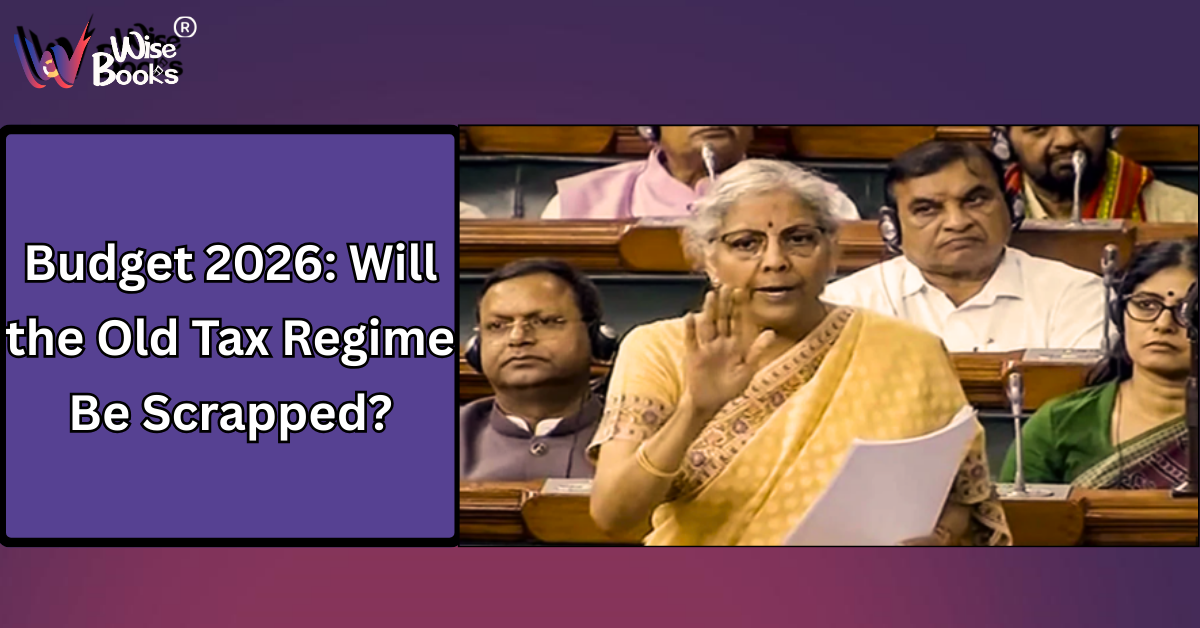
As the Union Budget 2026 draws near, there is one question in the air that has taken priority over all discussions within the tax community:
Is the government finally doing away with the old tax regime?
Speculation is running high because estimates suggest more than 80% of taxpayers might have already shifted to the new tax regime. The new system, simpler and cleaner, with tax freedom up to ₹12 lakh, has quickly become the default option for most people, particularly the salaried earners.
Yet, with the high tide of migration, one critical question lingers:
Is India ready to remove the old tax regime in Budget 2026? A more close look says: Not yet. There are strong economic, behavioural, legal, and administrative reasons why the old tax regime may stay for a few more years.
The Context: Why This Speculation Now?
The upcoming Union Budget will be the government’s third budget under its current term. Major tax reforms are expected, especially after the last Union Budget made the new tax regime the default option, increasing its attractiveness significantly.
A few factors have intensified the debate:
- Official data shows 9.19 crore returns filed in FY 2024–25, likely rising to nearly 10 crore in FY 2025–26.
- Post-Budget benefits especially making income up to ₹12 lakh effectively tax-free have accelerated migration.
- Government statements last year indicated that nearly 75% taxpayers had already adopted the new regime.
With rising adoption, the number is assumed to have now crossed 80%. - This has triggered widespread discussion on whether the government should continue maintaining two systems.
Why the Old Tax Regime Is Unlikely To Be Scrapped in Budget 2026
Although a vast majority now favours the new system, the old tax regime continues to play a structurally important role in India’s economy especially for middle-class families and long-term financial discipline
1. India's Household Savings Model Still Depends on the Old System
Despite the rising popularity of the new tax regime, the old system continues to hold deep structural importance in India’s financial ecosystem. A major reason is the country’s savings behaviour, which has long been shaped by the various deductions available only under the old regime.
Incentives such as Section 80C (PPF, EPF, ELSS, life insurance), Section 80D (health insurance), Section 24(b) (housing loan interest), HRA benefits, and standard deductions guide taxpayers toward long-term financial planning.
These provisions encourage disciplined investing, retirement savings, insurance adoption, and home ownership pillars that support both individual financial security and the broader national savings pool. Abruptly removing these deductions could weaken the household savings rate, disrupt retirement planning for millions, reduce inflows into government-backed instruments, and ultimately undermine the financial stability that India’s savings-led culture has built over decades. For these reasons, the old tax regime still remains a critical framework that the government is unlikely to dismantle anytime soon.
2. Middle-Class Cashflows Are Built Around Tax-Linked Investments
A huge section of India’s middle class has structured its monthly finances around products purchased specifically because of tax benefits.
These include:
- long-term home loans
- insurance policies
- pension schemes
- systematic 80C investments
- HRA-linked rental planning
For many families, these instruments are part of multi-year commitments.
Scrapping the old regime suddenly would:
- increase their annual tax burden
- disrupt long-term financial planning
- break the behavioural connection between “tax saving = disciplined investing”
Even if the new regime looks cheaper on paper, the psychological and structural shift cannot happen overnight.
3. A Dual System Offers Economic & Behavioural Stability
Maintaining both tax regimes allows the government to:
a. Encourage consumption through the new regime
- Encourage savings through the old regime
This balance helps maintain:
a. economic stability
b. steady financial flows into savings instruments
c. a smoother transition for taxpayers
A dual framework avoids sudden behavioural shocks, especially for families whose finances rely on old-regime deductions.
Additionally, businesses, banks, insurers, mutual funds, and housing finance companies depend on the continuity of tax rules. Sudden changes could disrupt entire sectors.
4. Scrapping the Old Regime Requires Significant Legal Amendments
Removing the old tax regime is not as simple as removing a few deductions. It will require:
- amending multiple sections of the Income Tax Act
- rewriting forms and compliance processes
- updating software systems
- recalibrating tax planning for tens of millions
- handling disputes related to investments made under the old system
Given the scale, this cannot be executed in a single budget.
The income tax department is currently handling both regimes smoothly; there is no administrative urgency to overhaul the system right now.
5. The Government Is Favouring a Soft, Gradual Transition—not a Forced Shift
So far, the government has followed a non-coercive, nudge-based approach:
- made the new regime the default
- increased its slab benefits
- cut tax rates
- reduced exemptions complexity
- improved take-home income
But it has not forced taxpayers to switch.
A sudden mandatory shift could be seen as unfair to those who have:
- taken long-term home loans
- bought insurance for tax benefits
- invested in tax-linked financial instruments
- structured their finances around deductions
A smoother multi-year approach is more acceptable and less disruptive.
Would Scrapping the Old Regime Now Cause Disruption?
Yes in several ways.
Even with 80% migration, completely removing the old system now would likely cause:
Economic disruption:
- sudden drop in long-term savings
- reduced investments in insurance and pension products
- possible impact on housing finance demand
Behavioural disruption:
- break in disciplined investing patterns
- fear among taxpayers close to retirement
- dissatisfaction among salary earners
Political and social disruption:
- negative perception among working middle class
- concerns about reduced support for savings
- timing concerns (close to elections in many states)
This is why a sudden withdrawal is widely seen as improbable in Budget 2026.
What Needs to Happen Before the Old Regime Can Be Phased Out?
However, several structural and behavioural milestones must be achieved before the old tax regime can be withdrawn responsibly. According to experts, India needs a gradual, well-planned transition to avoid disruption in savings patterns, long-term financial commitments, and taxpayer confidence.
1. Migration Shall Increase to 90–95%
The phase-out can take place only when an overwhelming proportion of the taxpayers would naturally shift to the new regime: this ensures that such a change is voluntary, market-driven, with minimum resistance or disruption to the existing pattern of financial behaviour.
2. New Regime Benefits Must Fully Match Old-Regime Deductions
It needs to compensate for the key advantages of the old regime: higher standard deductions, a strong rebate mechanism, and simpler benefits for salaried taxpayers, making the new regime beneficial even without traditional deductions.
3. Strong Alternatives Needed to Support Long-term Savings
If the deduction-based incentives are taken away, then the government must strengthen the other channels of savings. Higher returns on small savings schemes, flexible long-term investment products, and improved retirement-focused options will be required to keep the savings rate in India intact.
4. There Must be Grandfathering of Existing Investments
In order not to hurt the taxpayers who have already committed to home loans, insurance plans, or long-term savings linked with old-regime deductions, the existing benefits must continue up to maturity. This prevents financial loss and preserves public trust during the transition.
5. A multiyear sunset clause should be enacted.
A phase-out cannot be implemented overnight. A transition window of 3–5 years would allow taxpayers to realign investments, financial institutions to adjust products, and systems to adopt the new framework smoothly and without any legal complications.
Conclusion
Despite over 80% of taxpayers already migrating to the new tax regime, the old system is deeply entrenched in India's saving habits, middle-class financial planning cycles, and long-term investment patterns. Given this structural dependence, along with policy-linked incentives, administrative complexity, and the government's own gradualist approach, the scrapping of the old tax regime in Budget 2026 is very unlikely. Any complete phase-out, if considered sometime in the future, would require significantly higher migration to the new regime, stronger non-deduction-based savings incentives, a multi-year transition roadmap, firm grandfathering provisions, and extensive legal restructuring. For now, both regimes will operate in parallel, allowing individuals flexibility in choosing a regime that best fits their financial goals and tax planning needs.
FAQ
1. Why is there speculation that the old tax regime might be scrapped in Budget 2026?
Speculation is rising because more than 80% of taxpayers are estimated to have already shifted to the new tax regime. The government has also made the new regime the default option and made income up to ₹12 lakh effectively tax-free. This rapid adoption has triggered debates on whether dual systems are still needed.
2. Has the government confirmed that the old tax regime will be removed?
No. There is no official confirmation from the government or CBDT. In fact, multiple statements in the past have suggested that the transition will be gradual, not abrupt.
3. Why is the old tax regime unlikely to be scrapped in Budget 2026?
Because the old regime still plays a crucial role in India’s savings culture, long-term financial commitments, and middle-class planning. Removing it suddenly could disrupt household finances, reduce national savings, and create behavioural and economic instability.
4. How does the old tax regime support India’s savings model?
The old regime encourages taxpayers to invest in long-term savings through deductions like:
- Section 80C (PPF, EPF, ELSS, life insurance)
- Section 80D (health insurance)
- Section 24(b) (housing loan interest)
- HRA benefits
These tax-linked incentives drive retirement planning, insurance adoption, and disciplined investing.
5. What disruption could occur if the old regime is scrapped immediately?
Sudden removal could cause:
- A drop in long-term savings
- Reduced demand for insurance, housing loans, and pension schemes
- Financial stress for middle-class families
- Psychological disruption in the “tax saving = investing” habit
- Administrative and political backlash
6. Why is a dual tax system still important?
The new regime boosts consumption, while the old regime supports long-term savings. Keeping both systems helps maintain economic balance and allows taxpayers to choose based on their financial situation.
7. What legal and administrative challenges prevent immediate scrapping?
Scrapping the old regime would require:
- Amendments to multiple sections of the Income Tax Act
- Overhauling forms, software, and compliance systems
- Managing disputes related to old deductions
- Ensuring a smooth transition for millions of taxpayers
This cannot be done in a single budget cycle.
8. What needs to happen before the old regime can be phased out responsibly?
Experts say the following milestones must be met:
1. Migration must reach 90–95%.
2. New regime benefits must match or exceed old-regime deductions.
3. Strong savings alternatives (higher small savings rates, flexible investment schemes).
4. Grandfathering for existing loans, insurance plans, and long-term investments.
5. A 3–5 year sunset period for gradual transition.
9. Will Budget 2026 scrap the old tax regime?
Very unlikely. The government is expected to continue the dual system for several more years and allow taxpayers to transition naturally.
10. What should taxpayers do for now?
Taxpayers should:
- Compare both regimes annually
- Choose the system that offers the maximum benefit
- Continue long-term investments without fear of sudden policy change
Both regimes will remain available, offering flexibility and stability


Comments
No comments yet. Be the first to comment!