


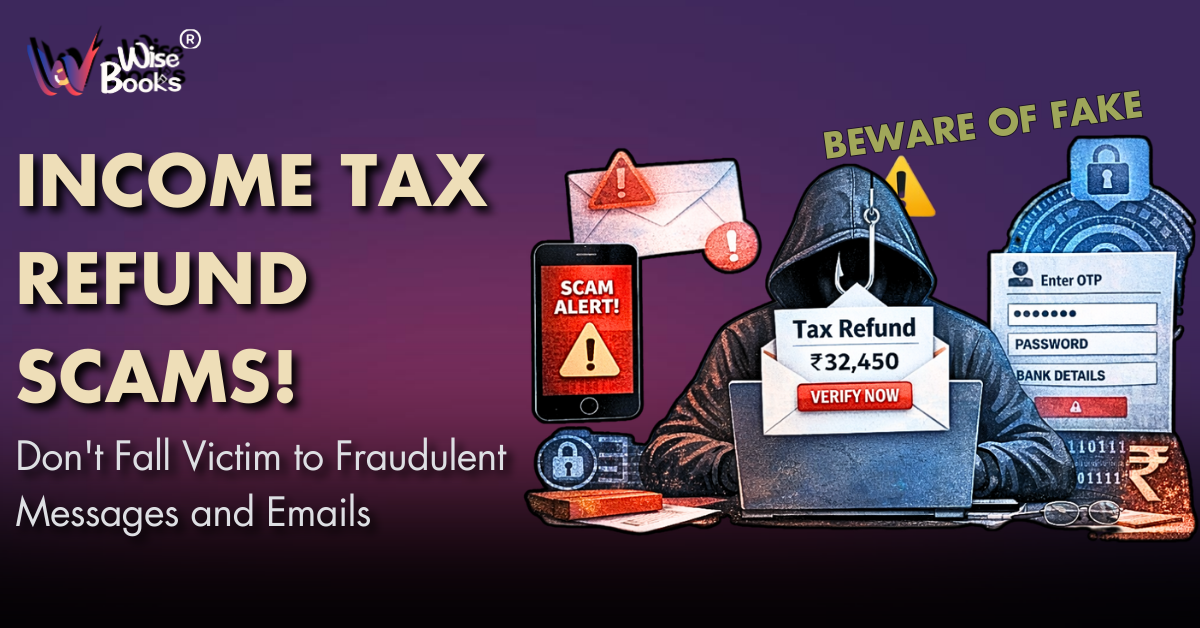
The Income Tax Department has issued a strong public advisory after observing a significant surge in fraudulent income tax refund communications being sent to taxpayers across India. These messages are being circulated through emails, SMS, WhatsApp, and even fake mobile applications, all designed to appear as if they originate from official government sources.
Rise in Fake Income Tax Refund Emails and Messages
Cybercriminals are impersonating the Income Tax Department by using look-alike email addresses, cloned websites, and official-looking logos. Under the false promise of a pending income tax refund, these fraudsters attempt to deceive taxpayers into sharing confidential information such as PAN, Aadhaar details, bank account numbers, login credentials, and OTPs. Once this information is obtained, it can be misused for financial fraud, identity theft, and unauthorized access to bank accounts.
With the ITR filing and refund season currently in progress, the risk of falling victim to such scams has increased substantially. Many taxpayers are expecting refunds, making them more vulnerable to messages that claim immediate action is required to “process” or “release” their refund. To counter this growing threat, the Income Tax Department has clearly stated that all refund-related information must be checked only through official government platforms.
Taxpayers are strongly advised not to click on links received via email or SMS, even if the message appears urgent or authentic. Genuine income tax refunds are processed automatically and can be verified only by logging in to the official Income Tax e-Filing portal at www.incometax.gov.in. The department never asks for sensitive personal or banking details through emails, messages, or phone calls.
Staying vigilant, verifying information through official channels, and reporting suspicious communications promptly are essential steps in protecting oneself from such fraudulent activities.
What Is the Fake Income Tax Refund Scam?
How the Scam Operates
The fake income tax refund scam is a cyber fraud in which fraudsters impersonate the Income Tax Department to deceive taxpayers into believing that their tax refund is pending. Scammers send look-alike emails, SMS messages, or WhatsApp alerts that closely resemble official government communications. These messages usually claim that immediate action is required to process or release the refund, creating a sense of urgency and panic among taxpayers.
Common Claims Used by Fraudsters
The fraudulent messages typically make one or more of the following claims:
- Your income tax refund is pending and awaiting verification
- Immediate confirmation is required to avoid delays
- PAN or bank details need to be updated or revalidated
- The refund will be cancelled or put on hold if action is not taken urgently
Such messages are deliberately worded to pressure taxpayers into responding quickly without verifying the source.
Warning Signs in Fake Refund Messages
These scam communications often contain subtle but noticeable red flags, such as:
- Fake or copied Income Tax Department logos to appear authentic
- Minor spelling or grammatical errors that are easy to overlook
- Deceptive website links that closely resemble the official Income Tax portal but differ slightly in spelling or domain name
How Taxpayers Get Trapped
Once a taxpayer clicks on the link provided in the message, they are redirected to a fake website designed to look like the official e-filing portal. The site prompts users to enter sensitive details such as login credentials, PAN, bank account information, and OTPs. As soon as this information is submitted, fraudsters gain unauthorized access, which can lead to financial loss, identity theft, and misuse of personal data.
Understanding how this scam works is the first step toward preventing fraud and protecting your financial information.
How to Identify a Fake Refund Email or Message
With cyber frauds increasing during the tax filing and refund season, taxpayers must be extra cautious before responding to any refund-related communication. Fake income tax refund messages are designed to look convincing, but they usually contain certain warning signs. Carefully checking the points below can help you identify fraudulent messages and avoid falling victim to scams.
Check the Sender’s Email Address Carefully
One of the easiest ways to spot a fake refund email is by examining the sender’s email address. Official communication from the Income Tax Department is sent only from authorised domains ending with @incometax.gov.in. Fraudsters often use look-alike email IDs with minor spelling changes, additional characters, or public email domains to mislead taxpayers. If the sender’s address looks unfamiliar or suspicious, do not trust the message.
Verify the Website Link Before Clicking
The Income Tax Department has clearly stated that refund verification and processing are done only through the official e-Filing portal.
https://www.incometax.gov.in
Fake messages usually contain links that closely resemble the official website but redirect users to fraudulent portals. These links may include extra letters, numbers, or different domain endings. Taxpayers should never click on such links and instead manually type the official website address into their browser to check refund status.
Beware of Urgency or Threatening Language
Fraudulent refund messages often use panic-inducing language such as:
- “Immediate action required”
- “Refund will be cancelled”
- “Legal action will be initiated”
- “Last warning before refund lapse”
The Income Tax Department does not threaten taxpayers through emails or SMS. Any message that creates fear or forces quick action without proper verification should be treated as a red flag.
Never Share Sensitive Personal or Banking Details
A genuine income tax communication will never ask for confidential information such as:
1. OTPs
2. Login passwords
3. Debit or credit card details
4. CVV numbers
5. PINs or net banking credentials
Fraudsters use fake refund messages to trick taxpayers into revealing these details, which can then be misused for unauthorised bank transactions and identity theft. Taxpayers should remember that no government department collects sensitive data via email, SMS, or WhatsApp.
Final Reminder for Taxpayers
If a refund is genuine, it will reflect automatically when you log in to the official Income Tax portal. There is no need to click on links or respond to unsolicited messages. When in doubt, always verify through authorised channels and report suspicious communications immediately.
Real-Life Case Example: How a Fake Refund Email Led to Financial Loss
Case Overview
A salaried taxpayer, like many others awaiting an income tax refund, received an email claiming that a refund of ₹32,450 was pending for the recently filed assessment year. The email appeared authentic, carrying official-looking language, familiar formatting, and references to the Income Tax Department. It warned that the refund would not be processed unless immediate verification was completed.
How the Fraud Occurred
Believing the email to be genuine, the taxpayer clicked on the link provided in the message. The link redirected to a website that closely resembled the official Income Tax e-Filing portal. The page prompted the taxpayer to enter PAN details, bank account information, and a one-time password (OTP) sent to the registered mobile number. Trusting the process and unaware of the risk, the taxpayer complied.
The Consequences
Within a few hours of submitting the information, unauthorised transactions were carried out from the linked bank account. The taxpayer soon realised something was wrong and contacted the bank, only to discover that sensitive details had been compromised. Further investigation revealed that the website used for verification was fake, created solely to harvest personal and financial data.
Key Lessons from the Incident
This case highlights how convincingly fraudsters can mimic official government communication, especially during the ITR filing and refund season, when taxpayers are expecting refunds and may act quickly without verification. It also reinforces the fact that the Income Tax Department never asks for PAN validation, bank details, or OTPs through email or external links.
Growing Trend of Similar Frauds
Such incidents are being reported with increasing frequency across the country. Cybercriminals actively exploit the refund season to target unsuspecting taxpayers, resulting in financial losses, identity theft, and prolonged stress for victims. Awareness and vigilance remain the most effective safeguards against falling prey to such scams.
How to Protect Yourself from ITR Refund Fraud
With the increasing number of fake income tax refund scams, it has become essential for both individuals and organisations to adopt strong preventive measures. Cybercriminals exploit gaps in awareness and digital hygiene, especially during the ITR filing and refund season. Following best practices can significantly reduce the risk of financial loss and identity theft.
Protection Measures for Individual Taxpayers
Individual taxpayers should always check their income tax refund status only by logging in directly to the official Income Tax e-Filing portal. Any refund reflected on the portal is genuine, and there is no requirement to click on external links or respond to unsolicited messages. Taxpayers must avoid clicking on links received through SMS, WhatsApp, emails, or social media, even if the message appears urgent or official.
Regular monitoring of bank statements and transaction alerts is another crucial step in detecting unauthorized activity at an early stage. If any suspicious transaction is noticed, reporting it to the bank immediately can help limit potential losses. Additionally, taxpayers should change their passwords periodically, especially for income tax and banking portals, and ensure that passwords are strong and unique.
Accessing tax portals over public or unsecured Wi-Fi networks should be strictly avoided. Such networks are vulnerable to data interception, increasing the risk of credential theft. Using a secure, private internet connection and updated devices adds an extra layer of protection against cyber threats.
Protection Measures for Businesses and Employers
Businesses and employers also play a vital role in preventing tax-related cyber fraud. Organisations should educate employees about fake tax refund scams, including how to identify suspicious emails and messages. Regular awareness sessions and internal advisories can help employees stay alert and avoid falling victim to phishing attempts.
Employers should encourage the professional handling of ITR filings and tax compliance, either through in-house experts or authorised tax professionals. This reduces the chances of errors and exposure to fraudulent communications. Maintaining strong internal compliance systems and cybersecurity practices, such as secure data storage, restricted access to financial information, and regular system audits, is equally important.
By fostering a culture of compliance and cyber awareness, businesses can safeguard not only their own financial data but also that of their employees and stakeholders.
Important Reminder from Tax Experts
Tax experts have constantly highlighted that the return file process of the income tax refund system in the Indian context is completely computerized and centrally controlled. After the filing of an income tax return and if the return qualifies for the grant of a tax refund, the amount gets automatically credited to the pre-validated bank account of the taxable person.
Experts warn taxpayers not to fall prey to the hype about the need to provide more verification in order to receive a refund. The moment an applicant is asked to confirm any detail via emails, messages, or unauthorized websites is an indictor that it is deviating from the required procedure.
Tax consultants further point out that if there is anyrelevant communication pertaining to refunds, this is strictly limited to informational notifications, whereby taxpayers are directed to check their log in to the website on their own. Nothing in this communication requires urgent attention or disclosure to be made. This is a fact worth knowing to enable taxpayers to act properly and without panic while waiting to retrieve their refunds.
Being up to date with normal refund procedures and using the official channels will provide both financial security and peace of mind, especially during the rush times of filing and claiming refunds


Comments
No comments yet. Be the first to comment!