


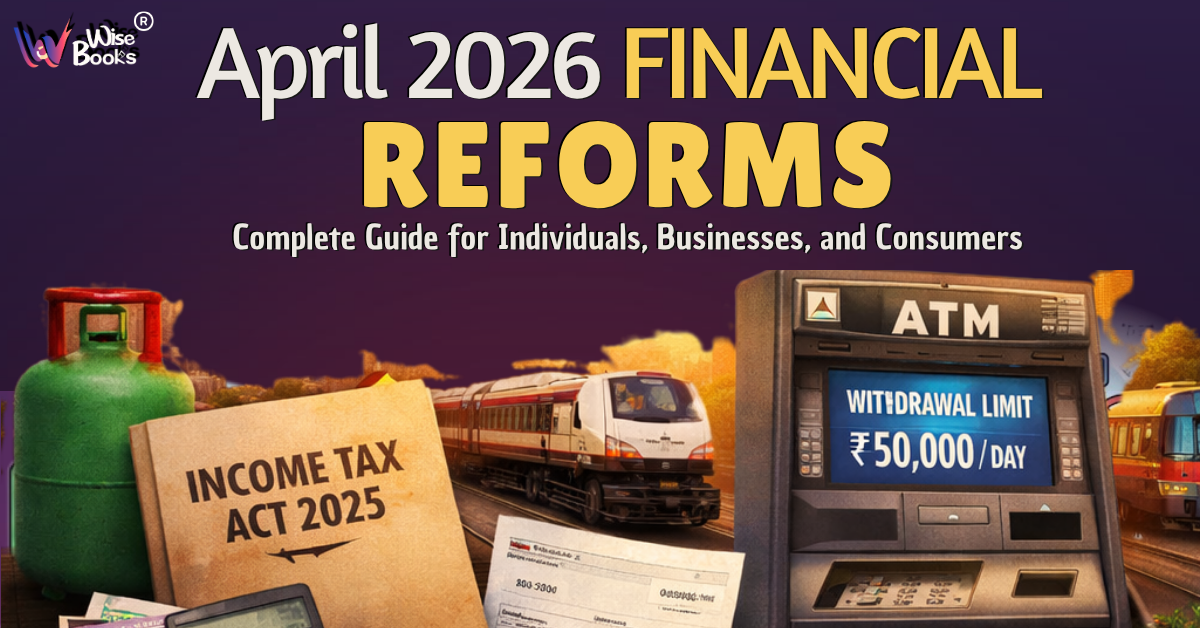
The start of the new financial year on 1st April 2026 marks the implementation of several significant financial reforms in India. These changes will have far-reaching effects on taxpayers, salaried individuals, business owners, and everyday consumers. From updated tax laws and stricter compliance norms to changes in banking charges and travel rules, it is essential to understand each reform in detail to plan finances efficiently. Below is a comprehensive breakdown of the reforms and their implications.
Introduction of the Income Tax Act 2025
The Income Tax Act 2025 replaces the long-standing Income Tax Act 1961, which has been in place for decades. The new Act is designed to simplify tax compliance, reduce confusion, and bring clarity in income reporting.
- Unified Concept of Tax Year: Traditional terms like “Assessment Year” and “Previous Year” have been replaced by a single concept called Tax Year. This streamlines the tax calculation process and eliminates the need to remember multiple timelines.
- Simplified Filing: The Act aims to make tax filing easier for first-time taxpayers and small business owners who previously struggled with complex forms and provisions.
- Transparency and Compliance: By introducing clearer reporting norms, audits and tax scrutiny can now be conducted more efficiently, reducing disputes and errors in assessment.
Overall, the Income Tax Act 2025 is expected to make taxation simpler, reduce compliance burden, and encourage voluntary adherence to tax norms.
Zero Income Tax on Annual Income up to ₹12 Lakh
One of the most significant reforms under the new tax regime is the enhanced rebate under Section 87A, which provides relief for middle-income earners.
- Who Benefits: Individuals earning up to ₹12 lakh annually are now eligible to pay zero income tax, a substantial increase from the previous ₹5 lakh threshold.
- Impact on Disposable Income: This change increases take-home income, enabling households to spend more on essentials, savings, and investments.
- Economic Implications: Increased disposable income can boost consumption, stimulate economic growth, and benefit small businesses and service providers.
For salaried employees, self-employed professionals, and small business owners, this reform reduces tax burden while encouraging compliance.
Modernization of TDS Documentation
The government has also revised the Tax Deducted at Source (TDS) documentation to simplify reporting and improve clarity.
- Renaming of Forms:
- Form 16 is now Form 130
- Form 16A is now Form 131
- Standardize reporting of salary and interest income.
- Make documentation easier for employees, employers, and financial institutions.
- Reduce errors and disputes during tax filing or audits.
These changes will help both taxpayers and authorities maintain accurate records, making compliance smoother and more efficient.
Stricter PAN Card Application Rules
To strengthen identity verification and reduce fraud, the government has tightened PAN card application norms.
- Aadhaar Alone Not Sufficient: Previously, Aadhaar could be used as proof of date of birth; now additional documents are mandatory.
- Required Documents: Class 10 certificate, birth certificate, or passport.
- Impact: Ensures stronger verification, prevents identity theft, and safeguards financial transactions linked to PAN.
Applicants for new PAN cards or those updating existing details must ensure they have valid supporting documents to avoid rejection.
Possible Revision in LPG Cylinder Prices
Domestic LPG prices may see revisions depending on global crude oil rates and geopolitical developments.
- Factors Influencing Price: Conflicts such as the US–Israel tensions impact crude oil prices, which directly affect domestic LPG costs.
- Household Impact: Families relying on LPG for cooking may need to adjust monthly budgets in case of price increases.
- Planning Tip: Households should monitor updates and consider alternatives like subsidized cooking gas or bulk refills.
This change highlights the importance of financial planning to mitigate sudden increases in household expenses.
Increase in Fuel Costs: CNG, PNG, and Aviation Fuel
The new financial year may also bring higher transportation costs due to rising fuel prices.
- Daily Commutes: Increased fuel costs may lead to higher fares for cabs, autos, and other public transport.
- Air Travel: Airlines may pass on fuel cost hikes to passengers, making flights more expensive.
- Economic Impact: Higher fuel prices can affect logistics, delivery services, and inflation, ultimately influencing the overall cost of goods and services.
Individuals and businesses should anticipate these changes to manage commuting, logistics, and travel budgets more effectively.
Revised ATM Withdrawal Charges
Banks have updated the rules for ATM transactions, which will affect frequent cash users.
- Free Transaction Limits:
- UPI-based ATM withdrawals now count toward free limits.
- After 5 free transactions, a fee of ₹23 per transaction may apply.
- Metro cities: 3 free withdrawals; Non-metro cities: 5 free withdrawals.
To avoid additional costs, individuals should consider using digital payment methods or plan cash withdrawals within the allowed free limit.
Reduction in Daily Debit Card Withdrawal Limits
Some banks have also revised the maximum cash withdrawal limits on debit cards.
- Previous Limit: ₹1,00,000 per day
- New Limit: ₹50,000–₹75,000 per day depending on the bank
- Impact: High-cash users, including small business owners, traders, and professionals relying on large daily withdrawals, need to plan withdrawals carefully to avoid inconvenience.
These changes encourage digital payments and reduce the handling of large cash amounts.
Stricter Train Ticket Cancellation Rules
Indian Railways has revised cancellation rules to minimize last-minute cancellations and optimize operations.
- Zero Refund: Cancellations within 8 hours of departure now receive no refund (previously 4 hours).
- Encouragement for Advance Planning: This change promotes better scheduling, reduces operational losses, and ensures availability for other passengers.
Travelers must plan their journeys carefully to avoid financial losses due to these stricter norms.
Revised Refund Structure for Train Tickets
Along with stricter cancellation rules, the refund structure for train tickets has been updated.
- 8–24 hours before departure: 50% refund
- 24–72 hours before departure: 75% refund
- More than 72 hours before departure: Standard charges apply
This system ensures that refunds are fair, encourages early cancellations when necessary, and reduces financial losses for railways.
Final Thoughts
The financial reforms effective from April 2026 reflect the government’s aim to:
- Simplify taxation and make compliance easier for taxpayers.
- Strengthen verification norms to reduce fraud.
- Adjust household and business expenses according to global economic conditions.
- Encourage digital transactions and reduce dependency on cash.
While reforms like zero tax on income up to ₹12 lakh provide significant relief, other changes such as higher banking charges, stricter PAN verification, and revised train rules require careful planning. Staying informed, reviewing personal finances, and adapting early to these changes will help individuals and businesses manage their money efficiently in the new financial year.


Comments
No comments yet. Be the first to comment!