


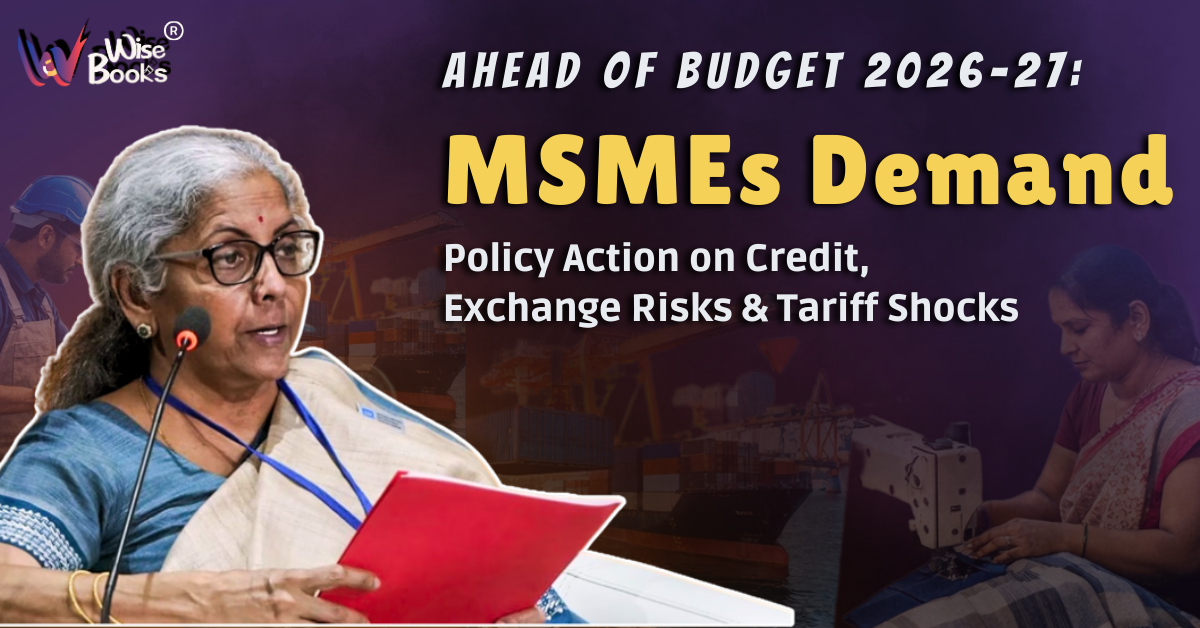
As India approaches the presentation of the Union Budget 2026-27, pre-budget consultations have intensified between the government and key economic stakeholders. Among all sectors, Micro, Small and Medium Enterprises (MSMEs) have emerged as one of the most vocal and strategically important voices, pressing for urgent policy reforms to address long-standing structural challenges.
MSMEs are widely regarded as the backbone of the Indian economy, contributing nearly 30% of GDP, accounting for approximately 45% of India’s exports, and providing employment to millions across manufacturing, services, retail, logistics, and trade. Despite their immense contribution, MSMEs remain disproportionately vulnerable to both domestic and global economic shocks.
According to leading economic assessments, including reports by Deloitte, India’s macroeconomic fundamentals remain strong, supported by consumption demand, infrastructure investment, and digital expansion. However, these positive indicators often fail to translate into ground-level relief for MSMEs, which continue to face credit constraints, rising costs, regulatory complexity, and global trade volatility.
Global supply chain disruptions, exchange-rate fluctuations, increasing borrowing costs, tighter lending norms, and compliance-heavy regulatory frameworks are collectively compressing MSME profit margins. Recognising these challenges, MSME associations, exporters’ councils, and industry bodies have presented a comprehensive policy wish list, urging the government to ensure that the 2026-27 Budget focuses on resilience, affordability, and long-term competitiveness, rather than short-term relief measures.
1. Better Access to Credit: Affordable, Inclusive, and Flexible
The Core Challenge
Access to formal credit remains the single most critical bottleneck for MSMEs. While several government schemes exist, a significant portion of micro and small enterprises still rely on informal lenders, exposing them to high interest rates and financial insecurity.
Banks and NBFCs often impose collateral requirements, rigid credit scoring norms, and lengthy approval processes, making timely access to working capital difficult. As highlighted by The Economic Times, even financially viable MSMEs face liquidity stress during seasonal slowdowns, delayed receivables, or sudden market disruptions.
Key Credit-Related Demands from MSMEs
Collateral-Free Lending Up to ₹1 Crore
MSMEs are seeking a wider rollout of collateral-free loans up to ₹1 crore, particularly for micro enterprises, with interest rates capped at 6–7%. This would help businesses finance raw materials, salaries, rent, and expansion plans without risking personal or family assets.
Interest Subvention & Counter-Cyclical Support
Industry bodies have strongly advocated for interest subvention schemes, especially during economic downturns or demand slowdowns. Counter-cyclical credit support would ensure that temporary disruptions do not escalate into permanent business failures.
Relaxation of NPA Classification Norms
The existing NPA tagging mechanism is viewed as excessively harsh for MSMEs. Short-term cash flow disruptions often result in loans being classified as NPAs, cutting off future credit access. MSMEs are requesting flexible restructuring norms, extended moratoriums, and longer grace periods.
Expansion of Credit Guarantee & Export Credit Schemes
Enhanced coverage under credit guarantee schemes would encourage lenders to extend loans without fear of defaults. Similarly, expanded export credit schemes would help small exporters manage delayed overseas payments and global market risks.
Why This Matters
Affordable and flexible credit directly affects business continuity, job creation, technology adoption, and export readiness. Without structural reforms in MSME financing, the sector risks stagnation, undermining India’s broader economic growth ambitions.
2. Strengthening Working Capital Cycles & Payment Discipline
Delayed Payments: A Silent Crisis
Delayed payments from large buyers and government departments remain a persistent issue for MSMEs, often choking cash flows and forcing businesses to borrow at high costs.
Key Expectations
- Stronger enforcement of MSME payment timelines
- Expansion of MSE Facilitation Councils with faster dispute resolution
- Mandatory disclosure and penalties for chronic payment defaulters
Why This Matters
Improving payment discipline would reduce MSMEs’ dependence on debt and improve financial stability across supply chains.
3. Safeguards Against Exchange-Rate Risks
The Currency Volatility Problem
Exchange-rate volatility has become a major risk factor for MSMEs engaged in imports or exports. A sudden depreciation of the rupee can inflate import costs overnight, while delayed export realisations worsen cash-flow stress.
Unlike large corporations, MSMEs lack access to advanced forex hedging instruments due to high costs and limited financial expertise.
Protective Measures Sought
Forex Fluctuation Protection Scheme
MSMEs want a government-backed forex protection mechanism designed specifically for micro and small enterprises to absorb losses from extreme currency movements.
Simplified & Subsidised Hedging Tools
Low-cost hedging instruments supported by the Reserve Bank of India and public sector banks would enable MSMEs to manage currency risk without complex financial arrangements.
Why This Matters
Stable currency risk management improves pricing certainty, profitability, and export competitiveness, allowing MSMEs to scale internationally with confidence.
4. Protection from Tariff Shocks & Global Trade Uncertainties
The Global Trade Reality
Rising protectionism, geopolitical tensions, and sudden tariff changes have made international trade unpredictable. MSMEs integrated into global value chains are often the first to absorb losses, lacking pricing power and financial buffers.
Key Trade-Related Budget Expectations
Enhanced Duty Drawback & Export Incentives
Temporary enhancements in duty drawback rates and export incentives would help offset tariff-related cost increases.
Trade Resilience Fund
A dedicated Trade Resilience Fund is being proposed to support MSMEs facing margin erosion due to tariffs, sanctions, or trade disruptions.
Freight Equalisation & Logistics Support
High logistics costs significantly impact MSME competitiveness. Subsidies, priority container allocation, and faster customs clearance are critical to reducing export bottlenecks.
Why This Matters
Proactive trade support can prevent order cancellations, market exits, and export contraction, helping MSMEs retain global buyers.
5. Simplifying Compliance & Reducing Cost Burden
The Compliance Overload
Complex compliance requirements, particularly under GST and labour laws, continue to drain MSMEs’ time and resources.
Key Compliance-Related Demands
- Higher GST exemption thresholds
- Single, simplified return systems for micro enterprises
- Time-bound GST refunds with statutory interest
- Decriminalisation of minor procedural lapses
Why This Matters
Simplified compliance allows entrepreneurs to focus on innovation, productivity, and scaling operations, rather than paperwork.
6. Technology Adoption & Digital Enablement
MSMEs are also seeking greater support for digital transformation, including:
- Subsidies for accounting, ERP, and GST software
- AI-driven bookkeeping and compliance tools
- Digital skilling programmes for small entrepreneurs
Technology adoption improves transparency, reduces errors, and strengthens financial discipline.
7. Employment, Skill Development & Sustainability
Employment Impact
MSMEs are India’s largest job creators. Stable policies can support formal employment growth, while uncertainty often leads to layoffs or informalisation.
Green & Sustainable MSMEs
There is growing demand for incentives supporting energy efficiency, green manufacturing, and sustainable practices, helping MSMEs align with global ESG standards.
Conclusion: A Budget for MSME Resilience and Growth
MSMEs are clearly signalling that the Union Budget 2026-27 must move beyond conventional fiscal measures. It should act as a strategic blueprint for resilience, addressing structural weaknesses in financing, foreign exchange exposure, global trade risks, compliance burden, and digital adoption.
By ensuring affordable credit, currency risk protection, trade safeguards, simplified compliance, and technology support, policymakers can unlock the true growth potential of MSMEs.
Strengthening MSMEs is not merely about supporting small businesses. it is essential for employment generation, export expansion, supply-chain stability, and India’s long-term global competitiveness.
The message to policymakers is clear: empowering MSMEs today will determine India’s economic strength tomorrow.
FAQs
Q1. Why are MSMEs demanding special policy attention ahead of the Union Budget 2026–27?
Answer:
MSMEs contribute nearly 30% to India’s GDP, 45% of exports, and generate millions of jobs. Despite this, they remain highly vulnerable to credit shortages, delayed payments, exchange-rate volatility, rising compliance costs, and global trade disruptions. Ahead of Budget 2026–27, MSMEs are urging the government to address these structural issues rather than offering short-term relief.
Q2. What is the biggest financial challenge faced by MSMEs today?
Answer:
The lack of affordable and timely access to credit is the most critical challenge. Many MSMEs still rely on informal lenders due to strict collateral requirements, rigid credit assessment norms, and slow loan approvals by banks and NBFCs.
Q3. What credit-related reforms are MSMEs seeking in Budget 2026–27?
Answer:
MSMEs are demanding:
- Collateral-free loans up to ₹1 crore
- Interest rate caps of 6–7% for micro enterprises
- Interest subvention during economic slowdowns
- Relaxed NPA classification norms
- Expanded credit guarantee and export credit schemes
These reforms would improve liquidity, business continuity, and job creation.
Q4. Why is delayed payment a serious issue for MSMEs?
Answer:
Delayed payments from large corporates and government departments severely disrupt MSMEs’ working capital cycles. This often forces businesses to borrow at high interest rates, increasing financial stress and risk of closure.
Q5. What solutions are MSMEs proposing to address delayed payments?
Answer:
Key expectations include:
- Strict enforcement of MSME payment timelines
- Faster dispute resolution through strengthened MSE Facilitation Councils
- Mandatory disclosures and penalties for chronic defaulters
Improved payment discipline would significantly reduce MSMEs’ dependence on debt.
Q6. How does exchange-rate volatility affect MSMEs?
Answer:
Currency fluctuations increase import costs and delay export realisations, squeezing margins. Unlike large firms, MSMEs lack access to affordable hedging tools and professional forex risk management.
Q7. What safeguards against exchange-rate risks are MSMEs seeking?
Answer:
MSMEs are calling for:
- A government-backed Forex Fluctuation Protection Scheme
- Simplified and subsidised hedging instruments
- Support from RBI and public sector banks for low-cost forex risk management
These measures would improve pricing certainty and export competitiveness.
Q8. Why are tariff shocks a concern for MSMEs?
Answer:
Sudden tariff hikes, geopolitical tensions, and protectionist trade policies disrupt global value chains. MSMEs, with limited pricing power and financial buffers, often absorb these shocks first.
Q9. What trade-related support do MSMEs expect in the Budget?
Answer:
Key demands include:
- Enhanced duty drawback and export incentives
- A dedicated Trade Resilience Fund
- Freight equalisation and logistics support
- Faster customs clearance and priority container allocation
Such measures would help MSMEs retain global markets and buyers.
Q10. How does compliance burden impact MSMEs?
Answer:
Complex GST and labour law compliance consumes time, money, and manpower. For small businesses, compliance costs often outweigh operational efficiency gains.
Q11. What compliance reforms are MSMEs demanding?
Answer:
MSMEs seek:
- Higher GST exemption thresholds
- Simplified single-return systems
- Time-bound GST refunds with interest
- Decriminalisation of minor procedural lapses
Simplification would allow entrepreneurs to focus on growth and innovation.
Q12. Why is technology adoption important for MSMEs?
Answer:
Digital tools improve transparency, reduce errors, ensure compliance, and enhance financial discipline. However, cost and skill gaps limit adoption among smaller enterprises.
Q13. What digital and technology support are MSMEs seeking?
Answer:
They are requesting:
- Subsidies for accounting, ERP, and GST software
- AI-driven bookkeeping and compliance tools
- Digital skilling programmes for entrepreneurs
Technology adoption strengthens competitiveness and scalability.
Q14. How are MSMEs linked to employment and sustainability goals?
Answer:
MSMEs are India’s largest job creators. Stable policies support formal employment, while uncertainty leads to layoffs and informalisation. MSMEs are also seeking incentives for green manufacturing, energy efficiency, and sustainable practices to meet global ESG standards.
Q15. What is the core message MSMEs want policymakers to hear?
Answer:
MSMEs are urging the government to treat Budget 2026–27 as a strategic blueprint for long-term resilience, not just a fiscal exercise.
Empowering MSMEs through affordable credit, risk protection, simplified compliance, trade safeguards, and digital support is essential for employment generation, export growth, and India’s global competitiveness.


Comments
??????????, ? ????? ????????? ??? ?????.