


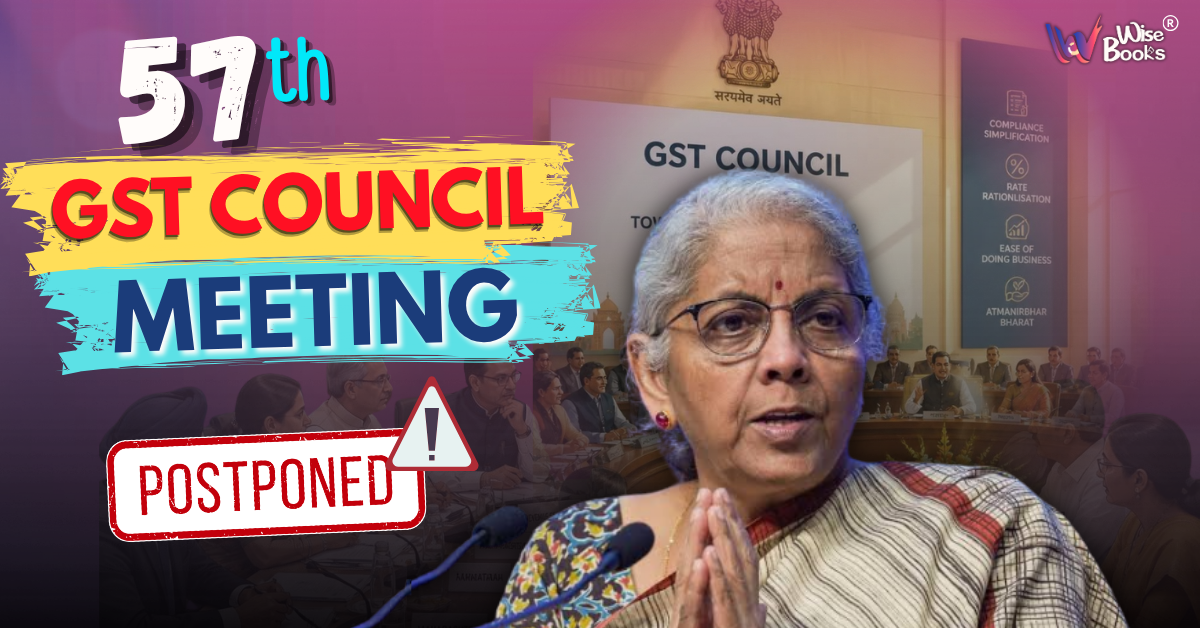
The 57th GST Council meeting was originally scheduled for September 12, 2026, in New Delhi. It has now been rescheduled to October 7, 2026. As businesses wait for the next round of GST decisions, the bigger question is: what could the meeting mean for compliance, input tax credit, and the future of GST?
Why the GST Council Meeting Matters
For a business owner, GST is not just a tax collected on sales. It affects pricing, purchases, working capital, invoices, and the ability to claim input tax credit.
That is why every GST Council meeting matters.
A decision on registration can affect how quickly a business gets its GSTIN. A change in ITC rules can affect how much tax a business can claim. A clarification on litigation can help businesses understand how to handle disputes.
The Council brings together the Union Finance Minister and representatives from the states to consider GST-related policy and administration. Its decisions can shape the next phase of India’s indirect tax system.
The upcoming meeting is therefore important not only for tax professionals, but also for traders, manufacturers, service providers, and small business owners.
September 12 or October 7? What Changed?
The 57th GST Council meeting was initially announced for September 12, 2026, in New Delhi. However, recent reports say the meeting has been moved to October 7, 2026 because the original date coincided with the BRICS Summit. The officers’ meeting is expected to take place on October 6.
This change is important for businesses planning their compliance calendars.
It also gives businesses more time to understand the issues likely to come up and prepare for any changes that may follow.
However, businesses should remember: A Council meeting does not automatically mean that every proposal becomes law immediately. Actual implementation depends on the relevant notifications, circulars, and other legal steps.
What Could Be Discussed in the Meeting?
The exact agenda should be confirmed through official announcements. However, recent reporting has highlighted several important areas that businesses may want to watch.
1. Simplifying GST Registration
One of the reported areas of discussion is the possibility of simplifying GST registration for businesses passing on tax credits of more than ₹2.5 lakh per month. A uniform registration circular for large businesses is also being developed by the central and state governments, with input from CBIC.
Why does this matter?
GST registration is often the first major compliance step for a growing business.
A business may need registration when it crosses the applicable threshold, or when its activities fall under compulsory registration provisions. Delays or difficulties in registration can affect invoicing, customer onboarding, and the ability to claim ITC.
If registration processes become simpler, businesses may benefit from:
- Faster onboarding
- Better clarity on documentation
- Fewer procedural difficulties
- Easier compliance for growing businesses
But the important point is: Any proposed simplification should be understood only after the final rules or official clarification are issued.
2. Input Tax Credit: A Major Area to Watch
Input Tax Credit, or ITC, is one of the most important parts of GST.
In simple terms, ITC allows an eligible business to reduce its GST liability by claiming credit for tax paid on eligible purchases and expenses, subject to the applicable conditions.
For example:
A business purchases goods and pays GST on the purchase. When it sells those goods, it collects GST from the customer. Eligible ITC helps the business adjust the tax already paid against its output tax liability.
But ITC is not automatic.
Businesses must follow the applicable conditions, maintain proper records, and ensure that their claims are supported by the required documents and compliance requirements.
Recent reporting has identified input tax credit and GST litigation as areas the Council may prioritise.
Why should businesses care?
Because an ITC-related change can affect:
- The amount of GST payable
- The cost of purchases
- Cash flow
- Reconciliation work
- The risk of disputes
For businesses, this is a reminder that GST reconciliation should not be treated as a last-minute activity.
3. Reducing GST Litigation
GST disputes can become expensive and time-consuming.
A business may face a dispute over classification, ITC, tax liability, or compliance. Even when a business believes its position is correct, resolving the issue can require documentation, professional advice, and time.
Recent reports indicate that reducing GST litigation may be another focus area for the upcoming meeting.
Why is this important?
A clearer tax system can help businesses:
- Understand their obligations
- Reduce uncertainty
- Avoid unnecessary disputes
- Plan their finances more confidently
For small businesses especially, clarity can be just as valuable as a tax reduction.
What Does This Mean for Small Businesses?
Small businesses often experience GST changes differently from large companies.
A large company may have a dedicated tax team. A small business may have one accountant handling GST, TDS, bookkeeping, and other compliance work.
That is why even a procedural change can make a real difference.
For example, if registration becomes easier, a growing business may be able to start operations more smoothly. If ITC rules change, the business may need to update its reconciliation process. If a clarification is issued, it may need to review its invoices and records.
The lesson is simple: GST changes are not just about tax rates. They are also about how businesses manage their daily operations.
What Should Businesses Do Before the Meeting?
While businesses wait for the official outcome, they can take a few practical steps.
Review your GST records
Make sure your sales and purchase records are updated and properly maintained.
Check your ITC reconciliation
Review whether the ITC claimed in your returns is supported by the applicable records and requirements.
Keep track of official updates
Do not rely only on social media posts or headlines. Wait for official notifications and clarifications before making compliance decisions.
Review your compliance process
If your business handles GST manually, this is a good time to identify areas where errors or delays may occur.
Speak to your tax professional
If a new rule affects your business, professional advice can help you understand what action is actually required.
The Bigger Picture: GST Is Still Evolving
GST was introduced in India in 2017, and the system has continued to evolve through changes in rates, procedures, compliance requirements, and administration.
The 57th GST Council meeting is another reminder that businesses need to stay updated.
But staying updated does not mean reacting to every headline.
It means understanding what has actually changed, when it becomes effective, and how it affects your business.
Final Takeaway
The 57th GST Council meeting was originally scheduled for September 12, 2026, but has been rescheduled to October 7. The reported focus areas include GST registration, input tax credit, and reducing litigation.
For businesses, the best approach is to stay informed, maintain accurate records, and wait for official clarification before changing their compliance practices.
Because in GST, knowing about a change is important but knowing when and how to act on it is even more important.


Comments
No comments yet. Be the first to comment!